Breast pumps
The best breast pumps for colostrum in 2026
Colostrum arrives in millilitres, not ounces, and it is thick enough to stick to the inside of a flange. The right tool is whichever one loses the fewest drops.
How this page is funded: if you buy through a link here we may earn an Amazon commission, at no extra cost to you. It never changes which product we put first, and we recommend the cheaper option whenever it is the better one. Full disclosure.
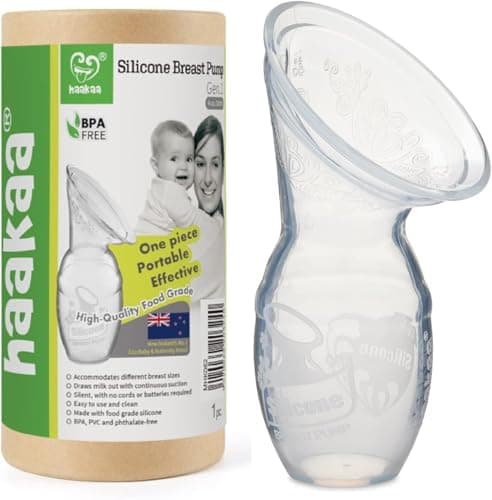
For the first two or three days, the best tool for colostrum is your hands and a spoon or a syringe — not a pump. Colostrum comes in drops, it is thick and sticky, and every extra surface between your breast and the container is somewhere drops are lost. Of the devices you can buy, the Haakaa silicone cup wastes least, because it is a single wide piece with nothing to disassemble. Once volumes climb past a few millilitres, a manual pump like the Medela Harmony takes over, and a double electric is only worth setting up from around day three.
Our pick
Haakaa Silicone Breast Pump
Not really a pump: a one-piece silicone cup that catches the milk your other side leaks during a feed. Buy it as a second device, never your only one.
Buy colostrum collection syringes too. They cost almost nothing, they let you collect one millilitre without losing half of it to a bottle wall, and they are what a hospital will ask you to use if you are expressing antenatally on medical advice.
#ad Affiliate link · Price as of October 17, 2026
Who should buy something else
- Your baby is in a NICU and the team wants volumes from day one. Use their hospital-grade rental pump and follow their protocol.
- Hand expression is not working for you. Buy the Medela Harmony. Light, one-handed, and you can feel the rhythm.
- You already own Avent bottles. Buy the Philips Avent manual, which expresses straight into them.
- You are already past the first week. Move to a double electric. Colostrum is over; this is milk now.
Quick picks
Our ranking, with the reasoning underneath. Tap any row to jump to the full write-up.
| # | Product | Best for | Score | Price |
|---|---|---|---|---|
| 1 | Haakaa Silicone Breast Pump Not really a pump: a one-piece silicone cup that catches the milk your other side leaks during a feed. Buy it as a second device, never your only one. | Catching let-down | 7.2 | $12.94View on Amazon #ad Affiliate link · Price as of October 17, 2026 |
| 2 | 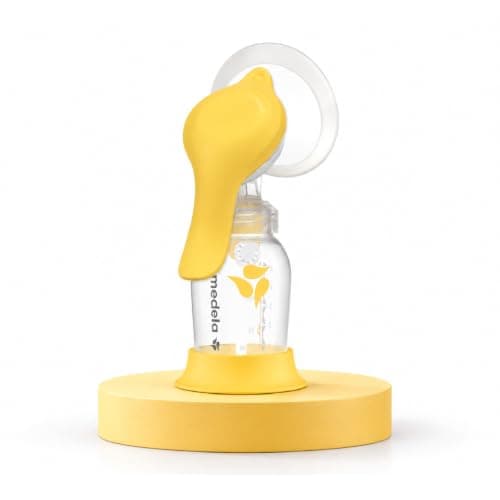 Medela Harmony The default manual pump in the US, and deservedly so: a two-speed handle that lets you stimulate then express without a motor. | Manual, overall | 8.0 | $28.72View on Amazon #ad Affiliate link · Price as of October 17, 2026 |
| 3 | 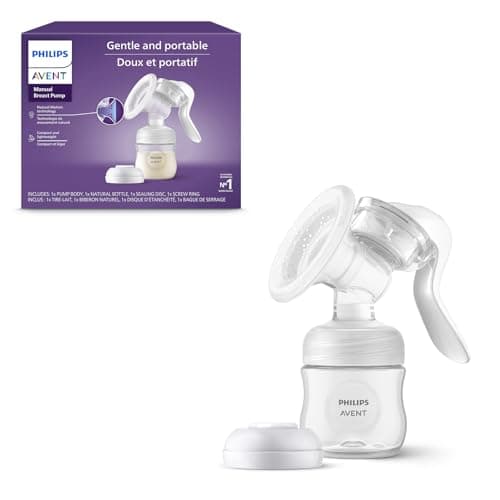 Philips Avent Manual Breast Pump Pumps straight into the Avent bottles you probably already own, which removes a transfer step at 3am. | Avent bottle owners | 7.4 | $34.95View on Amazon #ad Affiliate link · Price as of October 17, 2026 |
| 4 | 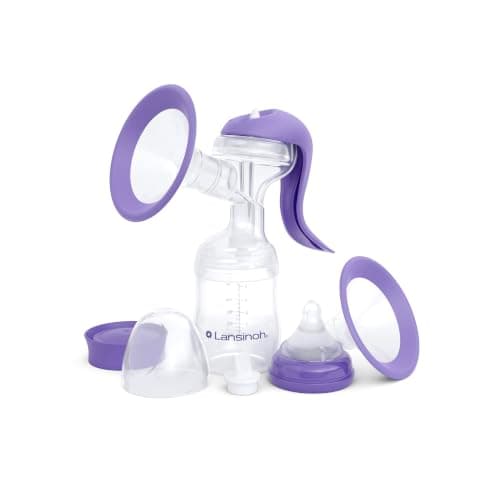 Lansinoh Manual Breast Pump Cheaper than the Harmony and close enough in use that several reviewers put it first for occasional pumping. | Manual, budget | 7.8 | $28.27$34.99(19% off)View on Amazon #ad Affiliate link · Price as of October 17, 2026 |
| 5 | 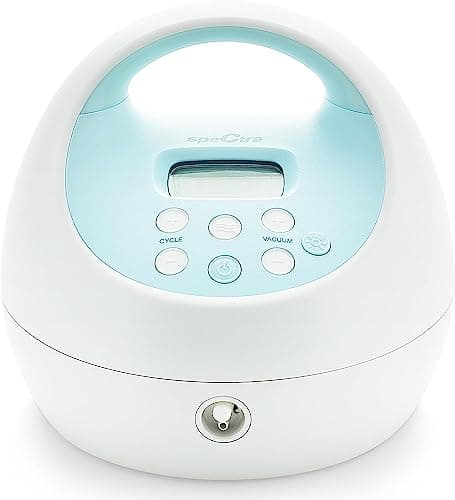 Spectra S1 Plus The one to buy when output is the priority: gentle, quiet, genuinely adjustable, and it runs on a built-in battery so you are not chained to an outlet. | Double electric, overall | 8.9 | $225.99View on Amazon #ad Affiliate link · Price as of October 17, 2026 |
Scores are our own research scores on the rubric published at how we choose. They are not star ratings from customers, and we do not show a price we cannot verify live.
Every pick, in detail
Product photo from the Amazon listing, not a photograph of our own unit.
Haakaa Silicone Breast Pump
Haakaa
Not really a pump: a one-piece silicone cup that catches the milk your other side leaks during a feed. Buy it as a second device, never your only one.
- Output
- 4
- Comfort
- 8
- Discretion
- 9
- Cleaning
- 10
- Value
- 10
- Type:
- One-piece silicone suction cup
- Standout feature:
- Nothing to assemble
- Cleaning burden:
- Very low, one piece
- Price tier:
- Budget
What works
- One piece, so washing takes seconds
- Catches milk that would otherwise soak into a nursing pad
- Cheap enough to own two
What to know first
- Suction is passive, so it cannot replace a real pump
- Tips over easily when full
- No suction control at all
#ad Affiliate link · Price as of October 17, 2026
Product photo from the Amazon listing, not a photograph of our own unit.
Medela Harmony
Medela
The default manual pump in the US, and deservedly so: a two-speed handle that lets you stimulate then express without a motor.
- Output
- 6
- Comfort
- 8
- Discretion
- 8
- Cleaning
- 9
- Value
- 10
- Type:
- Manual, single
- Standout feature:
- Two-phase handle action
- Cleaning burden:
- Low
- Price tier:
- Budget
What works
- The best-selling manual pump in the US, so parts are everywhere
- Angled shield fits more bodies comfortably than a flat flange
- Nothing to charge and nothing to break
What to know first
- One breast at a time, and your hand does the work
- Not a realistic tool for exclusive pumping
- Hand fatigue on long sessions
#ad Affiliate link · Price as of October 17, 2026
Product photo from the Amazon listing, not a photograph of our own unit.
Philips Avent Manual Breast Pump
Philips Avent
Pumps straight into the Avent bottles you probably already own, which removes a transfer step at 3am.
- Output
- 6
- Comfort
- 7
- Discretion
- 8
- Cleaning
- 9
- Value
- 9
- Type:
- Manual, single
- Standout feature:
- Screws onto the Avent bottle system
- Cleaning burden:
- Low
- Price tier:
- Budget
What works
- No decanting if your bottles are Avent
- Compact enough for a work bag
- Soft massage cushion in the funnel
What to know first
- Single-sided and hand-powered
- Less comfortable than the Harmony for some users
- Ties you to one bottle system
#ad Affiliate link · Price as of October 17, 2026
Product photo from the Amazon listing, not a photograph of our own unit.
Lansinoh Manual Breast Pump
Lansinoh
Cheaper than the Harmony and close enough in use that several reviewers put it first for occasional pumping.
- Output
- 6
- Comfort
- 8
- Discretion
- 8
- Cleaning
- 9
- Value
- 10
- Type:
- Manual, single
- Standout feature:
- Two flange sizes included
- Cleaning burden:
- Low
- Price tier:
- Budget
What works
- Two flange sizes in the box, which matters more than most beginners realize
- Comfortable handle angle
- Very low price
What to know first
- Single-sided and hand-powered
- Smaller parts ecosystem than Medela
- An occasional-use tool only
#ad Affiliate link · Price as of October 17, 2026
Product photo from the Amazon listing, not a photograph of our own unit.
Spectra S1 Plus
Spectra
The one to buy when output is the priority: gentle, quiet, genuinely adjustable, and it runs on a built-in battery so you are not chained to an outlet.
- Output
- 10
- Comfort
- 9
- Discretion
- 5
- Cleaning
- 8
- Value
- 8
- Type:
- Double electric, closed system
- Standout feature:
- Rechargeable battery and massage mode
- Cleaning burden:
- Low, closed system
- Price tier:
- Premium
What works
- Widely reported to produce more milk in less time than comparable pumps
- Separate cycle and suction controls, which is what beginners end up needing most
- Battery means you can pump anywhere in the house
What to know first
- Heavier than the S2, and far heavier than a wearable
- Tubing and flanges to wash
- You will want a hands-free pumping bra to use it comfortably
#ad Affiliate link · Price as of October 17, 2026
Why a good pump is the wrong tool on day one
Colostrum is not a small amount of milk. It is a different fluid: thicker, stickier, more concentrated, and produced in quantities measured in millilitres over a whole day. The total a baby takes in the first 24 hours is tiny by later standards and entirely normal — their stomach is about the size of a cherry.
That changes the engineering problem completely. A double electric pump is optimised to move ounces efficiently; it is not optimised to deliver three millilitres of a viscous fluid out the far end of a flange, a valve and a bottle neck without leaving most of it coating the inside. Hand expression has no such losses because there is nothing between you and the spoon.
| Method | Where the colostrum ends up | How much you lose to the equipment | Best used |
|---|---|---|---|
| Hand expression into a spoon or syringe | Straight into the collection vessel | Almost none | First 48 hours, and any time volumes are in drops |
| Haakaa silicone cup | A single wide-mouthed piece | Very little — one surface to scrape | Catching the other side during a feed |
| Manual pump (Medela Harmony, Lansinoh, Avent) | Flange, then bottle | Some, on the flange walls | When hand expression is not working for you |
| Double electric (Spectra S1 Plus) | Flange, tubing-side valve, then bottle | The most — several surfaces | From about day three, once volumes rise |
There is a second reason, and it is about stimulation rather than collection. What drives milk coming in is frequent, effective removal, and in the first days hands are often more effective than suction because they can compress the breast tissue directly. Many hospitals teach hand expression before they hand over a pump for exactly that reason.
What to look for in a colostrum collector
- Fewest surfaces. Count the pieces colostrum has to touch between you and the container. One is ideal. Four means you will be scraping.
- A wide, shallow collecting area. Easy to tip, easy to draw up with a syringe, easy to see what you actually got.
- Something you can use one-handed while feeding. Most colostrum is collected from the opposite side during a feed, not in a dedicated session.
- Syringes, not bottles. A 1ml or 3ml oral syringe holds and measures the volumes that actually exist in the first days, and freezes flat.
- Manual control, if you use a pump. A manual lets you match the compression rhythm that works for you, which matters when the flow is drops.
- An electric pump in the cupboard, not on the table. You will need it from day three or four. You do not need it on day one.
How to collect colostrum, practically
Warm the breast first — a warm flannel or a shower — then massage from the chest wall toward the nipple. Place a thumb and finger a couple of centimetres back from the base of the nipple, press back toward your chest, then compress thumb and finger together, release, and repeat in a rhythm. Rotate your hand position so you work different areas. Catch each drop in a spoon or draw it into a syringe as it forms, rather than waiting for a flow that is not going to come.
Five to ten minutes per side, several times a day, beats one long session. If nothing comes on the first few attempts, that is common and it is not a verdict on your supply. Ask a midwife or lactation consultant to watch you do it once — the technique is hard to get from text and immediate to fix in person.
A note on antenatal expression: collecting colostrum before birth is sometimes recommended for specific situations, and sometimes specifically advised against. That is a decision for your own midwife or doctor, not for a buying guide.
Storing what you collect
Volumes this small need containers this small. Syringes cap and freeze well; a storage bag designed for four ounces will lose a millilitre to its own seams. Label every syringe with the date and time, and if you are taking colostrum into a hospital, freeze it and transport it frozen in a cool bag.
The storage windows are the same as for mature milk. Per the CDC, freshly expressed milk keeps about four hours at room temperature, four days in a refrigerator, and six to twelve months in a freezer; thawed milk must be used within a short window and never refrozen. The full table, including the awkward edge cases, is in how long can breast milk sit out, and the hardware side is in the best breast milk storage bags.
When to move to a real pump
Around day three for most people, when the volume shifts from drops to millilitres to ounces and the thing you are optimising changes from loss to efficiency. That is the point at which a double electric earns its place, and the point at which how to choose a breast pump becomes the right page. If you are exclusively pumping, move sooner and read the best breast pumps for exclusive pumping.
One thing that stays true across the handover: flange fit decides output far more than the pump does, and an ill-fitting flange hurts. Measure before you buy a second one — breast pump flange size has the method.
Worth saying plainly
Do not express colostrum before birth unless your own midwife or doctor has advised it — nipple stimulation in pregnancy is not appropriate for everyone, and this is a clinical decision. If your baby is in a NICU, follow the unit's expressing protocol over anything here. Small volumes in the first days are normal; if you are worried about your baby's intake, weight or output, contact your pediatrician or a lactation consultant rather than buying different equipment. Clean all pump parts after every use per the CDC pump hygiene guidance. We are not clinicians, and nothing here is medical advice.
How we chose
Researched, not hands-on, and we do not claim otherwise. Storage windows come from the CDC and its storage Q&A; device guidance from the FDA; manual pump comparisons from The Bump and BabyGearLab. On this page loss of product to the equipment is weighted heaviest, and raw suction power is weighted down to almost nothing, because suction is not the limiting factor on day one. Rubric: how we choose.
Common questions
What is the best pump for colostrum?
For the first two or three days, none of them — hand expression into a spoon or a 1ml syringe collects more of what you produce than any pump, because colostrum is thick and sticks to flanges. Of the devices, a Haakaa silicone cup loses least. Move to a manual pump as volumes rise, and an electric from around day three.
Can you pump colostrum with an electric breast pump?
You can, and in a NICU you often will on the unit's instructions, but at home it is usually the wrong tool for day one. Several millilitres of a viscous fluid can be lost coating the flange, the valve and the bottle. Electric pumps come into their own once you are producing ounces rather than drops.
How much colostrum should I be able to collect?
Millilitres, not ounces, and often only a few drops at a time in the first day or two. That is normal — a newborn's stomach is tiny and colostrum is concentrated. Do not judge your supply on these numbers. If you have concerns about your baby's intake, speak to your pediatrician or a lactation consultant.
Is a Haakaa good for colostrum?
It is the best buyable device for it, mainly because it is one piece. Suction it to the side your baby is not feeding from and it catches what would otherwise soak into a nursing pad. Just be aware it tips over easily, which with colostrum means losing the whole session.
How do you store colostrum?
In small oral syringes rather than storage bags, labelled with the date and time, since a bag designed for four ounces loses a disproportionate amount to its seams. The CDC storage windows apply as for mature milk: about four hours at room temperature, four days refrigerated, six to twelve months frozen.
Should I express colostrum before the baby is born?
Only if your own midwife or doctor has advised it for your situation. Antenatal expression is recommended in some circumstances and specifically avoided in others, because nipple stimulation in pregnancy is not appropriate for everyone. It is a clinical decision, not a shopping one.