Breast pumps
The best breast pumps for C-section recovery in 2026
For the first two weeks the deciding question is not how much milk a pump removes. It is whether you can start it without standing up, bending forward or resting anything on your incision.
How this page is funded: if you buy through a link here we may earn an Amazon commission, at no extra cost to you. It never changes which product we put first, and we recommend the cheaper option whenever it is the better one. Full disclosure.
Buy the eufy S1 Pro. After a C-section the pump you can actually use is the one that goes in your bra while you are already sitting down, needs no table, no outlet and no reaching, and rests nothing on your abdomen — and among wearables the S1 Pro is the one independent testers rank first for milk removal, so you are not trading output for convenience. If you are exclusively pumping from day one, buy the Spectra S1 Plus: it has a battery, so it comes to the bed with you, and it empties better than anything wearable.
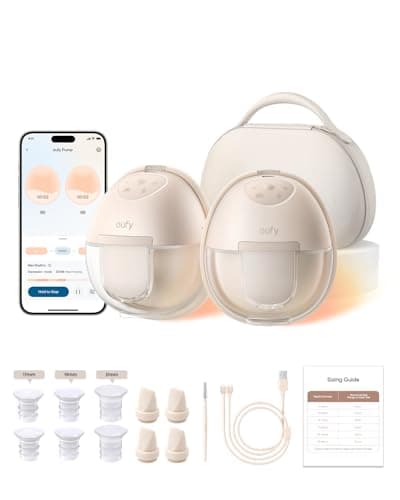
Our pick
eufy Wearable Breast Pump S1 Pro
The wearable that independent testers keep putting first: strong milk removal plus a gentle warming function that makes let-down easier at 3am.
Set it up before the surgery. Charge it, wash the parts, and leave it on the side of the bed you will be getting out of. The single most useful thing you can do for week one is remove every reason to stand up.
#ad Affiliate link · Price as of October 17, 2026
Who should buy something else
- You are exclusively pumping and output is the whole job. Buy the Spectra S1 Plus. Battery powered, so it comes to you.
- Cost rules out a flagship wearable. Buy the Momcozy M9. Same in-bra format, much less money.
- You are nursing and only need to catch let-down. Buy a Haakaa. One piece, no power, nothing to set up one-handed.
- You are still in hospital. Use their rental pump and ask for the lactation consultant on day one.
Quick picks
Our ranking, with the reasoning underneath. Tap any row to jump to the full write-up.
| # | Product | Best for | Score | Price |
|---|---|---|---|---|
| 1 | eufy Wearable Breast Pump S1 Pro The wearable that independent testers keep putting first: strong milk removal plus a gentle warming function that makes let-down easier at 3am. | Wearable, overall | 8.8 | $349.99View on Amazon #ad Affiliate link · Price as of October 17, 2026 |
| 2 | 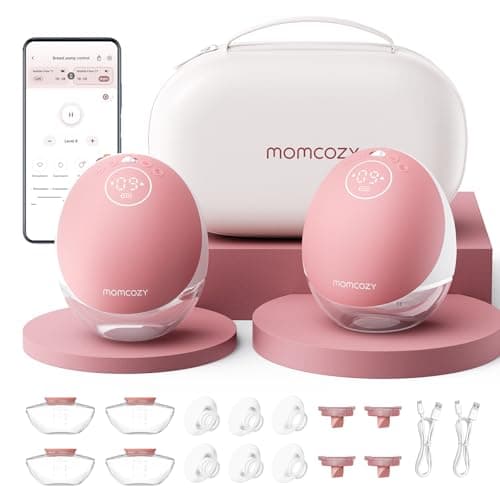 Momcozy M9 A real wearable without premium money, and the easiest one to recommend to somebody pumping for the first time. | Wearable, value | 8.4 | $194.64$269.99(28% off)View on Amazon #ad Affiliate link · Price as of October 17, 2026 |
| 3 | 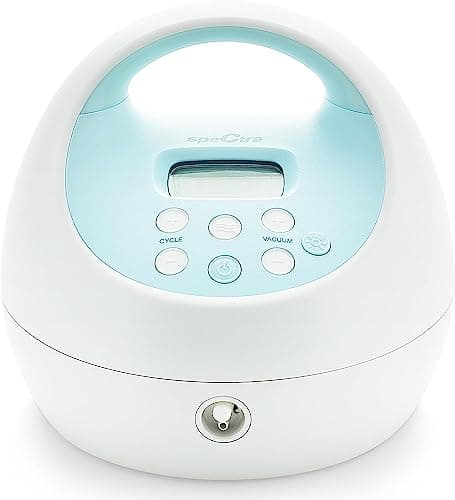 Spectra S1 Plus The one to buy when output is the priority: gentle, quiet, genuinely adjustable, and it runs on a built-in battery so you are not chained to an outlet. | Double electric, overall | 8.9 | $225.99View on Amazon #ad Affiliate link · Price as of October 17, 2026 |
| 4 | 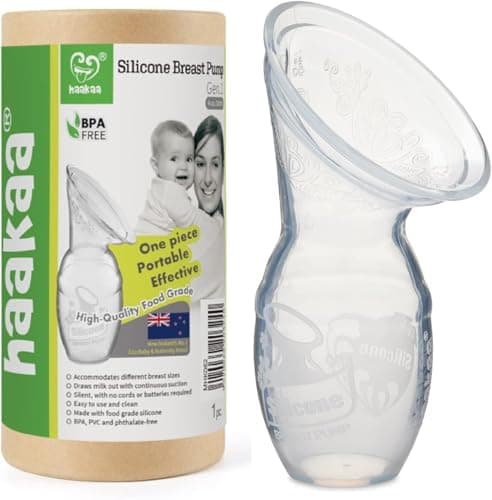 Haakaa Silicone Breast Pump Not really a pump: a one-piece silicone cup that catches the milk your other side leaks during a feed. Buy it as a second device, never your only one. | Catching let-down | 7.2 | $12.94View on Amazon #ad Affiliate link · Price as of October 17, 2026 |
| 5 | 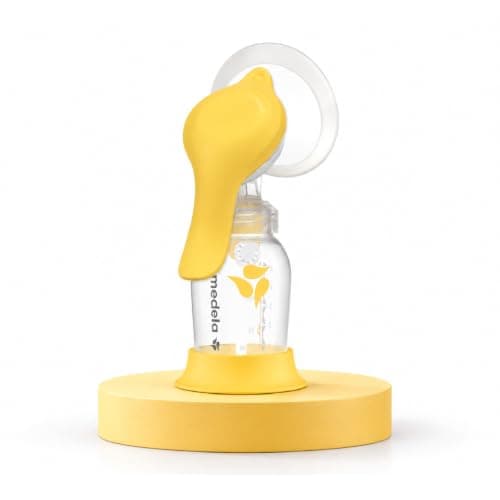 Medela Harmony The default manual pump in the US, and deservedly so: a two-speed handle that lets you stimulate then express without a motor. | Manual, overall | 8.0 | $28.72View on Amazon #ad Affiliate link · Price as of October 17, 2026 |
Scores are our own research scores on the rubric published at how we choose. They are not star ratings from customers, and we do not show a price we cannot verify live.
Every pick, in detail
Product photo from the Amazon listing, not a photograph of our own unit.
eufy Wearable Breast Pump S1 Pro
eufy
The wearable that independent testers keep putting first: strong milk removal plus a gentle warming function that makes let-down easier at 3am.
- Output
- 9
- Comfort
- 9
- Discretion
- 8
- Cleaning
- 7
- Value
- 7
- Type:
- In-bra wearable cup, double
- Standout feature:
- Built-in warming
- Cleaning burden:
- Moderate, multi-part cups
- Price tier:
- Premium
What works
- Ranked first for milk removal among wearables by Consumer Reports and Forbes testers
- Warming helps let-down, which matters most on night pumps
- App control means you are not fishing inside your shirt to change settings
What to know first
- The most expensive way into wearable pumping
- More parts to wash than a simple collection cup
- Heavier in the bra than the slimmest wearables
#ad Affiliate link · Price as of October 17, 2026
Product photo from the Amazon listing, not a photograph of our own unit.
Momcozy M9
Momcozy
A real wearable without premium money, and the easiest one to recommend to somebody pumping for the first time.
- Output
- 8
- Comfort
- 8
- Discretion
- 8
- Cleaning
- 7
- Value
- 9
- Type:
- In-bra wearable cup, double
- Standout feature:
- Near-premium suction at a mid-range price
- Cleaning burden:
- Moderate
- Price tier:
- Mid-range
What works
- Reviewers rate its suction close to premium wearables
- Widely stocked, so replacement parts are easy to find
- Simple controls, so there is less to learn in the first sleepless week
What to know first
- Not as quiet as the Elvie Pump
- No warming function
- Fit varies more by body than the premium cups
#ad Affiliate link · Price as of October 17, 2026
Product photo from the Amazon listing, not a photograph of our own unit.
Spectra S1 Plus
Spectra
The one to buy when output is the priority: gentle, quiet, genuinely adjustable, and it runs on a built-in battery so you are not chained to an outlet.
- Output
- 10
- Comfort
- 9
- Discretion
- 5
- Cleaning
- 8
- Value
- 8
- Type:
- Double electric, closed system
- Standout feature:
- Rechargeable battery and massage mode
- Cleaning burden:
- Low, closed system
- Price tier:
- Premium
What works
- Widely reported to produce more milk in less time than comparable pumps
- Separate cycle and suction controls, which is what beginners end up needing most
- Battery means you can pump anywhere in the house
What to know first
- Heavier than the S2, and far heavier than a wearable
- Tubing and flanges to wash
- You will want a hands-free pumping bra to use it comfortably
#ad Affiliate link · Price as of October 17, 2026
Product photo from the Amazon listing, not a photograph of our own unit.
Haakaa Silicone Breast Pump
Haakaa
Not really a pump: a one-piece silicone cup that catches the milk your other side leaks during a feed. Buy it as a second device, never your only one.
- Output
- 4
- Comfort
- 8
- Discretion
- 9
- Cleaning
- 10
- Value
- 10
- Type:
- One-piece silicone suction cup
- Standout feature:
- Nothing to assemble
- Cleaning burden:
- Very low, one piece
- Price tier:
- Budget
What works
- One piece, so washing takes seconds
- Catches milk that would otherwise soak into a nursing pad
- Cheap enough to own two
What to know first
- Suction is passive, so it cannot replace a real pump
- Tips over easily when full
- No suction control at all
#ad Affiliate link · Price as of October 17, 2026
Product photo from the Amazon listing, not a photograph of our own unit.
Medela Harmony
Medela
The default manual pump in the US, and deservedly so: a two-speed handle that lets you stimulate then express without a motor.
- Output
- 6
- Comfort
- 8
- Discretion
- 8
- Cleaning
- 9
- Value
- 10
- Type:
- Manual, single
- Standout feature:
- Two-phase handle action
- Cleaning burden:
- Low
- Price tier:
- Budget
What works
- The best-selling manual pump in the US, so parts are everywhere
- Angled shield fits more bodies comfortably than a flat flange
- Nothing to charge and nothing to break
What to know first
- One breast at a time, and your hand does the work
- Not a realistic tool for exclusive pumping
- Hand fatigue on long sessions
#ad Affiliate link · Price as of October 17, 2026
What a C-section actually changes about pumping
A caesarean is abdominal surgery, and recovery advice almost universally includes limits on lifting, bending and reaching for several weeks. Every one of those limits collides with a conventional pumping setup, and none of them appear in a normal pump review.
You cannot easily get up. Standing from a low chair, reaching a shelf, carrying a motor unit and a bottle of milk to the kitchen — these are the tasks that decide whether a pump gets used at 3am or skipped. Battery power and in-bra formats are not luxuries here, they are the feature.
Nothing should rest on your abdomen. A tabletop motor on your lap, a pumping bra with a tight band, a bottle balanced on your stomach while you unclip a flange: all of these press on an incision that is sore for weeks. Wearables keep the whole assembly above the waist.
One hand is often busy. Holding the incision when you cough, bracing to change position, or supporting a baby who cannot be lifted easily. A pump you can start, adjust and stop from an app or a single button is worth more than two extra ounces a session.
Milk may take a little longer to come in. This is common after a caesarean and it is not a failure. It is also the strongest argument for early, frequent milk removal rather than waiting — which is what the hospital's rental pump and hand expression are for in the first days.
| When | What is hard | What to pump with |
|---|---|---|
| Days 1–4, in hospital | Standing, bending, lifting anything heavier than your baby | The hospital's rental pump, plus hand expression for colostrum |
| Week 1 at home | Getting up to fetch things; sitting forward; holding weight on your lap | A wearable you can start without standing up, or a battery tabletop pump |
| Weeks 2–6 | Lifting restrictions still apply; incision still tender against waistbands | Whatever empties you best — output starts mattering more than reach |
| After six weeks | Usually nothing pump-specific | Choose on output and routine, like anyone else |
What to look for in a pump for the first weeks
- Battery power, or no power at all. The ability to pump where you are sitting, without finding an outlet, is the single highest-value feature in week one.
- In-bra, or a motor that sits beside you rather than on you. Keep all weight and all pressure above the incision line.
- Start and stop without looking. App control or one large button. Fishing inside a shirt to find a tiny switch is harder than it sounds when bending hurts.
- Few parts, washed in a sink you can reach. You may not be the person doing the washing-up for a fortnight. Fewer parts is kinder to whoever is.
- Honest capacity. A small wearable cup that fills mid-session means standing up to empty it. Larger cups genuinely reduce the number of trips.
- A pumping bra you can fasten at the front. Not a pump feature, but the accessory that makes the pump usable. Buy it before the surgery.
Get the pump before the baby
A planned caesarean is the easiest possible case for sorting the pump in advance, and under the Affordable Care Act most plans must cover a breast pump — see HealthCare.gov on breastfeeding benefits. Order it in the third trimester, not afterwards. Our best breast pumps covered by insurance page covers which models are commonly available through the usual suppliers, and do I need a breast pump is the right page if you are not sure you need one at all.
Set up a pump station on the side of the bed you will use: pump, charger, water, snacks, storage bags, a clean set of parts, and a bin. Everything you have to walk for in week one is a session you will skip. The newborn feeding starter kit has the full list of what is worth owning before day one.
The first few days, specifically
In hospital, use their pump. Hospital-grade rentals are stronger than anything you will buy and you are not carrying it anywhere. The job in the first 48 hours is not volume, it is frequency: colostrum comes in drops, and hand expression often collects it better than suction does — the detail is in the best breast pumps for colostrum.
Expect small numbers and ignore them. Pumping output in the first week tells you almost nothing about long-term supply; what predicts supply is how often milk is removed. If you are worried about volume, how many ounces should I pump sets out the realistic figures by stage, and how often should I pump covers the schedule.
Worth saying plainly
Follow your surgeon's and midwife's instructions on lifting, movement and pain management over anything on this page — we are not clinicians and nothing here is medical advice. Ask for the hospital lactation consultant before discharge; after a caesarean they are the fastest route to a workable plan. Buy a new pump rather than a used one: the FDA warns that personal-use pumps are single-user devices. Clean all parts after every use per the CDC pump hygiene guidance, which matters more while you are also caring for a surgical wound.
How we chose
Researched, not hands-on, and we do not claim otherwise. Pump specifications come from the makers' own pages, including eufy and Spectra; milk-removal rankings from Consumer Reports and BabyGearLab; device and hygiene guidance from the FDA and CDC; insurance coverage from HealthCare.gov. On this page reach, weight off the abdomen and one-handed operation are weighted heaviest; raw output is weighted down for the first fortnight and back up afterwards. Rubric: how we choose.
Common questions
What is the best breast pump after a C-section?
A wearable you can start while already sitting down. We would buy the eufy S1 Pro: it goes in the bra, needs no table or outlet, rests nothing on the incision, and ranks first among wearables for milk removal in independent testing. If you are exclusively pumping, the battery-powered Spectra S1 Plus is the stronger choice.
Does a C-section delay your milk coming in?
It commonly does, by a day or so, and that is not a sign that breastfeeding will not work. The response is more frequent milk removal rather than waiting — hand expression and early pumping in the first 48 hours. Ask the hospital lactation consultant before you are discharged.
Can you pump straight after a C-section?
Yes, and it is usually encouraged, using the hospital's rental pump or hand expression. The practical limits are movement rather than pumping itself: follow your surgical team's instructions on lifting and getting out of bed, and have someone bring the equipment to you.
Is a wearable pump better than a regular one after a C-section?
For the first two weeks, usually yes — not because it pumps better, but because there is nothing to carry, nothing to plug in and nothing resting on the incision. After about six weeks the usual trade-offs return and output becomes the main criterion again.
What should I set up before a planned C-section?
Order the pump in the third trimester and charge it. Set up a station on your side of the bed with the pump, charger, a clean set of parts, storage bags, water and snacks. Buy a front-fastening pumping bra. Every item you would otherwise have to stand up for is a session you will skip.
How long until I can use a normal tabletop pump?
Most people find reaching and bending comfortable enough somewhere in weeks two to six, but it is your surgical team's advice that decides it, not a schedule. A battery-powered tabletop pump bridges the gap, because it removes the outlet without removing the output.
Sources
- HealthCare.gov — Breastfeeding benefits (pump and lactation coverage)
- FDA — Choosing a Breast Pump
- FDA — Buying and Renting a Breast Pump
- CDC — How to Clean and Sanitize Breast Pumps
- Consumer Reports — Best Wearable Breast Pumps, tested and reviewed
- BabyGearLab — The Best Breast Pumps, lab tested and ranked
- eufy — Wearable Breast Pump S1 Pro specification
- Spectra Baby USA — S1 Plus Premier Rechargeable specification