Breast pumps
The best breast pumps with strong suction in 2026
Only two mainstream pumps publish a vacuum figure at all. Here is what they claim, what the rest do not say, and why the strongest setting is almost never the one you should use.
How this page is funded: if you buy through a link here we may earn an Amazon commission, at no extra cost to you. It never changes which product we put first, and we recommend the cheaper option whenever it is the better one. Full disclosure.
Buy the Elvie Stride 2. It carries the highest vacuum figure any maker here publishes — up to -300 mmHg, which Elvie describes as hospital grade — and, crucially, it ships with six flange sizes plus inserts down to 15mm, so you can use that strength with a seal that fits instead of one that hurts. The budget pick is the Medela Harmony, a manual pump: your hand sets the strength, which is the finest suction control money can buy and costs a fraction of everything else here.
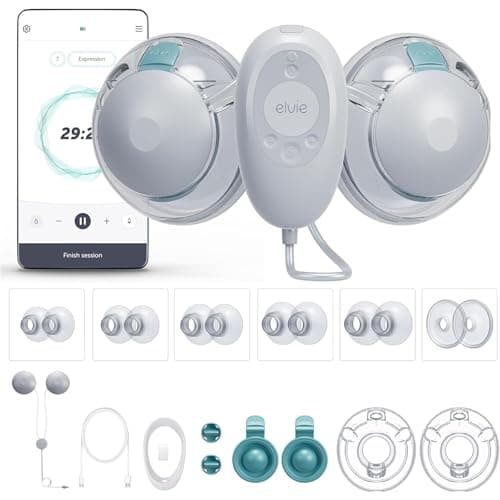
Our pick
Elvie Stride 2
The only mainstream pump that ships six flange sizes and three cushion inserts, which is why it suits bodies at both ends of the sizing chart.
Read the section below before you turn anything up. Higher vacuum is headroom, not output — comfortable suction removes more milk than painful suction, every time.
#ad Affiliate link · Price as of November 28, 2026
Who should buy something else
- You want separate cycle and strength dials, not modes. Buy the Spectra S1 Plus. Two dials, and the parts are everywhere.
- Insurance is paying and you want a published figure. Buy the Motif Luna: 280 mmHg, and on most covered lists.
- Your supply is the real worry, not the machine. Suction is the wrong lever. Start with frequency and fit.
- Pumping currently hurts. Do not buy more suction. Fix the flange size first.
Quick picks
Our ranking, with the reasoning underneath. Tap any row to jump to the full write-up.
| # | Product | Best for | Score | Price |
|---|---|---|---|---|
| 1 | Elvie Stride 2 The only mainstream pump that ships six flange sizes and three cushion inserts, which is why it suits bodies at both ends of the sizing chart. | Fit solved in the box | 8.5 | $134.99$269.99(50% off)View on Amazon #ad Affiliate link · Price as of November 28, 2026 |
| 2 | 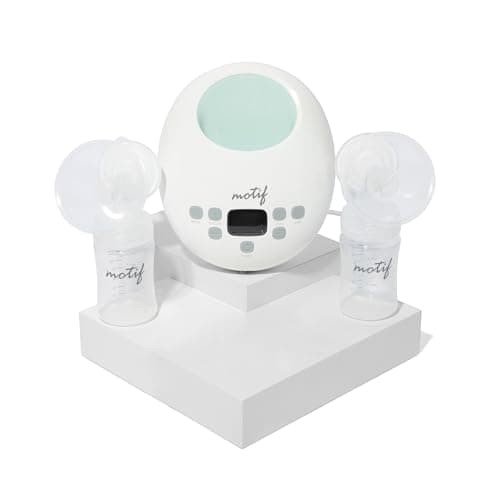 Motif Luna A hospital-strength closed-system pump that weighs under two pounds, is on most insurers' covered list, and accepts flanges from 20mm to 32mm. | Getting one through insurance | 8.4 | $124.13$189.00(34% off)View on Amazon #ad Affiliate link · Price as of November 28, 2026 |
| 3 | 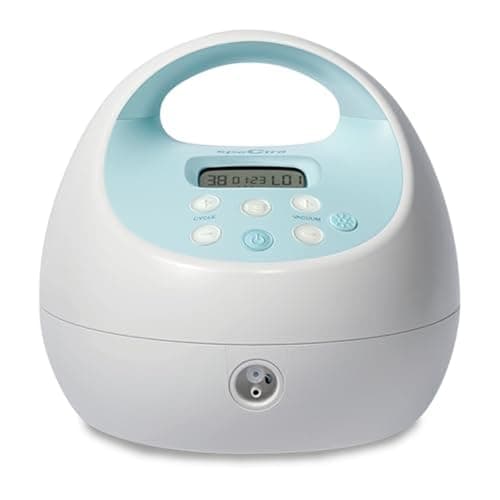 Spectra S1 Plus The one to buy when output is the priority: gentle, quiet, genuinely adjustable, and it runs on a built-in battery so you are not chained to an outlet. | Double electric, overall | 8.9 | $171.75$225.99(24% off)View on Amazon #ad Affiliate link · Price as of November 28, 2026 |
| 4 |  BabyBuddha Wearable Breast Pump Thirty strength settings instead of the usual handful, which is the point of it: you can find the one setting that works for you rather than picking the least bad preset. | Fine control over strength | 7.9 | Check price on Amazon #ad Affiliate link · We show no price until we can verify it live |
| 5 | 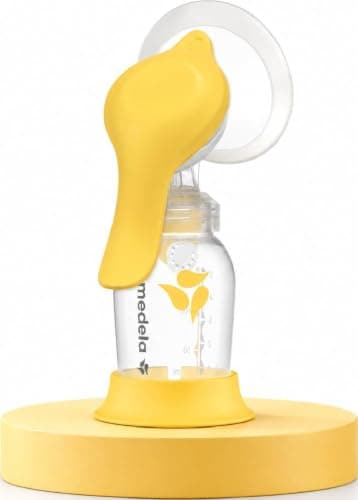 Medela Harmony The default manual pump in the US, and deservedly so: a two-speed handle that lets you stimulate then express without a motor. | Manual, overall | 8.0 | $25.49$28.99(12% off)View on Amazon #ad Affiliate link · Price as of November 28, 2026 |
Scores are our own research scores on the rubric published at how we choose. They are not star ratings from customers, and we do not show a price we cannot verify live.
Every pick, in detail
Product photo from the Amazon listing, not a photograph of our own unit.
Elvie Stride 2
Elvie
The only mainstream pump that ships six flange sizes and three cushion inserts, which is why it suits bodies at both ends of the sizing chart.
- Output
- 8
- Comfort
- 9
- Discretion
- 8
- Cleaning
- 7
- Value
- 7
- Type:
- Hands-free cups on a small hub motor
- Suction:
- Hospital grade, up to -300 mmHg
- Flange sizes:
- Six options 21-28mm in the box, plus 15/17/19mm inserts
- Price tier:
- Premium
What works
- Six sizes supplied, so you are not ordering parts in week one
- Cushion inserts go down to 15mm, the smallest range on a mainstream pump
- Hospital-grade suction in a cup you can wear under a shirt
What to know first
- Cups are tethered to a hub, so it is hands-free rather than cordless
- Premium money if your plan will not cover it
- More parts per session than a single-piece collection cup
#ad Affiliate link · Price as of November 28, 2026
Product photo from the Amazon listing, not a photograph of our own unit.
Motif Luna
Motif Medical
A hospital-strength closed-system pump that weighs under two pounds, is on most insurers' covered list, and accepts flanges from 20mm to 32mm.
- Output
- 9
- Comfort
- 8
- Discretion
- 4
- Cleaning
- 8
- Value
- 9
- Type:
- Traditional double electric, closed system
- Suction:
- Hospital strength, 280 mmHg
- Flange sizes:
- 20, 24, 28 and 32mm, plus any aftermarket size
- Price tier:
- Mid-range
What works
- One of the pumps insurers most often cover outright, which can make it free
- Takes the full 20-32mm flange range, so fit is not a dead end
- Under two pounds, so it moves around the house easily
What to know first
- A table-top pump with tubing, not a hands-free wearable
- Less widely stocked than Medela or Spectra, so listings vary
- You will still want something hands-free for work
#ad Affiliate link · Price as of November 28, 2026
Product photo from the Amazon listing, not a photograph of our own unit.
Spectra S1 Plus
Spectra
The one to buy when output is the priority: gentle, quiet, genuinely adjustable, and it runs on a built-in battery so you are not chained to an outlet.
- Output
- 10
- Comfort
- 9
- Discretion
- 5
- Cleaning
- 8
- Value
- 8
- Type:
- Double electric, closed system
- Standout feature:
- Rechargeable battery and massage mode
- Cleaning burden:
- Low, closed system
- Price tier:
- Premium
What works
- Widely reported to produce more milk in less time than comparable pumps
- Separate cycle and suction controls, which is what beginners end up needing most
- Battery means you can pump anywhere in the house
What to know first
- Heavier than the S2, and far heavier than a wearable
- Tubing and flanges to wash
- You will want a hands-free pumping bra to use it comfortably
#ad Affiliate link · Price as of November 28, 2026
Photo for illustration, not a photograph of our own unit.
BabyBuddha Wearable Breast Pump
BabyBuddha
Thirty strength settings instead of the usual handful, which is the point of it: you can find the one setting that works for you rather than picking the least bad preset.
- Output
- 8
- Comfort
- 7
- Discretion
- 8
- Cleaning
- 7
- Value
- 8
- Type:
- In-bra wearable cups, double
- Settings:
- Four modes across 30 comfort levels
- Flange sizes:
- 13, 15, 17, 19 and 21mm inserts supplied
- Capacity:
- 6 oz per cup
- Price tier:
- Mid-range
What works
- Thirty levels, so the jump between settings is small enough to live with
- Cordless and in-bra, so you can move around mid-session
- Five insert sizes in the box, so fit is solved before you order parts
What to know first
- We have no independent lab measurement of this model's suction
- In-bra cups are harder to get a good seal with than a flange on a hub
- Easy to turn up too far; strong is not the same as comfortable
#ad Affiliate link · We show no price until we can verify it live
Product photo from the Amazon listing, not a photograph of our own unit.
Medela Harmony
Medela
The default manual pump in the US, and deservedly so: a two-speed handle that lets you stimulate then express without a motor.
- Output
- 6
- Comfort
- 8
- Discretion
- 8
- Cleaning
- 9
- Value
- 10
- Type:
- Manual, single
- Standout feature:
- Two-phase handle action
- Cleaning burden:
- Low
- Price tier:
- Budget
What works
- The best-selling manual pump in the US, so parts are everywhere
- Angled shield fits more bodies comfortably than a flat flange
- Nothing to charge and nothing to break
What to know first
- One breast at a time, and your hand does the work
- Not a realistic tool for exclusive pumping
- Hand fatigue on long sessions
#ad Affiliate link · Price as of November 28, 2026
We only rank figures makers publish
Suction is the most-marketed and least-documented spec in this category. Plenty of listings say “hospital grade” and almost none of them say what that means in millimetres of mercury. So this page has a rule: a vacuum number appears here only if the maker publishes it, and where nothing is published we write that instead of filling the gap with a guess. That rule is why the table below has two numbers in it rather than five.
| Pump | Published vacuum | Strength steps | Cycle control | Fit range in the box |
|---|---|---|---|---|
| Elvie Stride 2 | Up to -300 mmHg, described by Elvie as hospital grade | Multiple levels across two modes | Mode-based | Six flanges 21-28mm, plus 15/17/19mm inserts |
| Motif Luna | 280 mmHg, described by Motif as hospital strength | Multiple levels | Separate cycle and vacuum | 20, 24, 28 and 32mm |
| Spectra S1 Plus | Not published as a single figure by Spectra | Multiple levels | Separate cycle and vacuum dials | Spectra sizes plus aftermarket inserts |
| BabyBuddha Wearable | No independent measurement of this model | 30 comfort levels across four modes | Mode-based | 13, 15, 17, 19 and 21mm inserts |
| Medela Harmony | You set it — it is your hand | Infinite, by feel | Two-phase handle | Angled shield, Medela sizes available |
The Spectra S1 Plus is a deliberate inclusion despite not publishing a single figure. It is the pump most widely reported to remove the most milk in the least time, and it gives you the control set that actually matters — cycle speed and vacuum on separate dials. It would be dishonest to rank it on a number Spectra does not state, and absurd to leave it off a page about getting milk out.
More suction is not more milk
This is the part of the page that will save you money. Vacuum strength and milk output are not the same variable. Milk removal depends on let-down, on the rhythm of the cycle, and above all on the seal between you and the flange. Turn the vacuum past comfortable and you get swelling, pain and a worse seal, which removes less milk, not more. The general principle is the one every lactation resource repeats: pump at the highest setting that is still comfortable, and no higher.
If output is genuinely the problem, the levers in order are frequency, fit and let-down, not strength. We go through them in how often should I pump, how to power pump and the best pumps for low milk supply. A pump that is suddenly producing less is usually a worn valve or membrane rather than a weak motor — see breast pump not suctioning.
The spec that matters more than the maximum: step size
If a pump offers five strength levels, the gap between level three and level four can be the gap between comfortable and sore, and you end up pumping at a setting that is slightly too weak because the next one up hurts. That is why BabyBuddha's thirty comfort levels are a real feature rather than a spec-sheet flourish: the jump between settings is small enough to live with.
It is also why separate cycle and vacuum controls beat mode buttons. A fast cycle at moderate vacuum triggers let-down; a slow cycle at higher vacuum empties afterwards. A pump that bundles both into one “mode” takes that tuning away from you. The settings we would actually start from are in breast pump settings.
Which one to buy
Elvie Stride 2 is the pick because it pairs the highest published figure with the widest fit range in the box. Six flange sizes plus three cushion inserts means you can find a seal first and then use the strength, which is the correct order. It is hands-free rather than cordless — the cups tether to a small hub — and it is premium money.
Motif Luna for a published 280 mmHg at a mid-range price, with separate cycle and vacuum control and 20–32mm flanges supplied. It is also one of the pumps insurers most often cover outright. Check which Luna a listing is: Motif sells corded and rechargeable versions under one name.
Spectra S1 Plus if control beats a headline figure for you. Two dials, a massage mode for let-down, a closed system, a battery, and the easiest parts in the US to replace. The one caveat is honest: no published mmHg number.
BabyBuddha Wearable for the finest strength adjustment here — thirty levels across four modes, with five insert sizes in the box. We have no independent lab measurement of this model's vacuum, so we rank it on control rather than on power, and say so.
Medela Harmony as the cheap answer that nobody expects on a page like this. A manual pump gives you continuous, instant strength control with your own hand, and the angled shield suits more bodies than a flat flange. It is one breast at a time and your hand gets tired, so it is a second device or an occasional-use pump — the rest of that category is in the best manual breast pumps.
Fit first, strength second
A flange that is too large pulls areola into the tunnel and bruises; one that is too small pinches the nipple and chokes the flow. Either way, adding vacuum makes it worse. Measure your nipple diameter, add a couple of millimetres, and buy for that — the method is in breast pump flange size, and the bodies that get this wrong most often are covered in elastic nipples, small breasts and large breasts.
Worth saying plainly
Pumping should not hurt. Pain, cracked skin, bruising or a nipple that comes out white means the flange or the setting is wrong, not that you need to push through it — stop, size down or up, and ask a lactation consultant. Do not use the maximum setting as a default. Personal pumps are single-user devices and the FDA advises against using a secondhand one. We are not clinicians and nothing here is medical advice; supply problems in particular are a conversation with a professional rather than a shopping decision.
How we chose
Researched, not hands-on. Vacuum figures and in-the-box flange ranges are taken only from the makers' own specification pages, including Elvie and Motif, with Spectra's own page used for the S1's controls; independent hands-on testing of the category from BabyGearLab and its BabyBuddha testing; device and usage guidance from the FDA and the CDC. We do not run suction tests ourselves and do not claim to. Rubric: how we choose.
Common questions
Which breast pump has the strongest suction?
Of the pumps we rank, the Elvie Stride 2 carries the highest published figure — up to -300 mmHg, which Elvie calls hospital grade — with the Motif Luna next at a published 280 mmHg. Most other makers publish no vacuum figure at all, so any list that ranks them by strength is guessing.
Does stronger suction mean more milk?
No. Milk removal depends on let-down, cycle rhythm and the seal between you and the flange. Past the comfortable point, more vacuum causes swelling and a worse seal, which removes less milk. Pump at the strongest setting that is still comfortable.
What does hospital grade suction actually mean?
On a spec sheet it usually means a vacuum figure in the region of 280 to 300 mmHg. It is not a regulated term for a personal pump, and it is different from a multi-user hospital pump, which is a rental device built to be sanitised between mothers.
My pump feels weaker than it used to. Is the motor dying?
Almost certainly not. Worn valves and membranes are the usual cause, followed by a loose connection or a cracked flange. Work through breast pump not suctioning before you buy anything.
Is a manual pump strong enough?
For occasional use, yes — your hand can generate plenty of vacuum and you control it precisely. It is one side at a time and tiring over long sessions, so it is not the tool for exclusive pumping.
Sources
- Elvie — Elvie Stride 2 product specification
- Motif Medical — Luna double electric breast pump specification
- Spectra Baby USA — S1 Plus Premier Rechargeable specification
- BabyGearLab — BabyBuddha breast pump review, with measured suction
- BabyGearLab — The Best Breast Pumps, lab tested and ranked
- FDA — Choosing a Breast Pump
- FDA — Buying and Renting a Breast Pump
- CDC — How to Clean and Sanitize Breast Pumps