Breast pumps
The best breast pump flange inserts
Almost every pump ships a 24mm flange, and most people are not a 24. These are the parts that close that gap, and the two pumps that never open it.
How this page is funded: if you buy through a link here we may earn an Amazon commission, at no extra cost to you. It never changes which product we put first, and we recommend the cheaper option whenever it is the better one. Full disclosure.
Buy the Maymom flange inserts. They drop a standard 24mm shield down to 21, 19, 17 or 15mm, they fit the Medela and Spectra flanges most US pumps use as well as Momcozy and Willow wearable cups, and they cost a fraction of replacing a pump that does not fit. Order the single size you measured, not a set. The budget pick is the Lansinoh LatchAssist, the cheapest thing here, which is a different tool: it draws a flat or inverted nipple out for a minute or two so the flange has something to hold.
Our pick
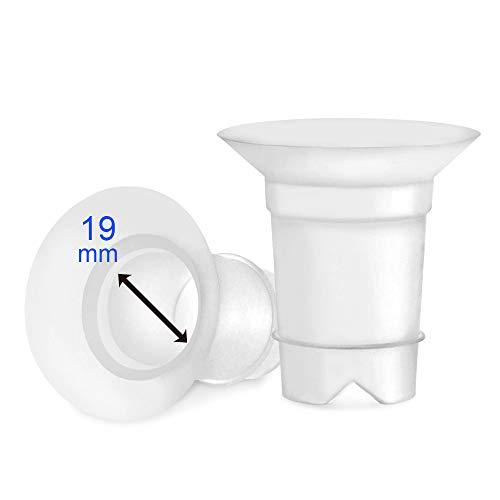
Maymom Flange Inserts
A soft insert that drops a standard 24mm flange down to your actual size. The standard fix when your pump's own size range stops before your size starts.
One thing to do before you buy it: measure. An insert in the wrong size is as uncomfortable as a flange in the wrong size, and the measurement takes two minutes — breast pump flange size walks through it. Maymom sell one size per listing on purpose, so there is no set to fall back on if you guess.
#ad Affiliate link · Price as of November 28, 2026
Who should buy something else
- Your nipple is flat or inverted, so there is nothing for the flange to pull on. Buy the LatchAssist. It is an everter, used before the pump.
- You want the simplest possible everter, in a pair. Buy the haakaa nipple corrector. One piece of silicone, nothing to perish.
- You have not bought a pump yet. Buy a pump that ships the sizes. The Elvie Stride 2 supplies nine.
- It still hurts with a correctly sized flange. That is a lactation consultant question, not a shopping one.
Quick picks
Our ranking, with the reasoning underneath. Tap any row to jump to the full write-up.
| # | Product | Best for | Score | Price |
|---|---|---|---|---|
| 1 | Maymom Flange Inserts A soft insert that drops a standard 24mm flange down to your actual size. The standard fix when your pump's own size range stops before your size starts. | Sizes your pump does not sell | 8.3 | $14.98View on Amazon #ad Affiliate link · Price as of November 28, 2026 |
| 2 | 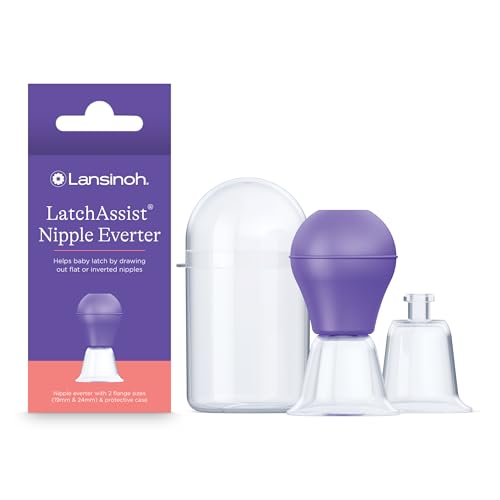 Lansinoh LatchAssist Nipple Everter A tiny hand pump whose only job is to bring a flat or inverted nipple out for a minute or two, so a flange or a latch has something to hold. | Drawing a flat nipple out first | 8.3 | $9.39View on Amazon #ad Affiliate link · Price as of November 28, 2026 |
| 3 | 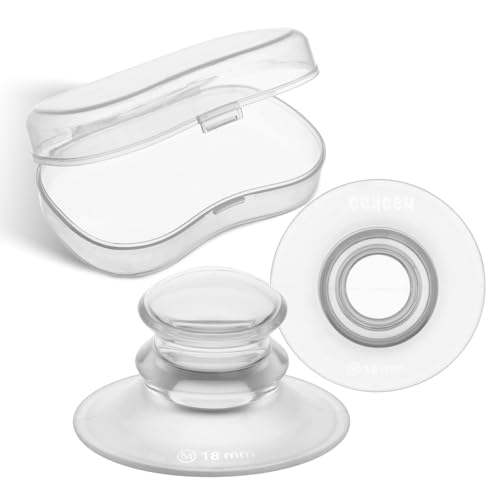 haakaa Silicone Nipple Corrector One piece of silicone that you squeeze and release over the nipple. Nothing to break, nothing to assemble, sold in pairs. | The cheapest everter | 8.0 | $14.44$16.99(15% off)View on Amazon #ad Affiliate link · Price as of November 28, 2026 |
| 4 | 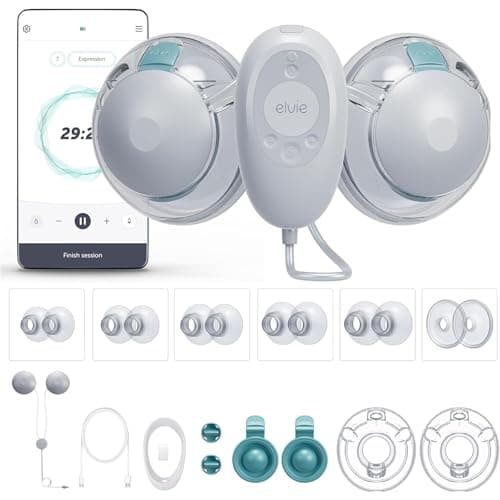 Elvie Stride 2 The only mainstream pump that ships six flange sizes and three cushion inserts, which is why it suits bodies at both ends of the sizing chart. | Fit solved in the box | 8.5 | $134.99$269.99(50% off)View on Amazon #ad Affiliate link · Price as of November 28, 2026 |
| 5 |  BabyBuddha Wearable Breast Pump Thirty strength settings instead of the usual handful, which is the point of it: you can find the one setting that works for you rather than picking the least bad preset. | Fine control over strength | 7.9 | Check price on Amazon #ad Affiliate link · We show no price until we can verify it live |
Scores are our own research scores on the rubric published at how we choose. They are not star ratings from customers, and we do not show a price we cannot verify live.
Every pick, in detail
Product photo from the Amazon listing, not a photograph of our own unit.
Maymom Flange Inserts
Maymom
A soft insert that drops a standard 24mm flange down to your actual size. The standard fix when your pump's own size range stops before your size starts.
- Effectiveness
- 9
- Comfort
- 8
- Ease of use
- 7
- Cleaning
- 8
- Value
- 10
- Type:
- Third-party inserts for a 24mm shield
- Sizes:
- Sold one size per listing — 15, 17, 19 and 21mm
- Fits:
- Medela and Spectra 24mm flanges, and Momcozy/Willow wearable cups
- Price tier:
- Budget
What works
- Covers sizes the pump manufacturers simply do not make
- The option lactation consultants reach for when a pump's range runs out
- Costs a fraction of replacing the pump
What to know first
- Third-party parts, not the pump maker's own
- One size per listing, so order the size you measured, not a set
- Still no use unless you have measured properly first
#ad Affiliate link · Price as of November 28, 2026
Product photo from the Amazon listing, not a photograph of our own unit.
Lansinoh LatchAssist Nipple Everter
Lansinoh
A tiny hand pump whose only job is to bring a flat or inverted nipple out for a minute or two, so a flange or a latch has something to hold.
- Effectiveness
- 8
- Comfort
- 8
- Ease of use
- 8
- Cleaning
- 9
- Value
- 9
- Type:
- Hand-squeezed nipple everter
- Sizes:
- Two flanges included, 19mm and 24mm
- When to use it:
- A couple of minutes before a latch or a pump session
- Price tier:
- Budget
What works
- You control the suction by hand, so you can stop the instant it pinches
- Both a 19mm and a 24mm flange in the box
- Cheap, dishwasher safe, and comes with a case
What to know first
- It is a step before the pump, not a pump
- The effect lasts minutes, not hours
- Fiddly to work one-handed while holding a baby
#ad Affiliate link · Price as of November 28, 2026
Product photo from the Amazon listing, not a photograph of our own unit.
haakaa Silicone Nipple Corrector
Haakaa
One piece of silicone that you squeeze and release over the nipple. Nothing to break, nothing to assemble, sold in pairs.
- Effectiveness
- 7
- Comfort
- 8
- Ease of use
- 9
- Cleaning
- 10
- Value
- 10
- Type:
- Single-piece silicone suction corrector
- Size:
- One size, 22mm inner diameter
- When to use it:
- A few minutes before feeding or pumping
- Price tier:
- Budget
What works
- No parts, no valves, nothing that can perish
- Suction is set by how hard you press, so it is easy to go gently
- Comes as a pair, one for each side
What to know first
- One size only, unlike a two-flange everter
- Less controllable than a hand-pumped everter
- Again, a pre-step rather than a pump
#ad Affiliate link · Price as of November 28, 2026
Product photo from the Amazon listing, not a photograph of our own unit.
Elvie Stride 2
Elvie
The only mainstream pump that ships six flange sizes and three cushion inserts, which is why it suits bodies at both ends of the sizing chart.
- Output
- 8
- Comfort
- 9
- Discretion
- 8
- Cleaning
- 7
- Value
- 7
- Type:
- Hands-free cups on a small hub motor
- Suction:
- Hospital grade, up to -300 mmHg
- Flange sizes:
- Six options 21-28mm in the box, plus 15/17/19mm inserts
- Price tier:
- Premium
What works
- Six sizes supplied, so you are not ordering parts in week one
- Cushion inserts go down to 15mm, the smallest range on a mainstream pump
- Hospital-grade suction in a cup you can wear under a shirt
What to know first
- Cups are tethered to a hub, so it is hands-free rather than cordless
- Premium money if your plan will not cover it
- More parts per session than a single-piece collection cup
#ad Affiliate link · Price as of November 28, 2026
Photo for illustration, not a photograph of our own unit.
BabyBuddha Wearable Breast Pump
BabyBuddha
Thirty strength settings instead of the usual handful, which is the point of it: you can find the one setting that works for you rather than picking the least bad preset.
- Output
- 8
- Comfort
- 7
- Discretion
- 8
- Cleaning
- 7
- Value
- 8
- Type:
- In-bra wearable cups, double
- Settings:
- Four modes across 30 comfort levels
- Flange sizes:
- 13, 15, 17, 19 and 21mm inserts supplied
- Capacity:
- 6 oz per cup
- Price tier:
- Mid-range
What works
- Thirty levels, so the jump between settings is small enough to live with
- Cordless and in-bra, so you can move around mid-session
- Five insert sizes in the box, so fit is solved before you order parts
What to know first
- We have no independent lab measurement of this model's suction
- In-bra cups are harder to get a good seal with than a flange on a hub
- Easy to turn up too far; strong is not the same as comfortable
#ad Affiliate link · We show no price until we can verify it live
Why this page exists
Nearly every breast pump sold in the US ships a 24mm flange, and 24mm is not the average nipple diameter — it is simply the size the industry standardised on. The result is the most common pumping problem there is: output that disappoints, a session that pinches, and a reasonable conclusion that the pump is bad. Usually the pump is fine and the hole is the wrong size.
The fix is cheap. An insert is a soft silicone cone that sits inside the existing flange and narrows the tunnel to your actual size. It costs about as much as a bottle and it is the thing lactation consultants reach for when a pump's own range runs out before the customer's size starts.
This page covers two different problems that get confused with each other, so be clear which one you have before you spend anything:
- The tunnel is too wide for your nipple. You need an insert — Maymom, or whatever your pump maker sells in your size.
- Your nipple is flat or inverted, so the flange cannot grip it. You need an everter: a LatchAssist or a haakaa corrector, used for a minute or two before you start. A smaller insert does not solve this.
| Product | What it is | Sizes | Fits | When you use it |
|---|---|---|---|---|
| Maymom Flange Inserts | Soft insert that narrows a 24mm shield | 15, 17, 19 and 21mm, one size per listing | Medela and Spectra 24mm flanges, Momcozy and Willow cups | Every session, left in place |
| Lansinoh LatchAssist | Tiny hand-squeezed everter | Two flanges supplied, 19mm and 24mm | Used on you, not on the pump | A couple of minutes before a session |
| haakaa Nipple Corrector | One-piece silicone suction corrector | One size, 22mm inner diameter | Used on you, not on the pump | A few minutes before a session |
| Elvie Stride 2 | A pump that solves fit in the box | Six flanges 21-28mm, plus 15/17/19mm inserts | Its own cups | Instead of buying inserts at all |
| BabyBuddha Wearable | A pump that solves fit in the box | 13, 15, 17, 19 and 21mm inserts supplied | Its own cups | Instead of buying inserts at all |
What we ranked these on
Which sizes it actually covers. An insert range that stops at 19mm is no use to somebody who measured 15. Coverage beats brand here.
Then what it fits. An insert is only useful if it seats properly in the flange you own. The Medela and Spectra 24mm shield is the widest-fitting standard, and the wearable cups from Momcozy and Willow take the same inserts — which is worth knowing before you buy a wearable with no small sizes.
Then how gently you can control it. This applies to the everters. A device whose suction you set by hand can be stopped the instant it pinches; one with a fixed pull cannot.
Then whether you need any of it. Two pumps on this page ship so many sizes that the problem never arises, and if you have not bought a pump yet that is the better answer than buying parts for one later.
We have not tested any of these products and do not claim to. Sizes and compatibility are the makers' own published figures.
Maymom Flange Inserts — the pick
The standard fix, and the reason is coverage: 15, 17, 19 and 21mm, which spans the sizes the pump manufacturers mostly do not make. They seat inside a 24mm Medela or Spectra shield — between them the most common flange in American homes — and the same inserts work in Momcozy and Willow wearable cups, which is the single most useful compatibility fact in this category.
At this price it is cheaper to own the size below and the size above than to spend one more week pumping into a flange that hurts.
The honest cons. These are third-party parts, not your pump maker's own, so a warranty-literal reading of your manual will not mention them. Each listing is one size, so you have to know your size before you order rather than after. And no insert helps at all if you have not measured properly — it just moves the problem.
Lansinoh LatchAssist — the budget pick
The cheapest product on this page, and a completely different tool from an insert. It is a tiny hand pump whose only job is to draw a flat or inverted nipple out for a minute or two so that a flange, or a baby, has something to hold. Both a 19mm and a 24mm flange come in the box, which means it works on most bodies without a second purchase, and it comes with a case.
Because you squeeze it by hand, you control the suction exactly, and you can stop the instant it pinches — which is not true of anything motorised.
The honest cons. It is a step before the pump, not a pump: the effect lasts minutes, not hours. It is fiddly to work one-handed while holding a baby. And if inverted nipples are the reason you are here, read the best pumps for inverted nipples before you buy a pump at all.
haakaa Nipple Corrector — the simplest everter
One piece of silicone that you squeeze and release over the nipple. There is no valve, no membrane and nothing that can perish, and it is sold as a pair so there is one for each side. Suction is set by how hard you press, so going gently is the default rather than an option.
Buy this over the LatchAssist if you want the version with no mechanism at all, or if you want two of them.
The honest cons. One size only, 22mm inner diameter, where the LatchAssist gives you two flanges. It is less controllable than a hand-pumped everter in the sense that there is no handle to modulate — just your grip. And, again, it is a pre-step rather than a pump.
Elvie Stride 2 — the pump that makes inserts unnecessary
If you have not committed to a pump yet, this is the better answer than buying parts for the wrong one later. Six flange sizes from 21 to 28mm come in the box, plus cushion inserts at 15, 17 and 19mm — nine options, which is the widest supplied fit range on any mainstream pump. Elvie also publishes suction up to -300 mmHg and describes it as hospital grade, which almost nobody in the wearable category does.
It is the reason the Stride 2 also wins on our small-breast picks and our large-breast picks: it fits the most bodies without a separate shopping trip.
The honest cons. The cups tether to a hub you clip to your waistband, so it is hands-free rather than cordless. It is premium money if your insurance will not cover it. And there are more parts per session than a single-piece collection cup.
BabyBuddha Wearable — five sizes and thirty settings
The other pump that solves fit in the box: 13, 15, 17, 19 and 21mm inserts supplied, which reaches a size smaller than the Elvie's range does. It also gives you four modes across thirty comfort levels, which matters for the same reason fit does — if level three is too weak and level four hurts, you will pump at three and resent it. Thirty levels makes the step between settings small enough to live with.
The honest cons. We have no independent lab measurement of this model's suction and will not imply one. In-bra cups are harder to seal than a flange on a hub. And thirty levels makes it easy to turn it up too far; strong is not the same as comfortable.
How to measure, in two minutes
- Measure the nipple, not the areola. Just the base of the nipple, across the widest point, in millimetres. The areola is not part of the measurement and including it is the most common mistake.
- Measure when it is erect, not resting. Easiest right after a feed or a short session, because that is the shape the flange has to accommodate.
- Add 2 to 3mm, then pick the nearest size down from there. Guidance varies by supplier, so follow whichever chart your pump or insert maker publishes rather than averaging them. There is a longer walkthrough in breast pump flange size, and Aeroflow and Genuine Lactation both publish sizing charts.
- Expect each side to differ. Two different sizes is normal and is a real argument for ordering two single inserts rather than a matched pair.
Worth saying plainly
Pumping should never hurt. Pain, bruising, cracked skin or a nipple that comes out white after a session means the fit or the setting is wrong — stop, change size, and speak to a lactation consultant if it continues. An insert is a fit fix, not a treatment: if pain persists with a correctly fitted flange, that is a clinical question and we are not clinicians. Wash inserts and every other milk-contact part after every session per the CDC, and replace silicone parts when they stiffen, discolor or stop sealing — timings are in how often to replace breast pump parts.
How we chose
Researched, not hands-on, and labeled that way on every card. Sizes, inner diameters and compatibility come from the makers' own listings and specification pages, including Elvie; sizing guidance from Aeroflow and Genuine Lactation; independent testing of the BabyBuddha from BabyGearLab; device guidance from the FDA. Size coverage is weighted heaviest, then compatibility, then control. Rubric: how we choose.
Common questions
What are the best flange inserts for a breast pump?
The Maymom inserts, because they cover 15, 17, 19 and 21mm — the sizes the pump makers largely do not sell — and they fit the standard 24mm Medela and Spectra shields as well as Momcozy and Willow wearable cups. Order the single size you measured.
Do I need a flange insert or a smaller flange?
Either works if it gets you to the right diameter. An insert is usually cheaper and faster, and it is the only option when your pump does not sell a flange in your size at all.
What size flange insert do I need?
Measure the base of your nipple at its widest point in millimetres, then follow the sizing chart published by your pump or insert maker — they differ, so do not average them. Each side can be a different size, which is normal.
Will a flange insert increase my output?
It can, if the wrong size was the problem, because a correctly sized tunnel transmits suction to the right place instead of pulling on the areola. It is not a supply treatment, and a persistent drop in supply is a conversation with a professional.
Are the prices on this page current?
Yes. Every price comes from the Amazon listing we link, is refreshed daily and carries the date it was checked. Where we cannot verify a price we show no number at all rather than an old one.
Sources
- Aeroflow Breastpumps — Flange size chart and how to measure
- Genuine Lactation (IBCLC) — Flange and insert sizing options, including aftermarket
- Elvie — Elvie Stride 2 product specification
- BabyGearLab — BabyBuddha breast pump review, with measured suction
- FDA — Choosing a Breast Pump
- CDC — How to Clean and Sanitize Breast Pumps