Guides
What to pack in a pump bag for work
One full set of parts per session. That single rule removes most of what makes pumping at work miserable, and it is the thing almost nobody does in week one.
How this page is funded: if you buy through a link here we may earn an Amazon commission, at no extra cost to you. It never changes which product we put first, and we recommend the cheaper option whenever it is the better one. Full disclosure.
The short answer
Pack the pump and its charger, one complete set of pump parts for every session you will do that day plus one spare, flange inserts in your size, a labelled bottle or storage bag per session, an insulated cooler bag with ice packs, a hands-free pumping bra, micro-steam sanitizing bags, a spare top, nursing pads, wipes and a plastic bag for used parts. The rule that matters most is one full set of parts per session — washing pump parts in a shared office sink is the thing that makes people give up on pumping at work, and it is entirely avoidable for the price of two extra kits.
The one-set-per-session rule
Everything else on this page is detail. This is the rule.
A pump session at work takes fifteen to twenty minutes. Washing the parts afterwards in an office kitchen takes another ten, needs a sink you may not want to use, and leaves you carrying damp equipment back to your desk. Three sessions a day is half an hour of washing in a space you would rather not be doing it in.
Buying two or three extra sets of flanges, valves, membranes and connectors turns that into dropping used parts into a bag and dealing with them all at once at home. It is the cheapest meaningful upgrade in the whole category, and it costs far less than the pump did.
The CDC's breast pump hygiene guidance is the reference for what to do with parts between uses. If you genuinely cannot wash at work, keeping used parts in a clean sealed bag in a refrigerator until you can is widely advised, but it is not a substitute for a proper wash — it buys you time, not a clean part.
| Item | How many | Why it is on the list |
|---|---|---|
| Pump and power source | 1, charged, plus the cable | A flat wearable at 11am is a missed session |
| Complete sets of pump parts | One per session, plus one spare | The alternative is washing parts in an office sink |
| Flange inserts in your size | 1 pair | Fit decides output more than the pump does |
| Bottles or storage bags | One per session, pre-labelled | Labelling at your desk is faster than labelling later |
| Insulated cooler bag and ice pack | 1 | Milk keeps in a cooler with ice packs for about 24 hours |
| Micro-steam sanitizing bags | 1–2 | The only realistic way to sanitize parts at work |
| Hands-free pumping bra | 1, worn or packed | Turns a 20-minute session into 20 minutes of work |
| Spare top, nursing pads, wipes | 1 of each | Spills happen, and so do let-downs in meetings |
| A plastic bag or wet bag | 1 | For used parts you are not washing on site |
Keeping the milk safe until you get home
The numbers that govern your day come from the CDC storage guidance: freshly expressed milk keeps about four hours at room temperature, about four days in a refrigerator, and about 24 hours in an insulated cooler bag with ice packs. That last figure is the one your working day runs on.
So: if there is a refrigerator you can use, use it, in a labelled bag or bottle. If there is not, a cooler with two ice packs covers a long day comfortably. Label every container with the date and time you expressed it, because that is the clock that counts — not the time you got home. The full table, including the thawed-milk edge cases, is in how long can breast milk sit out, and the bags themselves are compared in the best breast milk storage bags.
If the day involves a flight rather than a commute, breast milk is treated differently from other liquids at security — the TSA allows it in reasonable quantities above the usual limit. The whole procedure is in how to travel with breast milk.
What to look for in the bag itself
- An insulated compartment, or room for a separate cooler. A dedicated insulated pocket is tidier; a plain bag plus a good cooler is cheaper and often better insulated.
- A separate section for used parts. Wet, milky equipment should not share space with a laptop or a clean set.
- A flat base and a structured body. Bags that collapse spill bottles. This is the single most common complaint about soft tote-style pump bags.
- A wipeable lining. Milk will get in there in the first fortnight.
- Something that does not look like a pump bag, if you would rather it did not. A plain backpack with packing cubes does this job perfectly well.
- Enough room for the pump you actually own. A tabletop double electric plus tubing needs real volume; a wearable needs almost none, which is itself an argument for the format.
We do not keep bags in our product registry, so we are not going to rank bags we have not researched to the same standard as everything else on this site. The picks below are the consumables that decide whether the bag works, plus the pump format that shrinks it.
The pump decides the bag
A wearable fits in a coat pocket, needs no outlet and no table, and can be run during a meeting you cannot leave. A tabletop double electric removes more milk and needs a surface, an outlet or a charged battery, and a bag twice the size. Which trade is right depends on how many sessions you do and how much privacy you have — the comparison is in wearable vs traditional breast pump and the workday-specific picks are in the best breast pumps for working moms.
If noise is your constraint — an open-plan office, a shared room, calls you cannot mute — that is a different ranking again, and it is in the quietest breast pumps.
Making the day work
Block the sessions in your calendar before someone else books the time, and keep them at roughly the times your baby would feed. Pump about every three hours, which for most full-time schedules is two or three sessions — the schedule logic is in how often should I pump.
Keep a second charger at work and a spare set of parts in your desk, because the failure mode is never the plan, it is the one missing valve. And do not judge your supply by what you get in an office: output at work is usually lower than at home, for reasons that have more to do with stress and let-down than with milk — how many ounces should I pump sets out what is actually normal.
Worth saying plainly
Follow the CDC storage windows for anything you express, and clean pump parts after every use per the CDC pump hygiene guidance — refrigerating used parts between sessions buys time but is not a substitute for washing. Do not share a personal-use pump or buy one second-hand; the FDA treats them as single-user devices. Nothing here is legal advice about your workplace rights — check your own employer's policy and local law for break time and space. We are not clinicians, and nothing here is medical advice.
What we would buy
Now that the decision is made, these are the products we would actually put in the basket, and why.
Product photo from the Amazon listing, not a photograph of our own unit.
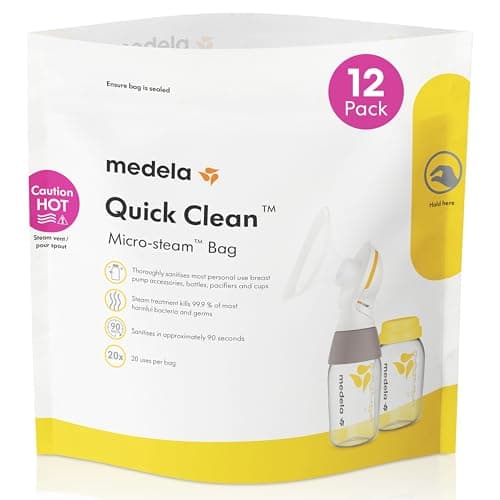
Medela Quick Clean Micro-Steam Bags
Medela
Reusable microwave steam bags that pack flat. The answer to sterilizing pump parts in an office kitchen.
- Speed
- 9
- Evenness
- 7
- Capacity
- 4
- Ease of use
- 8
- Value
- 9
- Method:
- Microwave steam in a reusable bag
- Capacity:
- One pump set, or a few bottle parts
- Extras:
- Reusable for a set number of cycles
- Price tier:
- Budget
What works
- Packs flat in a work bag or suitcase
- Very fast
- Cheap to replace
What to know first
- Limited number of uses per bag
- Small capacity
- Still needs a microwave
#ad Affiliate link · Price as of October 17, 2026
Product photo from the Amazon listing, not a photograph of our own unit.
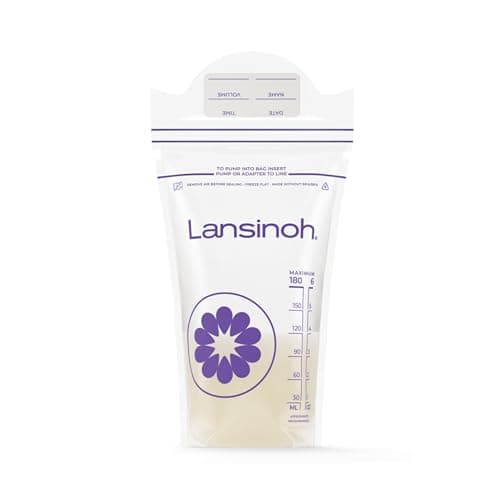
Lansinoh Breastmilk Storage Bags
Lansinoh
The bag lactation consultants have recommended for years: a double-zipper seal, reinforced side seams, and no plastic taste or smell carried into the milk.
- Leak resistance
- 9
- Freezer footprint
- 6
- Filling
- 7
- Durability
- 9
- Value
- 10
- Seal:
- Double zipper
- Seams:
- Reinforced side seams
- Material:
- BPA-free
- Pump directly in?:
- No, pour or decant
- Price tier:
- Budget
What works
- Double-zipper seal and reinforced side seams, which is what matters once bags are stacked frozen
- No plastic smell or taste carried into the milk, a common complaint with cheaper bags
- The long-standing default recommendation, so it is easy to restock anywhere
What to know first
- No adapter to pump straight into the bag, so you decant and risk a spill
- Does not stand up as reliably as a gusseted bag when you are filling one-handed
- Plain shape, so no space-saving advantage in a full freezer
#ad Affiliate link · Price as of October 17, 2026
Product photo from the Amazon listing, not a photograph of our own unit.
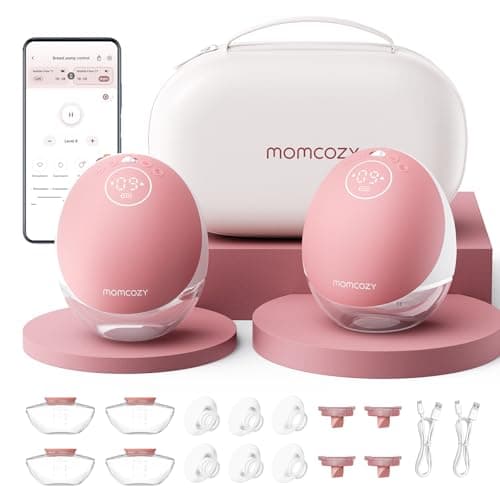
Momcozy M9
Momcozy
A real wearable without premium money, and the easiest one to recommend to somebody pumping for the first time.
- Output
- 8
- Comfort
- 8
- Discretion
- 8
- Cleaning
- 7
- Value
- 9
- Type:
- In-bra wearable cup, double
- Standout feature:
- Near-premium suction at a mid-range price
- Cleaning burden:
- Moderate
- Price tier:
- Mid-range
What works
- Reviewers rate its suction close to premium wearables
- Widely stocked, so replacement parts are easy to find
- Simple controls, so there is less to learn in the first sleepless week
What to know first
- Not as quiet as the Elvie Pump
- No warming function
- Fit varies more by body than the premium cups
#ad Affiliate link · Price as of October 17, 2026
Common questions
What do I need in my pump bag for work?
The pump and charger, one complete set of parts per session plus a spare, flange inserts in your size, a labelled bottle or storage bag per session, an insulated cooler with ice packs, a hands-free pumping bra, sanitizing bags, a spare top, nursing pads, wipes and a bag for used parts.
How many sets of pump parts do I need for work?
One per session, plus one spare — so three or four sets for a typical full day. It is the cheapest upgrade in the category and it removes the single worst part of pumping at work, which is washing equipment in a shared office sink between meetings.
How do you keep breast milk cold at work?
A refrigerator if you have access to one, in a labelled container, where milk keeps about four days. Otherwise an insulated cooler bag with ice packs, which per CDC guidance keeps freshly expressed milk for about 24 hours — comfortably longer than a working day.
Can you reuse pump parts without washing them between sessions at work?
Not as a routine. Where washing on site is impossible, keeping used parts in a clean sealed bag in a refrigerator until you can wash them is commonly advised, but it buys time rather than cleaning anything. Packing a full set per session is the better answer.
Do I need a special breast pump bag?
No. A structured backpack with a flat base, a wipeable lining, a separate pocket for used parts and room for a cooler does the job. A dedicated pump bag is tidier; the things that actually decide whether the day works are the spare parts and the cooler, not the bag.
Why do I pump less at work than at home?
Almost always let-down rather than supply. Let-down responds to warmth, privacy and relaxation, all of which are in short supply in an office. A photo or a video of your baby, a warm compress and a couple of minutes on massage mode genuinely help.