High chairs
The best high chairs for toddlers in 2026
A two-year-old is a different customer to a six-month-old. Heavier, taller, able to climb out, and halfway to the family table. Five seats that handle it.
How this page is funded: if you buy through a link here we may earn an Amazon commission, at no extra cost to you. It never changes which product we put first, and we recommend the cheaper option whenever it is the better one. Full disclosure.
Buy the Stokke Tripp Trapp. For a toddler the question is no longer which chair feeds a baby best, it is which chair you are not replacing in eight months — and the Tripp Trapp answers that by moving its seat and footplate into new slots as the child grows, through the toddler years and out the other side as an ordinary chair. If you want a convertible that still has a tray for the messy end of toddlerhood, buy the Abiie Beyond Junior.
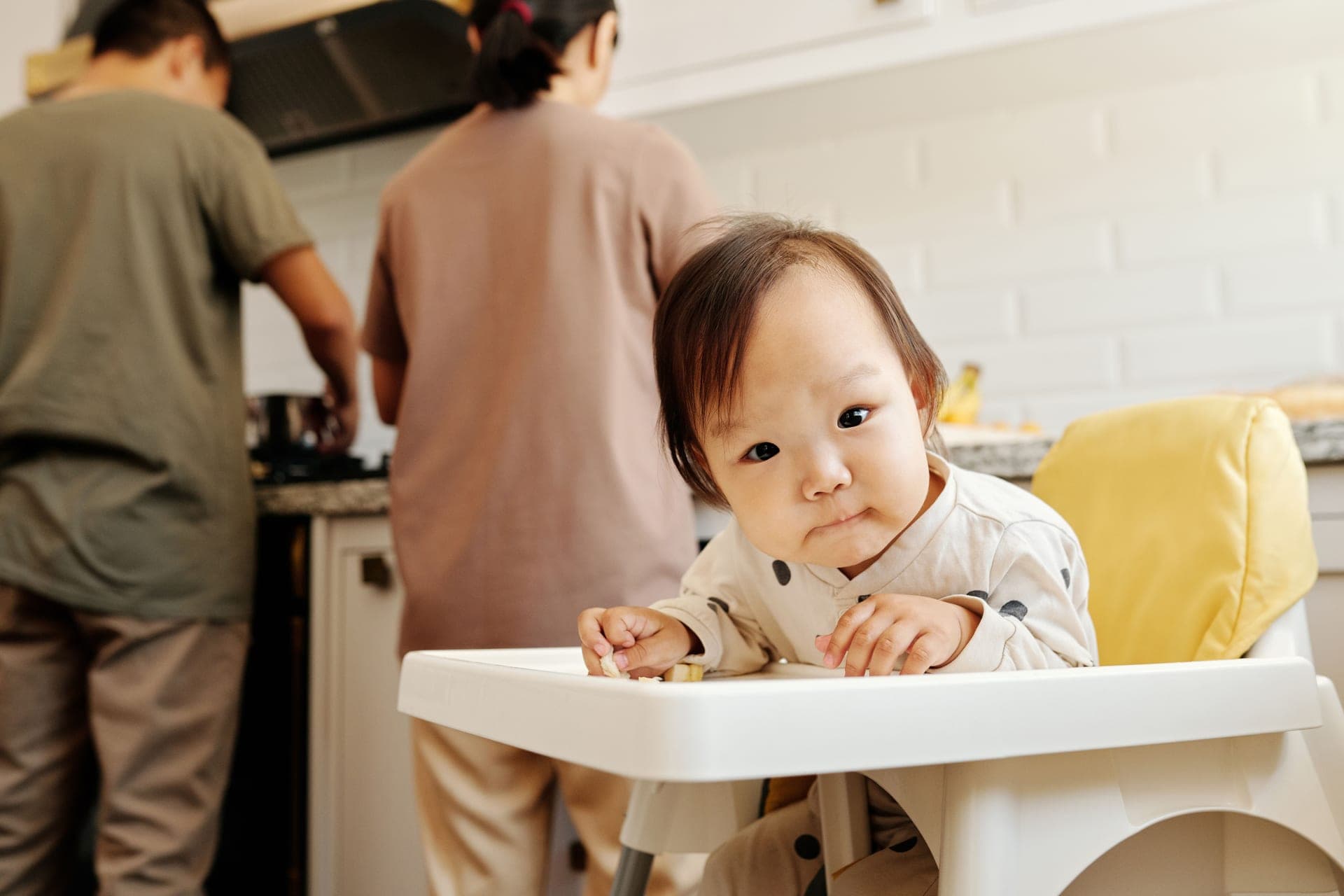
Our pick
Stokke Tripp Trapp
Buy it once. With the baby set it is a high chair, and the same frame is still a chair your teenager sits in.
Run one check before you buy anything on this page: find your current chair's stated weight limit. A lot of toddler high chair shopping turns out to be unnecessary, and a lot more of it turns out to be urgent for a reason the parent had not spotted.
#ad Affiliate link · We show no price until we can verify it live
Who should buy something else
- Your toddler has long legs and kicks the footrest. Buy the Keekaroo Height Right. It has the widest footplate travel of the five.
- They are climbing out and you want them at the table instead. Buy a booster. The Ingenuity Baby Base straps to a dining chair and costs little.
- You are bridging one year, not buying for four. Buy the Bumbo 3-in-1 Multi Seat and use it as a strapped booster.
- You already own a convertible chair. You may need nothing. Remove the tray and insert and move the footplate up.
Quick picks
Our ranking, with the reasoning underneath. Tap any row to jump to the full write-up.
| # | Product | Best for | Score | Price |
|---|---|---|---|---|
| 1 | Stokke Tripp Trapp Buy it once. With the baby set it is a high chair, and the same frame is still a chair your teenager sits in. | High chairs, overall | 8.8 | Check price on Amazon #ad Affiliate link · We show no price until we can verify it live |
| 2 | Abiie Beyond Junior A wooden chair whose seat and footplate both slide to fit, rated to 250lb, and unlike the Tripp Trapp it comes with a tray in the box. | Adjustable footrest, with a tray | 8.6 | Check price on Amazon #ad Affiliate link · We show no price until we can verify it live |
| 3 | Keekaroo Height Right High Chair The footplate moves across a wider span than anything else here, which is the whole point if you want feet braced at every stage. | The widest footrest range | 8.3 | Check price on Amazon #ad Affiliate link · We show no price until we can verify it live |
| 4 | 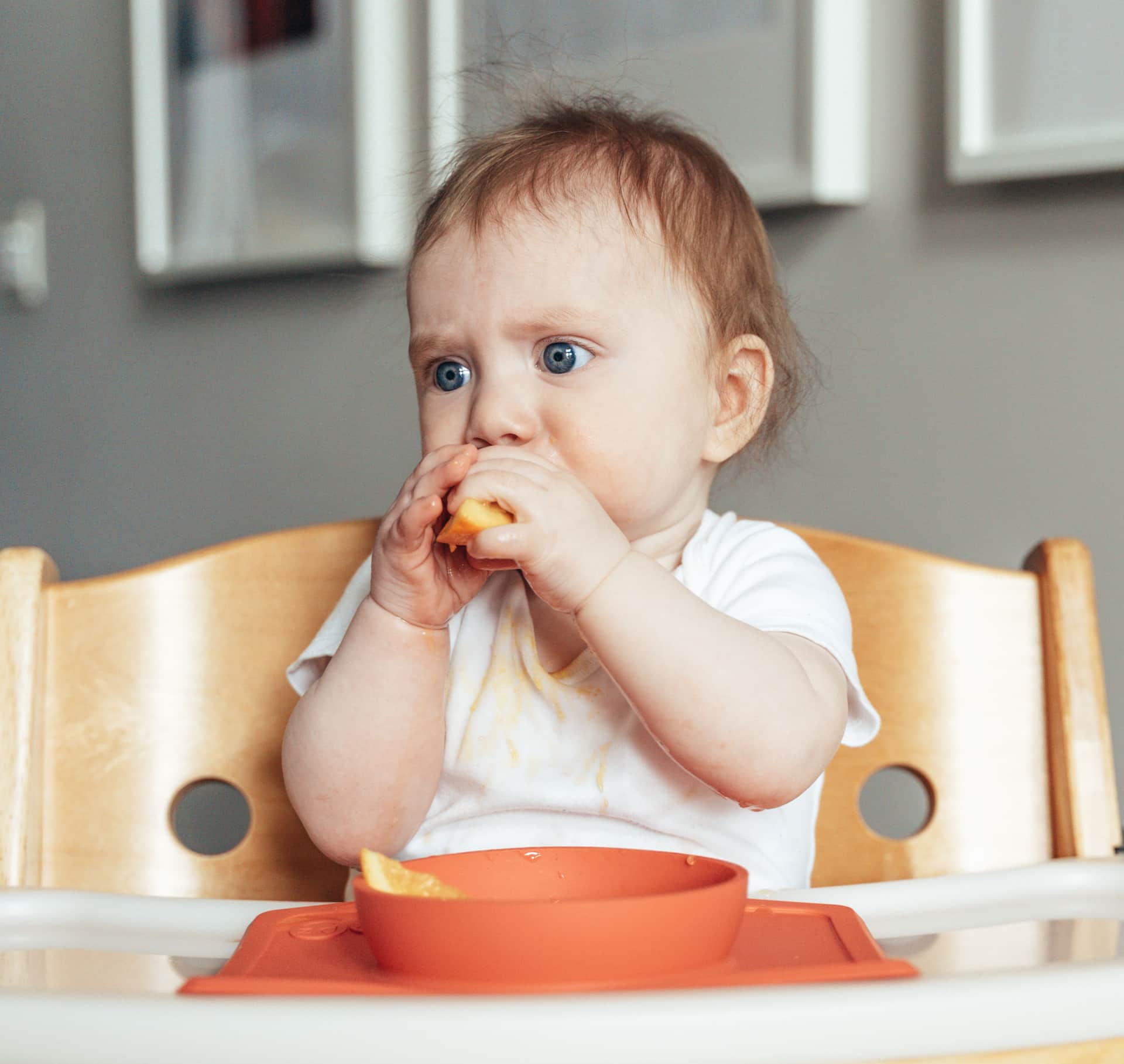 Bumbo 3-in-1 Multi Seat The Bumbo that is meant for mealtimes: a strap-on booster with a stowable tray, two heights and a removable foam insert, from six months to three years. | The Bumbo you can actually eat in | 7.8 | Check price on Amazon #ad Affiliate link · We show no price until we can verify it live |
| 5 | Ingenuity Baby Base 2-in-1 Booster The straightforward step after a high chair: it straps to a dining chair, has a removable tray, and wipes clean in seconds. | Boosters, overall | 8.0 | Check price on Amazon #ad Affiliate link · We show no price until we can verify it live |
Scores are our own research scores on the rubric published at how we choose. They are not star ratings from customers, and we do not show a price we cannot verify live.
Every pick, in detail
Photo for illustration, not a photograph of our own unit.
Stokke Tripp Trapp
Stokke
Buy it once. With the baby set it is a high chair, and the same frame is still a chair your teenager sits in.
- Safety
- 9
- Cleaning
- 7
- Footprint
- 9
- Longevity
- 10
- Value
- 7
- Type:
- Wooden, adjustable, grows with the child
- Footprint:
- Small, pulls up to the table
- Tray:
- None by default, the child eats at the table
- Price tier:
- Premium
What works
- Genuinely lasts into adulthood, which changes the cost calculation
- Seat and footplate adjust, so posture stays right as the child grows
- No tray means the child eats with the family from the first meal
What to know first
- The baby set and harness are separate purchases
- Wood needs wiping, not hosing
- Highest up-front price here
#ad Affiliate link · We show no price until we can verify it live
Photo for illustration, not a photograph of our own unit.
Abiie Beyond Junior
Abiie
A wooden chair whose seat and footplate both slide to fit, rated to 250lb, and unlike the Tripp Trapp it comes with a tray in the box.
- Safety
- 9
- Cleaning
- 8
- Footprint
- 8
- Longevity
- 10
- Value
- 7
- Type:
- Wooden adjustable chair, grows with the child
- Footrest:
- Adjustable, independently of the seat
- Rated to:
- 6 months to 250lb
- Price tier:
- Premium
What works
- Seat and footplate adjust separately, so the bracing height is actually right
- Tray included, which the obvious competitor charges extra for
- Water-resistant finish, so spills are a wipe rather than a stain
What to know first
- Premium price, even on sale
- Wood needs wiping rather than hosing
- Assembly and readjustment take a few minutes each time
#ad Affiliate link · We show no price until we can verify it live
Photo for illustration, not a photograph of our own unit.
Keekaroo Height Right High Chair
Keekaroo
The footplate moves across a wider span than anything else here, which is the whole point if you want feet braced at every stage.
- Safety
- 9
- Cleaning
- 8
- Footprint
- 8
- Longevity
- 9
- Value
- 6
- Type:
- Wooden adjustable chair
- Footrest:
- Adjusts across roughly 4 to 21 inches from the floor
- Seat height:
- Roughly 16 to 24 inches
- Price tier:
- Premium
What works
- The largest footrest adjustment range in the category
- Plant-based lacquer finish, wipes clean with soapy water
- Becomes an ordinary chair at a table once the tray goes
What to know first
- The infant insert is a separate, pricier version
- Tray is an add-on on some configurations
- Premium money for a chair with no recline
#ad Affiliate link · We show no price until we can verify it live
Photo for illustration, not a photograph of our own unit.
Bumbo 3-in-1 Multi Seat
Bumbo
The Bumbo that is meant for mealtimes: a strap-on booster with a stowable tray, two heights and a removable foam insert, from six months to three years.
- Safety
- 7
- Cleaning
- 8
- Footprint
- 10
- Longevity
- 7
- Value
- 8
- Type:
- Strap-on booster with tray
- Age range:
- Six to 36 months
- Tray:
- Included, stows behind the backrest
- Price tier:
- Mid-range
What works
- Designed and sold for feeding, unlike the Floor Seat
- Straps to a dining chair, so it costs no floor space
- Foam insert comes out as the child grows, and the tray stows on the seat
What to know first
- Only as safe as the dining chair you strap it to
- No recline, so it is for a confident sitter
- No footrest, which is the standard booster compromise
#ad Affiliate link · We show no price until we can verify it live
Photo for illustration, not a photograph of our own unit.
Ingenuity Baby Base 2-in-1 Booster
Ingenuity
The straightforward step after a high chair: it straps to a dining chair, has a removable tray, and wipes clean in seconds.
- Safety
- 7
- Cleaning
- 10
- Footprint
- 9
- Longevity
- 6
- Value
- 10
- Type:
- Floor seat and dining-chair booster
- Footprint:
- None, it sits on a chair
- Tray:
- Removable, dishwasher-safe
- Price tier:
- Budget
What works
- Doubles as a floor seat for first tastes
- Hard plastic wipes clean instantly
- Cheap and widely available
What to know first
- Needs a dining chair with a flat seat
- Less support than a proper high chair for a young baby
- No height adjustment
#ad Affiliate link · We show no price until we can verify it live
What actually changes at two
Four things, and none of them are the things that mattered at six months.
They can get out. This is the one that reorganises the whole decision. A toddler who can push off the footrest and swing a leg over the tray will do it the moment your back is turned, from a seat whose entire safety case assumes they cannot. The AAP is blunt about the related habit in its high chair safety guidance: never let a child stand in the chair. Once standing and climbing start, the harness has to be used every single time or the raised seat is worse than a dining chair.
They are heavier, and the limit is real. The stated weight limit is the load the chair's stability and structural testing was carried out against. Past it, the testing simply does not cover your situation. Limits vary enormously between a moulded plastic seat and a wooden convertible, so the number you need is your model's, not a general rule.
Their legs are long. A footrest set for a baby is now in the wrong place, and a toddler with no foot support fidgets, slides and leaves the table. The chairs that survive this stage are the ones whose footplate moves, which is a different requirement from merely having a footrest.
They want to be at the table. Not next to it in their own furniture. A seat that brings a toddler to the family table height beats a nicer seat that keeps them in their own zone, because the social half of mealtimes is doing real work by two.
How long each of these actually lasts
| Seat | How long the maker says it lasts | What that means at two or three |
|---|---|---|
| Stokke Tripp Trapp | Converts from baby set to child seat to adult chair | The seat and footplate move to new slots, so the same frame keeps working past the high chair stage entirely |
| Abiie Beyond Junior | Convertible wooden chair with a removable tray | Drop the tray and the harness and it becomes a youth chair pulled up to the table |
| Keekaroo Height Right | Adjustable seat and footplate, tray optional | The widest footrest travel here, which is what a long-legged toddler needs |
| Bumbo 3-in-1 Multi Seat | Booster stage follows the floor-seat stage | Strapped to a dining chair it covers the in-between year |
| Ingenuity Baby Base 2-in-1 | Floor seat, then booster on an adult chair | The cheapest honest route out of a high chair |
| A freestanding high chair, generally | The US standard is written around "a child up to 3 years of age" | Not a deadline, but check your own model's stated weight limit rather than assuming |
The two regulatory numbers worth knowing, because they frame the whole category: the CPSC defines a high chair as "a freestanding chair for a child up to 3 years of age", and a booster seat as a juvenile chair for children "up to 5 years of age". Those describe what each product is tested for. They are not instructions about your child's birthday, and a sturdy convertible with a stated limit well past three is fine past three. The full exit decision is in when to stop using a high chair.
What to look for in a toddler seat
- A stated weight limit well above where they are now. If the number is within ten pounds of your child, you are buying this again next year. Convertible wooden chairs tend to have the most headroom here.
- A footplate that moves, not just exists. Measure from the seat to where their feet naturally hang. A fixed bar that was right at eight months is now a shin rest.
- A harness you can keep using, and later stop using. A toddler still benefits from a crotch strap even when the shoulder straps come off. Buy a seat with straps you can remove rather than a seat with none.
- A removable tray. The tray is what stands between a toddler and the table. Being able to take it off is how one chair covers both stages.
- A footprint you can push in. Splayed plastic legs that were invisible under a baby's chair become the thing everyone trips over when the chair lives at the table full-time.
- Wipeable everything. This stage is messier than the spoon-fed one, not less — self-feeding plus opinions. Fabric seat pads with seams are the part you will resent.
The climbing problem, practically
Three things help and one does not.
What helps: buckling the crotch strap every time without negotiating about it, moving the footplate down so it is harder to push off, and keeping the chair far enough from the table and the wall that there is nothing to brace a foot against. The AAP guidance is specific about that last one — keep the chair away from surfaces a child can push against.
What does not help: using the tray as the restraint. A tray that touches the child is not a harness, and a child who can stand can stand right over it. If buckling has become a daily fight, that is a signal the seat has stopped being the right one, not a signal to skip the buckle. A booster at the table that they will sit in beats a high chair they fight — high chair vs booster seat walks through that handoff.
When you do not need to buy anything
Genuinely common, and worth checking before you spend. If you own a convertible chair, the toddler upgrade may cost nothing at all: remove the baby insert, take off the tray, move the seat and footplate up a slot, and the same frame is now a youth chair at the table. That is the quiet argument for having bought a convertible in the first place, covered in best convertible high chairs.
If you own a chair whose footrest does not move, the cheap fix is a sturdy box or a stack of books under their feet. It looks like nothing and it solves most of the fidgeting, for the same reason a real footrest does — best high chairs with a footrest explains why foot support changes how a child sits.
Worth saying plainly
Use the safety straps, including the crotch strap, every time, and never substitute the tray for the harness — that is AAP guidance and it matters more at two than it did at eight months, not less. Never let a child stand in the seat, keep the chair away from walls and counters they can push against, and never leave them unattended. Do not use any seat past its stated weight or height limit. Check second-hand seats against CPSC recalls before use. We are not clinicians, and nothing here is medical advice — questions about your child's posture, development or eating belong with your pediatrician.
How we chose
Researched, not hands-on, and we do not claim otherwise. Conversion stages, footplate travel and stated limits come from the makers' own specification pages; the regulatory definitions come from the CPSC's high chair and booster seat pages, and harness and supervision guidance from the AAP. Independent hands-on testing of the wider category comes from NBC Select and Mommyhood101. On this page longevity and footplate adjustment are weighted heaviest and newborn recline is weighted down to nothing, because a toddler does not need it. Rubric: how we choose.
Common questions
What is the best high chair for a 2 year old?
A convertible one, because at two you are buying for the next three years rather than the next three months. The Stokke Tripp Trapp leads here since its seat and footplate move into new slots as the child grows; the Abiie Beyond Junior is the version that still has a tray. Whichever you pick, check its stated weight limit sits well above your child's current weight.
Can a 2 year old still use a high chair?
Yes, as long as they are inside the manufacturer's stated weight and height limits and the harness still fits properly. The CPSC defines a high chair as a freestanding chair for a child up to three years of age, so two is squarely inside the category. Stop sooner if they can climb out.
Do toddlers need a footrest in a high chair?
It helps more at two than at eight months, because the legs are longer and dangling them is genuinely uncomfortable. Foot support reduces fidgeting and sliding, which is most of what ends a toddler meal early. If your chair's footrest does not adjust, a sturdy box under the feet does the same job for nothing.
My toddler keeps climbing out of the high chair. What do I do?
Buckle the crotch strap every time, lower the footplate so there is less to push off, and move the chair away from the table and wall so there is nothing to brace against. Never use the tray as the restraint. If buckling has become a daily fight, move them to a strapped booster at the table instead — a seat they will sit in beats one they escape.
Is a booster seat better than a high chair for a toddler?
Often, yes, and it is the usual next step. A booster strapped to an ordinary dining chair brings a toddler to table height, takes no floor space and travels. The CPSC defines boosters for children up to five, so one purchase covers the rest of the stage. Keep a harness for the first few months of it.
What weight can a toddler high chair hold?
It varies far too much to generalise — a moulded plastic seat and a wooden convertible are not in the same range. Look up your specific model's stated limit rather than assuming a figure, because that limit is what the chair's stability and structural testing was performed against.