Breast pumps
The best budget breast pumps of 2026
Cheap pumps are not all the same kind of cheap. Here is the least you can spend at each level of capability, and exactly what the saving costs you.
How this page is funded: if you buy through a link here we may earn an Amazon commission, at no extra cost to you. It never changes which product we put first, and we recommend the cheaper option whenever it is the better one. Full disclosure.
Before you spend anything: if you are in the US and insured, your plan almost certainly owes you a pump. Do that first. If you still need to buy one with your own money, buy the Lansinoh Signature Pro — it is the cheapest double electric we would put a name behind, with eight suction levels, three pumping styles and a closed system, for under a hundred dollars. If you only need a pump occasionally, stop reading the electric section entirely and buy the Medela Harmony, which costs less than a week of diapers.
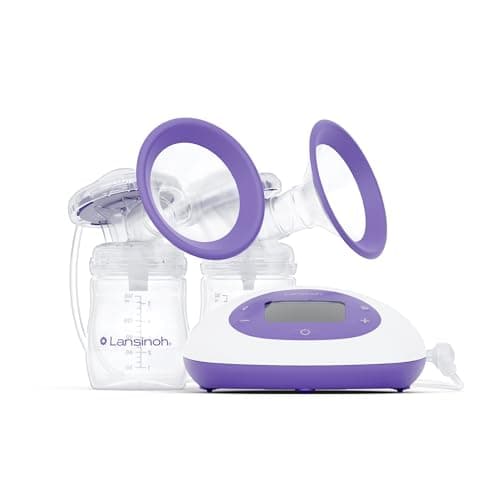
Our pick
Lansinoh Signature Pro
The cheapest double electric we would actually recommend: enough control for occasional pumping, not enough for exclusive pumping.
The free route first, because it is genuinely the best budget advice on this page. Under the Affordable Care Act, most plans have to cover breastfeeding support and supplies, including a pump, at no cost to you — often a mid-range or premium pump you would never buy at retail. The details of which pump, when you can order it and whether you can pay a small upgrade fee are all plan-specific, and we walk through the whole process in the best breast pumps covered by insurance. Buy nothing until you have made that call.
#ad Affiliate link · Price as of November 6, 2026
Who should buy something else
- You will pump a few times a month, for a date night or a bottle at bedtime. Buy the Medela Harmony and skip electrics entirely.
- You want the brand your hospital used, and you can stretch past a hundred dollars. Buy the Medela Pump in Style starter kit.
- Hands-free is the whole point and you can go to the mid-hundreds. Buy the Momcozy V1 Pro, the cheapest hands-free pump we would trust with your supply.
- You are only trying to catch the milk that leaks while you nurse. Buy a Haakaa. It is not a pump, and that is fine.
Quick picks
Our ranking, with the reasoning underneath. Tap any row to jump to the full write-up.
| # | Product | Best for | Score | Price |
|---|---|---|---|---|
| 1 | Lansinoh Signature Pro The cheapest double electric we would actually recommend: enough control for occasional pumping, not enough for exclusive pumping. | Double electric, budget | 7.3 | $95.99View on Amazon #ad Affiliate link · Price as of November 6, 2026 |
| 2 | 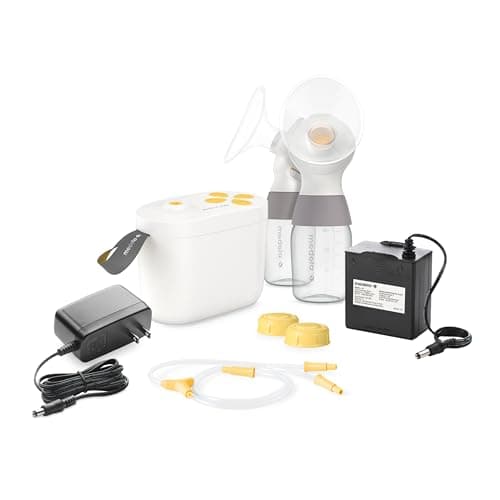 Medela Pump in Style Starter Kit The brand most US hospitals hand you a flange for, sold as a starter kit with bottles. Buy it if you got on well with a Medela on the ward and want the same feel at home. | Hospital-familiar suction | 8.0 | $100.00$124.99(20% off)View on Amazon #ad Affiliate link · Price as of November 6, 2026 |
| 3 | 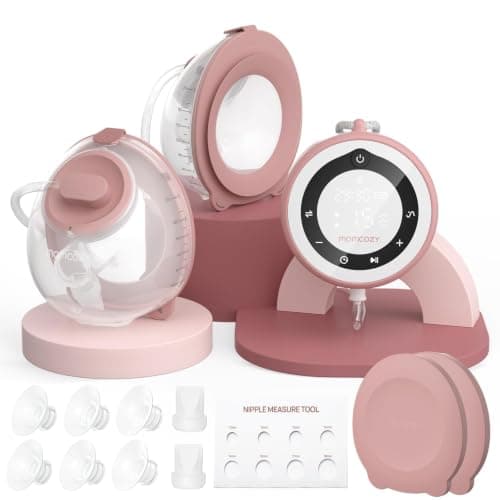 Momcozy V1 Pro Hands-free collection cups with the motor kept off your chest in a pocket unit, so output lands closer to a traditional pump. | Hands-free with output first | 7.6 | $199.99View on Amazon #ad Affiliate link · Price as of November 6, 2026 |
| 4 | 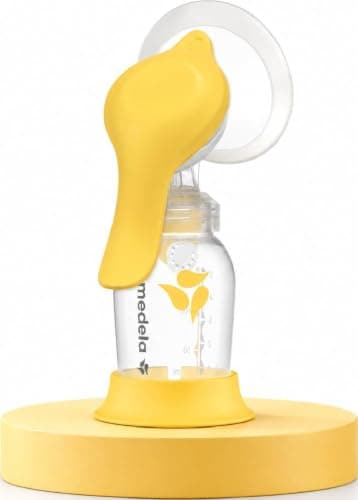 Medela Harmony The default manual pump in the US, and deservedly so: a two-speed handle that lets you stimulate then express without a motor. | Manual, overall | 8.0 | $25.49$28.99(12% off)View on Amazon #ad Affiliate link · Price as of November 6, 2026 |
| 5 | 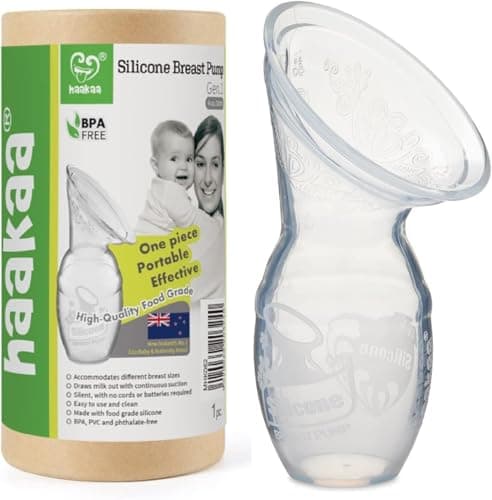 Haakaa Silicone Breast Pump Not really a pump: a one-piece silicone cup that catches the milk your other side leaks during a feed. Buy it as a second device, never your only one. | Catching let-down | 7.2 | $12.94View on Amazon #ad Affiliate link · Price as of November 6, 2026 |
Scores are our own research scores on the rubric published at how we choose. They are not star ratings from customers, and we do not show a price we cannot verify live.
Every pick, in detail
Product photo from the Amazon listing, not a photograph of our own unit.
Lansinoh Signature Pro
Lansinoh
The cheapest double electric we would actually recommend: enough control for occasional pumping, not enough for exclusive pumping.
- Output
- 7
- Comfort
- 7
- Discretion
- 4
- Cleaning
- 8
- Value
- 9
- Type:
- Double electric, closed system
- Standout feature:
- Lowest cost of entry to double pumping
- Cleaning burden:
- Low
- Price tier:
- Budget
What works
- Genuinely affordable double pumping
- Closed system, so milk cannot reach the motor
- Compact and light
What to know first
- Not built for the volume of exclusive pumping
- Noisier than premium pumps
- Fewer flange sizes in the box
#ad Affiliate link · Price as of November 6, 2026
Product photo from the Amazon listing, not a photograph of our own unit.
Medela Pump in Style Starter Kit
Medela
The brand most US hospitals hand you a flange for, sold as a starter kit with bottles. Buy it if you got on well with a Medela on the ward and want the same feel at home.
- Output
- 9
- Comfort
- 7
- Discretion
- 4
- Cleaning
- 8
- Value
- 7
- Type:
- Double electric, corded
- In the box:
- Classic Pump In Style motor with bottles
- Cleaning burden:
- Low to moderate
- Price tier:
- Mid-range
What works
- Part and flange ecosystem is the most widely stocked in the US
- Familiar suction feel if you used a Medela in hospital
- Well supported by insurance providers and DME suppliers
What to know first
- Reported as louder and heavier than Spectra's pumps
- Fewer independent controls than the Spectra S-series
- Corded, so this is not the one to walk around with
#ad Affiliate link · Price as of November 6, 2026
Product photo from the Amazon listing, not a photograph of our own unit.
Momcozy V1 Pro
Momcozy
Hands-free collection cups with the motor kept off your chest in a pocket unit, so output lands closer to a traditional pump.
- Output
- 8
- Comfort
- 7
- Discretion
- 6
- Cleaning
- 7
- Value
- 8
- Type:
- Hands-free cups with a separate pocket motor
- Standout feature:
- Motor off the body, with see-through cups
- Cleaning burden:
- Moderate
- Price tier:
- Mid-range
What works
- Separating the motor usually means stronger, steadier suction
- Still hands-free while you feed or work
- Cheaper than premium all-in-cup wearables
What to know first
- Not truly cable-free, since there is a unit to carry
- Less discreet than an in-bra cup
- More pieces to keep track of
#ad Affiliate link · Price as of November 6, 2026
Product photo from the Amazon listing, not a photograph of our own unit.
Medela Harmony
Medela
The default manual pump in the US, and deservedly so: a two-speed handle that lets you stimulate then express without a motor.
- Output
- 6
- Comfort
- 8
- Discretion
- 8
- Cleaning
- 9
- Value
- 10
- Type:
- Manual, single
- Standout feature:
- Two-phase handle action
- Cleaning burden:
- Low
- Price tier:
- Budget
What works
- The best-selling manual pump in the US, so parts are everywhere
- Angled shield fits more bodies comfortably than a flat flange
- Nothing to charge and nothing to break
What to know first
- One breast at a time, and your hand does the work
- Not a realistic tool for exclusive pumping
- Hand fatigue on long sessions
#ad Affiliate link · Price as of November 6, 2026
Product photo from the Amazon listing, not a photograph of our own unit.
Haakaa Silicone Breast Pump
Haakaa
Not really a pump: a one-piece silicone cup that catches the milk your other side leaks during a feed. Buy it as a second device, never your only one.
- Output
- 4
- Comfort
- 8
- Discretion
- 9
- Cleaning
- 10
- Value
- 10
- Type:
- One-piece silicone suction cup
- Standout feature:
- Nothing to assemble
- Cleaning burden:
- Very low, one piece
- Price tier:
- Budget
What works
- One piece, so washing takes seconds
- Catches milk that would otherwise soak into a nursing pad
- Cheap enough to own two
What to know first
- Suction is passive, so it cannot replace a real pump
- Tips over easily when full
- No suction control at all
#ad Affiliate link · Price as of November 6, 2026
What we ranked on, and why
"Budget" is the only category in this niche where the ranking criteria have to start with a question about you rather than about the product. A twenty-dollar silicone cup and a ninety-dollar double electric are both honestly cheap, and only one of them is the right answer for any given parent. So here is what we weighted, in order.
1. Does it do the job you are buying it for at all? This is the criterion that disqualifies most cheap pumps. A pump that cannot empty a breast reliably is not a bargain at any price — it is a device that will cost you supply, and supply is the one thing you cannot buy back later. Every pick below is here because it does a specific job properly, not because it is inexpensive.
2. Closed system, or not. A closed system puts a barrier between the milk path and the motor, so milk and moisture cannot get into the tubing or the pump housing. On a cheap pump this matters more, not less, because the cheap end of the market is where open systems still exist. The FDA's guidance on choosing a pump is also explicit that a used or secondhand pump is a hygiene risk unless it is a multi-user model, which is the single most important thing to know before you buy the cheapest thing on a marketplace.
3. How much control you get for the money. Suction level count, separate stimulation and expression phases, and whether you can adjust speed and strength independently. These are the features that let you find a setting that is comfortable AND productive, and they are the first thing the cheapest pumps drop.
4. Parts you can actually replace. Valves and membranes wear out and suction drops off long before the motor dies — see how often to replace breast pump parts. A cheap pump from a brand with no parts ecosystem becomes landfill the first time a duckbill valve splits, which makes it the expensive choice in the end.
5. What the saving costs you, stated plainly. Every pick below has a "what you give up" paragraph, because at this end of the market there is always something. A page that pretends otherwise is selling you something.
What we did not rank on is discretion or wearability. The honest situation there is in the no cheap wearable section below, and it is not good news.
Start with the pump you do not have to buy
This section is first because skipping it is the most expensive mistake in the category. Under US law most insurance plans must cover a breast pump as a preventive benefit, which HealthCare.gov sets out alongside lactation support and counseling. In practice that means a phone call to your plan or a form with a durable medical equipment supplier, and a pump arriving before or just after your due date.
Three things worth knowing before you make that call. The pump your plan offers is usually a double electric in the mid-range or above, so the free option often beats anything on this page outright. Many plans let you pay a modest upgrade fee toward a better model, which turns a budget decision into a cheap one rather than a compromised one. And timing matters — some plans will not ship until after the birth, which is exactly when you least want to be chasing paperwork. The full walkthrough, including what to ask, is in the best breast pumps covered by insurance.
If you are uninsured, between plans, or your plan's offer is a pump you have already tried and disliked, the rest of this page is for you. Also worth reading before you spend: the FDA's page on buying or renting a pump, because renting a hospital-grade pump for one hard month is sometimes cheaper than buying a mediocre one forever — the rental route is in best hospital-grade breast pumps.
Why the Lansinoh Signature Pro wins
The Signature Pro wins this page because it is the cheapest pump here that can be somebody's only pump. Everything below it in price is either single-sided or hand-powered; everything above it costs meaningfully more.
What you get for under a hundred dollars is a genuine double electric: eight adjustable suction levels, three pumping styles, and the two-phase approach every decent pump uses — a fast, shallow rhythm to trigger let-down, then a slower, deeper one to move milk. It is a closed system, so milk cannot reach the motor. It runs on mains power, six AA batteries or a USB power bank, which is unusual at this price and genuinely useful if you are pumping somewhere without an outlet. Its own listing specifies 25mm flanges in the box, two bottles and a carry bag.
The flange note is the important one, and it is why we put the Signature Pro above cheaper no-name double pumps. Fit decides comfort and output more than suction strength does, and 25mm is a size many people actually need rather than the single 24mm shield most kits assume. If 25mm is wrong for you, Lansinoh sells other sizes and third-party inserts fit standard flanges — measure first using our flange sizing guide, because a pump that hurts is a pump you stop using.
What you give up, honestly. This is not a pump for exclusive pumping. The motor is built for occasional and regular use, not for eight sessions a day for a year, and people who pump exclusively report wanting more from it within a few months. It is noisier than premium pumps, which matters if you pump next to a sleeping baby — see the quietest breast pumps. It is corded or battery-powered rather than hands-free, so you sit still for twenty minutes. And Lansinoh's parts network, while real, is smaller than Medela's. If you know you will be pumping every day for months, the honest advice is to spend up to a Spectra instead — the reasons are in best breast pumps for exclusive pumping.
Medela Pump in Style: the cheapest pump from the hospital brand
If you used a Medela on the ward, got on with it, and want that same feel at home, the Pump in Style starter kit is the cheapest way to get it. It costs more than the Lansinoh but stays in the low three figures, which is still the budget end of double electrics.
The real argument for it is not the motor, it is the ecosystem. Medela parts, flanges, valves, membranes and bottles are stocked in more US pharmacies than any other brand, which means a split membrane on a Sunday is a short errand rather than a four-day wait. It is also the pump most insurance providers and DME suppliers list, so if you end up going the insurance route later, your accessories carry over.
What you give up. It is reported as louder and heavier than Spectra's equivalents, it is corded, and it gives you fewer independent controls than the S-series. If you have no Medela history and no part-availability worry, the Lansinoh below it does the same job for less, and a Spectra above it does a better job for more. Compared head to head with the brand it is usually weighed against in Spectra vs Medela.
Momcozy V1 Pro: the cheapest hands-free pump we would trust
This is the pick for the parent whose actual requirement is "hands-free" rather than "cheap", and who has found that those two words do not currently coexist. The V1 Pro is the least you can spend on a hands-free pump without gambling with your supply, and it lands in the mid-hundreds rather than the high ones.
It works by splitting the design: the collection cups sit in your bra, and the motor goes in a pocket or a bag. That is why it outperforms similarly-priced all-in-cup wearables — a motor that does not have to fit inside a bra cup can be bigger. Its listing specifies suction up to 300mmHg, three rhythms, fifteen adjustable levels, a 2300mAh battery rated for eight to nine sessions per charge, cups of about 120g each, 48dB operation, a 102-degree angled tunnel, multiple insert sizes and only three milk-contact parts to wash.
That last number is the one we would buy it for. Three milk-contact parts is genuinely few for a hands-free pump, and washing is the chore that decides whether you keep using a pump at six weeks — how to clean breast pump parts explains why the CDC's routine takes longer than you think.
What you give up. It is not cable-free: there is a unit to carry and a tube to the cups, so it is less discreet than an in-bra cup under a fitted top. The cups are visible under clothing. And it is still two to three times the price of the Lansinoh, which is why it sits third on a budget page rather than first. If hands-free is non-negotiable, compare the field properly in the best wearable breast pumps and in eufy vs Momcozy before you decide.
Medela Harmony: the cheapest pump that genuinely works
For a lot of parents this is the correct answer and the electric section above is a distraction. If you need a bottle so somebody else can do a feed, or you are going out for an evening, or you want a few ounces in the freezer, a manual pump does that for about the price of a takeout dinner.
The Harmony is the US best-seller in manual pumps for sound reasons. Its handle switches between a stimulation action and an expression action, which is the same two-phase idea the electrics use, done with your hand. The PersonalFit Flex shield has a soft oval rim that rotates, which fits more bodies comfortably than a flat funnel. It has few parts, they are dishwasher safe, and there is nothing to charge or break. Its listing specifies a 24mm shield and a 5oz bottle in the box.
What you give up. One breast at a time, and your hand does the work, so a full session takes real effort and hand fatigue is a genuine limit. It is not a realistic tool for exclusive pumping or for a return to full-time work. If you want a manual pump but with two flange sizes in the box, the manual pump ranking explains why the Lansinoh manual runs it close for less money.
Haakaa: the cheapest thing here, and not a pump
We include the Haakaa because it is what a lot of people are actually looking for when they search for a cheap pump, and because being honest about what it is saves money. It is a one-piece silicone cup that suctions onto one breast and passively collects what would otherwise soak into a nursing pad while your baby feeds on the other side. Its listing specifies 100% food-grade silicone, BPA, PVC and phthalate free, and a 4oz capacity.
At this price it is close to an impulse buy, there is one piece to wash, and it is the best possible answer to "I am leaking anyway, can I keep it?" Two of them cost less than one manual pump.
What you give up. Everything a pump does. Suction is passive and cannot be adjusted, so it cannot empty a breast on demand, it cannot build supply, and it will not get you through a day at work. It tips over when full. Buy it as a second device, never as your only one — breast pump vs Haakaa is the full version of that argument.
The bracket where cheap does not exist yet
Worth saying plainly, because the search results for "cheap wearable breast pump" are full of pages that will not say it: there is currently no genuinely budget in-bra wearable we would recommend as somebody's only pump. The cheapest wearables we trust sit in the mid-hundreds, and the ones priced near a manual pump are the ones whose reviews fill up with complaints about weak suction and lost supply.
That is a market fact, not snobbery. A wearable has to fit a motor, a battery and a milk collector inside a bra cup, and doing that well is expensive. The cheap ones cut the motor. If your budget is under a hundred dollars and hands-free matters, the honest options are to pump sitting down with the Lansinoh, to use a pumping bra with a conventional pump, or to wait and buy the wearable properly later. We set out what separates a good wearable from a bad one in are wearable breast pumps worth it?
Secondhand, rentals and the marketplace trap
The cheapest listings you will find are used pumps, and this is the one place where we will tell you not to buy. Most retail pumps are single-user devices: the FDA is clear that a pump used by more than one person can carry infectious organisms into the milk path, and that risk does not go away with a wash. Replacing every soft part on a used pump often costs more than the saving, and you cannot replace the motor's wear.
There are two legitimate cheap routes that are not secondhand retail pumps. The first is a multi-user hospital-grade rental, which is designed and certified for exactly this, and is the right call for a short hard period such as a NICU stay or building supply back up. The second is new parts on a loaned motor from a multi-user model, arranged through a lactation service rather than a classified ad. Both are covered in best hospital-grade breast pumps.
The costs a cheap pump does not show you
A pump is not the whole bill, and budgeting for the pump alone is how people end up spending more. Three items to plan for.
Replacement soft parts. Valves, membranes and duckbills are consumables. Suction fades gradually as they wear, which is why so many "my pump stopped working" stories end with a two-dollar part — breast pump not suctioning is the checklist, and how often to replace breast pump parts is the schedule.
The right flange. The single shield in a cheap box fits some people and hurts others. Inserts are inexpensive; carrying on with the wrong size costs you comfort and output. Measure before you order anything: breast pump flange size.
Storage and washing. Bags or bottles for the milk, and some way of cleaning parts that you will tolerate at 3am. You do not need an appliance — do I need a bottle sterilizer? argues that most people do not — but you do need a plan, and storage bags are the cheapest part of the whole setup.
What we left out, and why
No unbranded marketplace pumps. The cheapest double electrics on the big marketplaces are frequently relabeled versions of the same unit with no parts supply, no published suction specification and no support, and we could not verify either their hygiene design or their availability from one week to the next. A pump you cannot buy a valve for is not a bargain.
No in-bra wearable under a hundred dollars, for the reason in the section above.
And no pick we could not confirm was currently purchasable. Every product above was checked against its live retail listing on the day this page was published.
Which one to buy
Call your insurance first. The cheapest good pump is usually the one your plan has to give you.
Then buy the Lansinoh Signature Pro if you need a real double electric with your own money. Eight suction levels, three styles, a closed system and three power options, under a hundred dollars. Not for exclusive pumping.
Buy the Medela Harmony if you will pump occasionally rather than daily. It is the best few dollars in this category and most occasional pumpers need nothing more.
Buy the Medela Pump in Style starter kit if you want the hospital brand's feel and the biggest parts network in the US, and the Momcozy V1 Pro if hands-free is the actual requirement and the mid-hundreds is reachable.
Add a Haakaa to any of the above for the price of a coffee, to catch what you are leaking anyway.
If you are not yet sure you need a pump at all, that question comes first: do I need a breast pump? And if you want the unrestricted ranking rather than the cheap one, start at how to choose a breast pump.
Worth saying plainly
Do not buy a used single-user breast pump. The FDA warns that sharing a pump that is not designed for multiple users can transfer infectious organisms through the milk path; rentals are only safe when the model is a certified multi-user one. Clean pump parts after every use following the CDC's pump hygiene routine, and store expressed milk by the CDC's storage guidance. Pumping should never hurt — pain usually means the flange is the wrong size, not that you need more suction. We are not clinicians and nothing here is medical advice; talk to a lactation consultant or your provider about supply, pain or a feeding plan.
How we chose
Researched, not hands-on, and every product card says so. Suction levels, pumping styles, power options, battery figures, part counts and what is in each box come from each product's live retail listing, which we also used to confirm that every pick is currently purchasable. Insurance coverage is HealthCare.gov's; the hygiene and secondhand warnings are the FDA's and the FDA's buying-or-renting guidance, with cleaning from the CDC. Independent testing of the wider field comes from BabyGearLab and, for wearables specifically, Consumer Reports, and the manual-pump field from The Bump. On this page capability per dollar is weighted heaviest, with hygiene design and parts availability as hard filters rather than scored criteria. We do not publish star ratings or review counts. Full rubric: how we choose.
Common questions
What is the best budget breast pump?
The Lansinoh Signature Pro, if you need a real double electric and are paying for it yourself. It has eight suction levels, three pumping styles, a closed system and runs on mains, AA batteries or a USB power bank, for under a hundred dollars. If you will only pump occasionally, the Medela Harmony manual costs a fraction of that and is enough.
Can I get a breast pump for free?
Usually, yes, if you are insured in the US. Most plans must cover breastfeeding supplies including a pump as a preventive benefit, per HealthCare.gov. Which model, when it ships and whether you can pay an upgrade fee are all plan-specific. Start with best breast pumps covered by insurance before you buy anything.
Is a cheap breast pump bad for your supply?
A pump that cannot empty the breast properly can reduce supply over time, because supply responds to how completely and how often milk is removed. That is the real risk at the bottom of the market, and it is why we would rather send you to a manual pump that works than a weak electric one. Frequency and fit matter more than suction strength — see best breast pumps for low milk supply.
Should I buy a secondhand breast pump?
No, unless it is a model specifically designed for multiple users. The FDA warns that a single-user pump shared between people can carry infectious organisms in the milk path, and replacing the soft parts does not remove that risk. A certified multi-user rental is the safe cheap route.
Is there a good cheap wearable breast pump?
Not yet, as somebody's only pump. The cheapest hands-free pump we would trust is the Momcozy V1 Pro in the mid-hundreds, and it keeps its motor out of the bra cup to get there. Wearables priced near a manual pump tend to be the ones whose reviews report weak suction. The field is in best wearable breast pumps.
Is a manual pump enough?
For occasional pumping, yes — an evening out, one bottle a day, relieving engorgement, or building a small freezer stash. It is not enough for exclusive pumping or a full-time return to work, because one side at a time by hand does not scale. The ranking is in best manual breast pumps.
What hidden costs come with a cheap pump?
Replacement valves and membranes (consumables, not failures), the correct flange size if the one in the box does not fit you, and somewhere to put the milk. Budget for all three. A cheap pump with the wrong flange and worn valves performs worse than a manual pump that fits.
Sources
- HealthCare.gov — Breastfeeding benefits (pump and lactation coverage)
- FDA — Choosing a Breast Pump
- FDA — Buying and Renting a Breast Pump
- CDC — How to Clean and Sanitize Breast Pumps
- CDC — Breast Milk Storage and Preparation
- BabyGearLab — The Best Breast Pumps, lab tested and ranked
- Consumer Reports — Best Wearable Breast Pumps, tested and reviewed
- The Bump — Best Manual Breast Pumps, tested by moms