Guides
Do I need a bottle sterilizer?
Usually no, and the registry does not need to know that. Here is what the CDC actually asks for, when a machine earns its place, and what to buy if it does.
How this page is funded: if you buy through a link here we may earn an Amazon commission, at no extra cost to you. It never changes which product we put first, and we recommend the cheaper option whenever it is the better one. Full disclosure.
The short answer
Probably not. If you own a dishwasher with a heated drying or sanitizing cycle, the CDC says that needs no separate sanitizing step at all — and if you do not, a pan of boiling water for five minutes is one of the methods the CDC lists and costs nothing. Daily sanitizing is recommended specifically if your baby is under two months old, was born prematurely, or has a weakened immune system. Buy a machine if you fall into one of those groups and have no dishwasher, if you are pumping several times a day and want the drying, or if you simply decide the convenience is worth it — but it is a convenience purchase, not a requirement.
Decide in one table
| Your situation | Do you need one? | What to do instead, or which to buy |
|---|---|---|
| Dishwasher with a heated dry or sanitize cycle | No | Per the CDC that cycle needs no separate sanitizing step. Use a closed-top basket for small parts |
| No dishwasher, healthy full-term baby over 2 months | No | Thorough cleaning after every use is the requirement. Sanitizing is optional at that point |
| No dishwasher, baby under 2 months | Optional — something, not necessarily a machine | A pan of boiling water for 5 minutes is CDC-listed and free, or a cheap microwave box |
| Baby born prematurely or with a weakened immune system | Yes, sanitize daily — ask your pediatrician how long for | An electric sterilize-and-dry unit, for the drying as much as the sterilizing |
| Pumping several times a day | Probably worth it | Buy for the dryer. Wet valves are the actual daily annoyance with pump parts |
| Counter space is the binding constraint | Not an electric one | A microwave box or steam bags, both of which live in a cupboard |
The row that saves the most people the most money is the first one, and it is the one almost nobody knows: a dishwasher cycle with hot water and a heated drying or sanitizing setting is itself a sanitizing method according to the CDC. That is not a workaround or a close-enough — it is in the guidance. The full comparison, including what to do about small parts, is in bottle sterilizer vs dishwasher.
What the CDC actually asks for
Worth quoting rather than paraphrasing, because the packaging on sterilizers implies something much stronger. CDC guidance on cleaning, sanitizing and storing infant feeding items asks you to sanitize feeding items daily "for extra germ removal or if your baby: Is less than 2 months old, Was born prematurely, or Has a weakened immune system".
Three things follow. Cleaning is the requirement — hot soapy water, a dedicated brush, every part, after every single use, for as long as your child uses bottles. Sanitizing is a top-up for babies whose immune systems need the extra margin, and it only works on an already-clean item. And a sterilizer is one way to deliver that top-up, competing with boiling water, a dishwasher cycle, a microwave box and steam bags — all of which are also in the guidance or in the same category of method.
So the honest shape of the question is not "do I need to sanitize" but "which method suits my kitchen". Methods side by side are in how to sterilize baby bottles, frequency is in how often to sterilize bottles, and when you can stop entirely is in when to stop sterilizing baby bottles.
Three cases where it is genuinely worth it
1. You are pumping, several times a day. This is the strongest case and it is not about sterilizing at all — it is the drying. A pump set is six to ten small parts, and a wet valve seals badly, which reads to you as a pump that has lost suction. An electric sterilize-and-dry unit turns a fiddly twenty-minute job into a button. The hardware is covered in best sterilizers for breast pump parts.
2. Your baby is premature or immunocompromised, and you have no dishwasher. Daily sanitizing is recommended here and may continue for a while, so a repeatable one-button routine is worth real money. Ask your pediatrician how long to keep it up rather than assuming a date.
3. You have decided the convenience is worth it, with your eyes open. Entirely legitimate. A nightly cycle that produces dry, sorted, ready bottles removes a chore at the worst time of day. Just buy it knowing it is convenience rather than safety, which also means you should buy on drying and capacity rather than on sterilizing claims.
Three cases where it is a waste
- You have a dishwasher with a sanitize or heated dry cycle. You already own the machine. Add a closed-top basket for nipples and valves and you are done.
- Your baby is healthy, full-term and past two months. You are outside the condition the daily recommendation attaches to. Clean properly and stop worrying about it.
- Counter space is already a fight. An electric sterilizer is a permanent resident of your worktop. A microwave box or a pack of steam bags does the same job and lives in a cupboard — best microwave bottle sterilizers covers that route.
If you are buying one, buy on these
- A real drying stage. Filtered-air drying, not "residual heat". This is the feature that actually changes your day.
- Stated compatibility with what you own. Glass bottles and wearable pump cups are the two things most racks were not designed around. Look for the maker naming them.
- Measured interior height. The specification that causes returns. Measure your tallest bottle upright.
- A small-parts basket with a lid. Without it, nipples and valves move during the cycle and come out nested and wet.
- Sterile storage with the lid closed. It doubles as the clean, dust-protected place the CDC asks you to air-dry items in.
- Easy descaling. Steam units scale up, and a scaled unit stops reaching temperature. One you can descale easily stays effective.
The ranked picks across the whole category are in best bottle sterilizers, and if your bottles are glass, start at best sterilizers for glass bottles instead, because rack geometry decides that one.
The step people skip after buying one
Drying, properly. The CDC asks you to place sanitized items "on a clean, unused dish towel or paper towel in an area protected from dirt and dust" and allow them to air-dry thoroughly before storing. Towel-drying a freshly sanitized bottle undoes the cycle you just paid for, and storing damp parts in a sealed container is worse than leaving dry ones on an open rack.
Which is, neatly, the same reason the drying stage is the thing worth paying for in the first place. If you are going to own a machine, own one that finishes the job.
Worth saying plainly
Clean every feeding item after every use. Per CDC guidance, sanitize daily if your baby is under two months old, was born prematurely, or has a weakened immune system — and in those cases ask your pediatrician how long to continue rather than stopping on a date from the internet. Pump parts have their own CDC hygiene guidance. Only microwave items the manufacturer states are microwave safe, and never warm milk or formula in a microwave. We are not clinicians and nothing here is medical advice.
What we would buy
Now that the decision is made, these are the products we would actually put in the basket, and why.
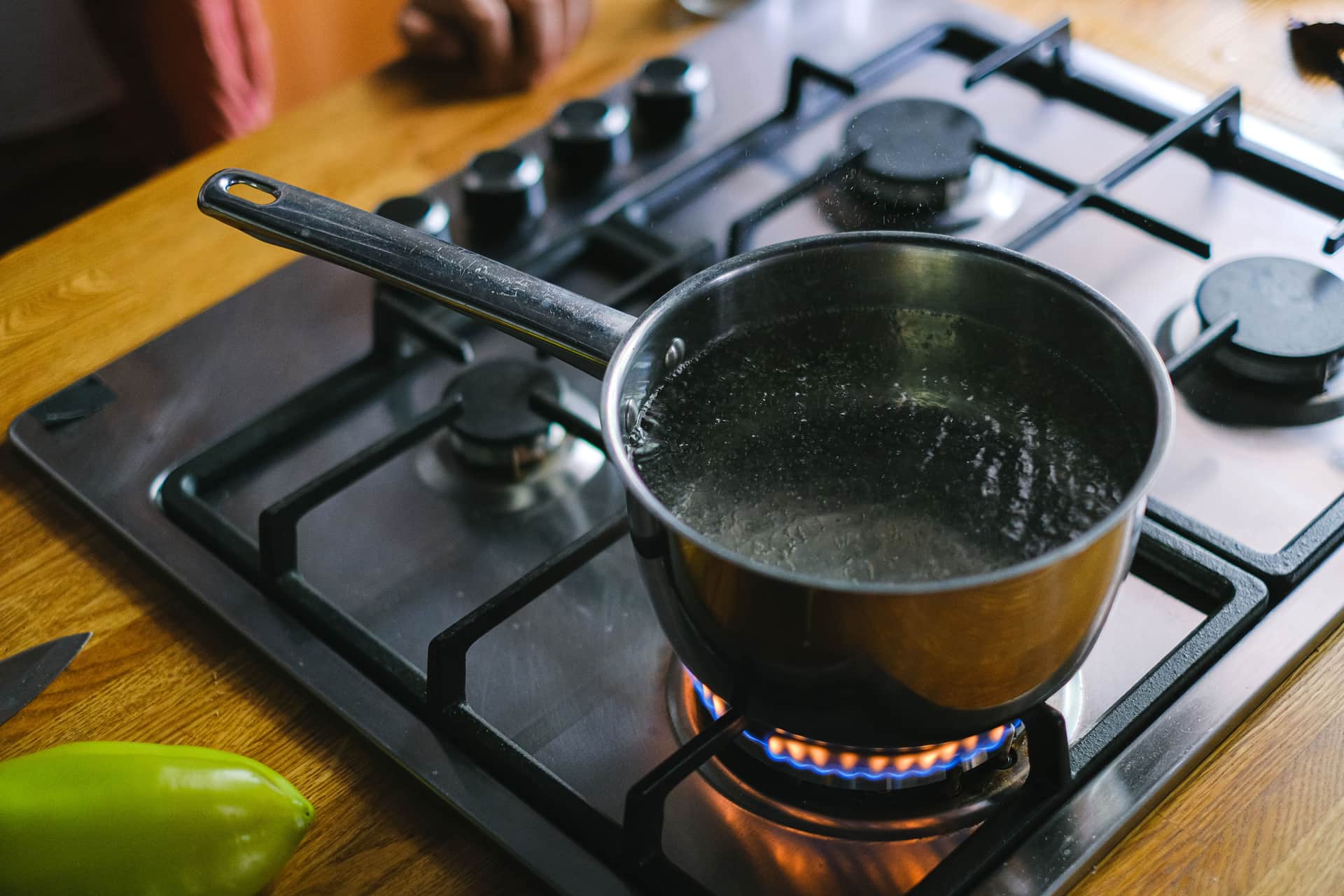
Photo for illustration, not a photograph of our own unit.
Munchkin Steam Guard Microwave Sterilizer
Munchkin
A plastic box, a splash of water and your microwave. It sterilizes properly and costs a fraction of an electric unit, so start here.
- Speed
- 9
- Evenness
- 8
- Capacity
- 6
- Ease of use
- 7
- Value
- 10
- Method:
- Microwave steam
- Capacity:
- Around four bottles
- Extras:
- None
- Price tier:
- Budget
What works
- Cheapest real sterilizing method after a pan of boiling water
- No counter space used between cycles
- Fast, at a couple of minutes per load
What to know first
- No drying, so parts come out wet
- You need a microwave big enough
- Hot and heavy to lift out
#ad Affiliate link · We show no price until we can verify it live
Photo for illustration, not a photograph of our own unit.
Baby Brezza Bottle Sterilizer and Dryer Advanced
Baby Brezza
Sterilizes and dries a full load of bottles plus pump parts in one cycle, which is the only version of this job worth paying for.
- Speed
- 8
- Evenness
- 9
- Capacity
- 10
- Ease of use
- 8
- Value
- 7
- Method:
- Steam sterilize plus filtered dry
- Capacity:
- A day of bottles plus pump parts
- Extras:
- Sterile storage between cycles
- Price tier:
- Premium
What works
- Drying is the part that saves time, because wet parts are the daily annoyance
- Largest capacity in its class, so one cycle covers the day
- Keeps contents sterile between openings
What to know first
- Large, and it lives on the counter
- Premium price
- Needs regular descaling
#ad Affiliate link · We show no price until we can verify it live
Photo for illustration, not a photograph of our own unit.
Grownsy 4-in-1 Sterilizer and Dryer
Grownsy
Large capacity and long sterile storage for noticeably less money than the brand-name units.
- Speed
- 8
- Evenness
- 8
- Capacity
- 9
- Ease of use
- 7
- Value
- 9
- Method:
- Steam sterilize plus dry
- Capacity:
- Eight tall bottles
- Extras:
- Extended sterile-storage mode
- Price tier:
- Mid-range
What works
- Takes tall bottles that other units cannot
- Long sterile-storage window
- Much cheaper than the premium pair
What to know first
- Build quality is a step below the name brands
- Controls are less intuitive
- Support is thinner if something fails
#ad Affiliate link · We show no price until we can verify it live
Common questions
Do I really need a bottle sterilizer?
Usually not. If you have a dishwasher with a heated drying or sanitizing cycle, the CDC says that needs no separate sanitizing step, and a pan of boiling water for five minutes is a listed method that costs nothing. It is a convenience purchase for most families, not a safety requirement.
Do I need a bottle sterilizer if I have a dishwasher?
No, provided your dishwasher runs hot water with a heated drying or sanitizing setting — that cycle is itself a sanitizing method per CDC guidance. Put nipples, rings and valves in a closed-top basket so they cannot move or fall through, and you have covered it.
Do I need a sterilizer if I am breastfeeding?
If you are pumping, the case is stronger than for bottles — not for the sterilizing but for the drying, since a pump set is six to ten small parts and a damp valve seals badly. If you are feeding at the breast with no bottles or pump involved, there is nothing to sanitize.
Is a sterilizer and dryer worth it?
The dryer is the half worth paying for, especially with pump parts. The sterilizing is available free from a pan of water or a dishwasher cycle; getting ten small parts bone dry without handling them is the job that is genuinely annoying to do by hand.
What can I use instead of a bottle sterilizer?
A pan of boiling water for five minutes, which the CDC lists; a dishwasher cycle with a heated dry or sanitize setting, which needs no extra step; a microwave steam box or reusable steam bags, both of which cost little and store in a cupboard. All four are legitimate.
How long do I need to sterilize bottles for?
Daily sanitizing is recommended while your baby is under two months old, and for as long as your pediatrician advises if they were born prematurely or have a weakened immune system. For a healthy full-term baby it becomes optional after that — when to stop sterilizing baby bottles goes through it.