Breast pumps
The best wearable breast pumps under $200
Wearables used to start well above this line. They no longer do - which means the question has changed from whether you can afford one to which compromise you are accepting.
How this page is funded: if you buy through a link here we may earn an Amazon commission, at no extra cost to you. It never changes which product we put first, and we recommend the cheaper option whenever it is the better one. Full disclosure.
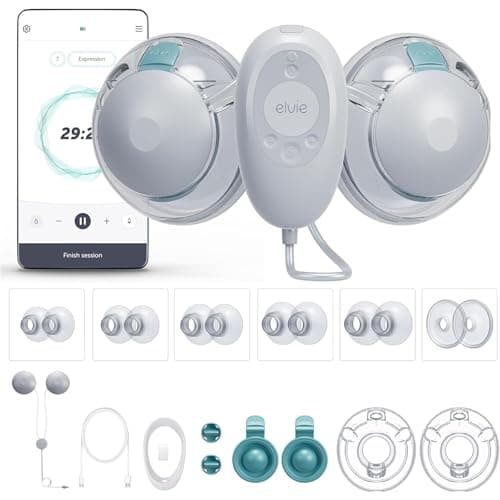
Buy the Elvie Stride 2. Under $200 it is the only pump here that publishes a suction figure at all — Elvie states up to -300 mmHg, which it describes as hospital grade — and, more useful day to day, it ships with six flange sizes plus cushion inserts down to 15mm. That is the widest supplied fit range on any mainstream pump, and fit is what decides whether a wearable works for you. The budget pick is the BabyBuddha wearable, the cheapest here, which gives you thirty strength levels instead of a handful of presets.
Our pick
Elvie Stride 2
The only mainstream pump that ships six flange sizes and three cushion inserts, which is why it suits bodies at both ends of the sizing chart.
One thing to be clear about before you buy it: the Stride 2's cups tether to a small hub you clip to your waistband. It is hands-free, not cordless. If being able to walk around with nothing attached is the whole point for you, buy the Momcozy M9 instead.
#ad Affiliate link · Price as of November 28, 2026
What is actually under the line today
As of November 28, 2026, 4 of the 5 picks below had a live Amazon price under $200. Amazon prices move daily, so treat the band as where these products normally sit rather than a guarantee — every “Check price” button goes to the live listing and carries the date we last verified it.
Who should buy something else
- You want nothing attached to you at all. Buy the Momcozy M9 or the Willow Go. All-in-cup, no hub.
- You routinely fill a cup before the session is finished. Buy the Willow Go for the roomier cup.
- This will be your only pump and you are pumping for every feed. A wearable is the wrong sole pump. Read this first.
- You care more about output than about being hands-free. The same budget buys a much stronger table-top pump.
Quick picks
Our ranking, with the reasoning underneath. Tap any row to jump to the full write-up.
| # | Product | Best for | Score | Price |
|---|---|---|---|---|
| 1 | Elvie Stride 2 The only mainstream pump that ships six flange sizes and three cushion inserts, which is why it suits bodies at both ends of the sizing chart. | Fit solved in the box | 8.5 | $134.99$269.99(50% off)View on Amazon #ad Affiliate link · Price as of November 28, 2026 |
| 2 | 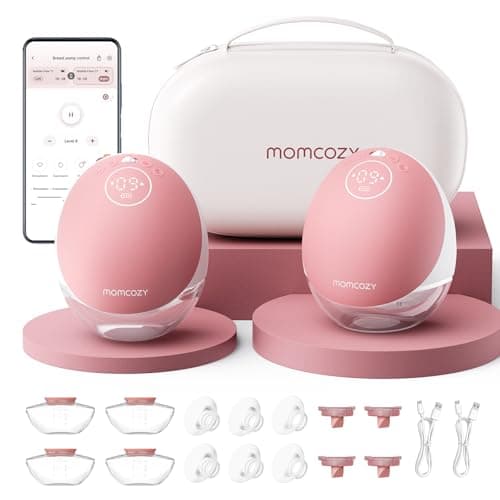 Momcozy M9 A real wearable without premium money, and the easiest one to recommend to somebody pumping for the first time. | Wearable, value | 8.4 | $194.39$269.99(28% off)View on Amazon #ad Affiliate link · Price as of November 28, 2026 |
| 3 | 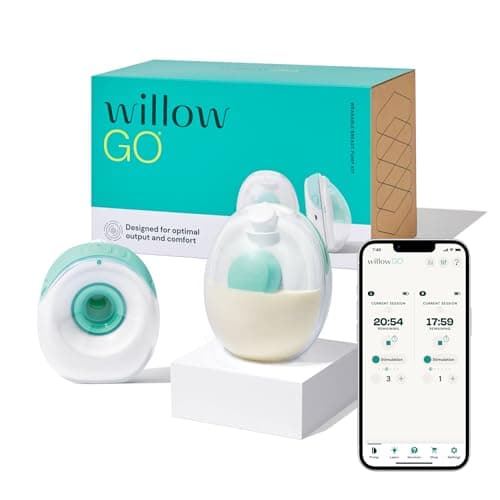 Willow Go A roomier wearable cup, worth a look if you routinely fill smaller wearables before the session is finished. | Bigger single sessions | 7.5 | $179.99$299.99(40% off)View on Amazon #ad Affiliate link · Price as of November 28, 2026 |
| 4 | 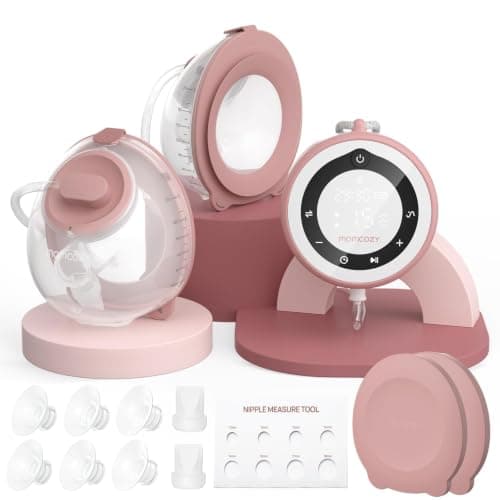 Momcozy V1 Pro Hands-free collection cups with the motor kept off your chest in a pocket unit, so output lands closer to a traditional pump. | Hands-free with output first | 7.6 | $149.99$199.99(25% off)View on Amazon #ad Affiliate link · Price as of November 28, 2026 |
| 5 |  BabyBuddha Wearable Breast Pump Thirty strength settings instead of the usual handful, which is the point of it: you can find the one setting that works for you rather than picking the least bad preset. | Fine control over strength | 7.9 | Check price on Amazon #ad Affiliate link · We show no price until we can verify it live |
Scores are our own research scores on the rubric published at how we choose. They are not star ratings from customers, and we do not show a price we cannot verify live.
Every pick, in detail
Product photo from the Amazon listing, not a photograph of our own unit.
Elvie Stride 2
Elvie
The only mainstream pump that ships six flange sizes and three cushion inserts, which is why it suits bodies at both ends of the sizing chart.
- Output
- 8
- Comfort
- 9
- Discretion
- 8
- Cleaning
- 7
- Value
- 7
- Type:
- Hands-free cups on a small hub motor
- Suction:
- Hospital grade, up to -300 mmHg
- Flange sizes:
- Six options 21-28mm in the box, plus 15/17/19mm inserts
- Price tier:
- Premium
What works
- Six sizes supplied, so you are not ordering parts in week one
- Cushion inserts go down to 15mm, the smallest range on a mainstream pump
- Hospital-grade suction in a cup you can wear under a shirt
What to know first
- Cups are tethered to a hub, so it is hands-free rather than cordless
- Premium money if your plan will not cover it
- More parts per session than a single-piece collection cup
#ad Affiliate link · Price as of November 28, 2026
Product photo from the Amazon listing, not a photograph of our own unit.
Momcozy M9
Momcozy
A real wearable without premium money, and the easiest one to recommend to somebody pumping for the first time.
- Output
- 8
- Comfort
- 8
- Discretion
- 8
- Cleaning
- 7
- Value
- 9
- Type:
- In-bra wearable cup, double
- Standout feature:
- Near-premium suction at a mid-range price
- Cleaning burden:
- Moderate
- Price tier:
- Mid-range
What works
- Reviewers rate its suction close to premium wearables
- Widely stocked, so replacement parts are easy to find
- Simple controls, so there is less to learn in the first sleepless week
What to know first
- Not as quiet as the Elvie Pump
- No warming function
- Fit varies more by body than the premium cups
#ad Affiliate link · Price as of November 28, 2026
Product photo from the Amazon listing, not a photograph of our own unit.
Willow Go
Willow
A roomier wearable cup, worth a look if you routinely fill smaller wearables before the session is finished.
- Output
- 8
- Comfort
- 8
- Discretion
- 6
- Cleaning
- 7
- Value
- 6
- Type:
- In-bra wearable cup, double
- Standout feature:
- Larger cup capacity
- Cleaning burden:
- Moderate
- Price tier:
- Premium
What works
- Bigger capacity means fewer mid-session stops
- Established brand with a long wearable track record
- Comfortable at higher suction levels
What to know first
- Bulkier in the bra than slim cups
- Premium pricing
- Proprietary parts add to running costs
#ad Affiliate link · Price as of November 28, 2026
Product photo from the Amazon listing, not a photograph of our own unit.
Momcozy V1 Pro
Momcozy
Hands-free collection cups with the motor kept off your chest in a pocket unit, so output lands closer to a traditional pump.
- Output
- 8
- Comfort
- 7
- Discretion
- 6
- Cleaning
- 7
- Value
- 8
- Type:
- Hands-free cups with a separate pocket motor
- Standout feature:
- Motor off the body, with see-through cups
- Cleaning burden:
- Moderate
- Price tier:
- Mid-range
What works
- Separating the motor usually means stronger, steadier suction
- Still hands-free while you feed or work
- Cheaper than premium all-in-cup wearables
What to know first
- Not truly cable-free, since there is a unit to carry
- Less discreet than an in-bra cup
- More pieces to keep track of
#ad Affiliate link · Price as of November 28, 2026
Photo for illustration, not a photograph of our own unit.
BabyBuddha Wearable Breast Pump
BabyBuddha
Thirty strength settings instead of the usual handful, which is the point of it: you can find the one setting that works for you rather than picking the least bad preset.
- Output
- 8
- Comfort
- 7
- Discretion
- 8
- Cleaning
- 7
- Value
- 8
- Type:
- In-bra wearable cups, double
- Settings:
- Four modes across 30 comfort levels
- Flange sizes:
- 13, 15, 17, 19 and 21mm inserts supplied
- Capacity:
- 6 oz per cup
- Price tier:
- Mid-range
What works
- Thirty levels, so the jump between settings is small enough to live with
- Cordless and in-bra, so you can move around mid-session
- Five insert sizes in the box, so fit is solved before you order parts
What to know first
- We have no independent lab measurement of this model's suction
- In-bra cups are harder to get a good seal with than a flange on a hub
- Easy to turn up too far; strong is not the same as comfortable
#ad Affiliate link · We show no price until we can verify it live
What changed, and why this page exists now
For most of the time wearable pumps have existed, the good ones started well above $200 and the sub-$200 shelf was filled with pumps we would not have recommended as anybody's only device. That has shifted. Several pumps that genuinely compete — including one with a published hospital-grade suction figure and the best supplied fit range on the market — now sit inside this band at least some of the time.
That changes the question. It is no longer “can I get a usable wearable for $200?” but “which of the three compromises am I accepting?” Because there are three, and every pump on this page makes at least one of them.
A note on the numbers before anything else: pump prices in this category move a lot, and they move most in November. Every price on this page is read live from the listing we link at the moment you load it, and the note above tells you how many of these picks are under $200 today, with the date we checked. We do not write prices into the text, so nothing here can quietly go stale on you.
The three compromises at this price
1. Hands-free is not the same as cordless. This is the distinction the category is worst at explaining and the one buyers are most often surprised by. A fully cordless pump puts the motor, the flange and the collection bottle inside a single cup in your bra — nothing attached, nothing trailing. A hands-free pump puts the cups in your bra but runs a short tube or cable to a separate hub or pocket motor. Both free your hands; only one lets you walk out of the room without unclipping something. The Elvie Stride 2 and the Momcozy V1 Pro are the hands-free kind; the M9, the Willow Go and the BabyBuddha are the cordless kind.
2. Almost nobody publishes a suction figure. One pump on this page states a vacuum number. The rest say “strong suction” and leave it there, which means nobody can honestly rank them against each other on power — and we do not pretend to, here or on our strong-suction roundup. Where a figure is published we quote it; where it is not, the table says so.
3. The motor is in the cup, so it is small. A separate motor in a table-top pump can be as big as it needs to be. A motor inside a bra cup cannot. That is the structural reason wearables generally remove less milk per session than a good corded pump, and it does not go away at any price — the whole trade is laid out in wearable vs traditional breast pump.
| Pump | Shape | Published suction | Fit range supplied | Strength steps |
|---|---|---|---|---|
| Elvie Stride 2 | Cups in the bra, tethered to a small hub | Up to -300 mmHg, stated hospital grade | Six flanges 21-28mm, plus 15/17/19mm inserts | Mode-based |
| Momcozy M9 | Fully cordless, all-in-cup | Not published | Inserts supplied | Mode-based |
| Willow Go | Fully cordless, all-in-cup | Not published | Inserts supplied | Mode-based |
| Momcozy V1 Pro | Cups in the bra, motor in a pocket unit | Not published | Inserts supplied | Mode-based |
| BabyBuddha Wearable | Fully cordless, all-in-cup | No independent measurement of this model | 13, 15, 17, 19 and 21mm inserts | 30 levels across four modes |
What we ranked these on
Fit range first, and it is not close. A wearable has to make a seal inside a bra, held in place by fabric rather than by your hand, which is a harder sealing problem than a flange you press on. Get the size wrong and a wearable does not merely underperform, it hurts and leaks. So the pump that ships with the most sizes solves the most common failure before it happens. Measure before you buy anything: breast pump flange size.
Then how finely you can adjust strength. Not the maximum — the step size. If a pump offers five levels and level three is too weak while level four hurts, you will pump at three and resent it. BabyBuddha's thirty levels across four modes is a real feature for exactly this reason, and it is why a pump with no published vacuum figure still earns a place here.
Then capacity per cup. A cup that fills before your let-down is finished means stopping mid-session to decant, which defeats the point of being hands-free.
Then parts per session. Every wearable loses this comparison to a traditional pump, because each cup comes apart into a flange, a valve or diaphragm, a chamber and a lid, twice. It is worth knowing before you buy rather than after — see the best breast pumps with the fewest parts.
We have not tested any of these pumps and do not claim to. Every figure here is the maker's own published specification.
Elvie Stride 2 — the pick
Six flange sizes from 21 to 28mm in the box, plus cushion inserts at 15, 17 and 19mm. No other mainstream pump supplies that range, and it means that if you are at either end of the sizing chart you are not ordering parts in week one and waiting. Elvie publishes suction up to -300 mmHg and describes it as hospital grade — the only published figure in this band.
That combination is why it also appears on our small-breast picks and our large-breast picks: it is the pump that fits the most bodies without a separate shopping trip.
The honest cons. The cups tether to a hub, so it is hands-free rather than cordless — if you wanted to walk the dog while pumping, this is not it. Strength and rhythm are bundled into modes rather than set on separate dials, which is the thing a Spectra gives you and this does not. And there are more parts per session than a single-piece collection cup.
Momcozy M9 — the cordless one to buy
A genuine all-in-cup wearable: motor, flange and bottle in one unit, nothing tethered. Reviewers rate its suction close to the premium cups, it is widely stocked so replacement parts are easy to find, and the controls are simple enough to learn in a sleepless week — which is not a trivial quality when you are doing this at 3am.
If the entire reason you want a wearable is to move around freely, this is the pick in this band, and it is the one we would recommend to somebody pumping for the first time.
The honest cons. It is not as quiet as the premium wearables, which matters if you pump on calls — see the quietest breast pumps. There is no warming function. And fit varies more by body than the premium cups, which is a real risk when the pump does not ship with six sizes.
Willow Go — for bigger sessions
A roomier cup than most wearables, from a brand with one of the longest track records in the category. Worth a look specifically if you routinely fill smaller wearables before the session is finished — the time lost to stopping, decanting and re-seating a cup adds up fast, and a bigger cup removes it.
It is comfortable at higher suction levels, which is not something every cordless cup manages.
The honest cons. Bulkier in the bra than slim cups, so it is more visible under a fitted top. The parts are proprietary, which adds to running costs over a year. And like the rest of this band apart from the Elvie, Willow publishes no vacuum figure.
Momcozy V1 Pro — output closer to a real pump
The compromise in the other direction: the collection cups sit in your bra but the motor lives in a separate pocket unit. Taking the motor off your chest usually means stronger, steadier suction than an all-in-cup design can manage, because the motor is not constrained by having to fit inside a bra.
If output is the thing you are least willing to give up but you still want your hands, this is the shape of answer that makes sense.
The honest cons. It is not truly cable-free — there is a unit to carry and a cable to manage, so it is less discreet than an in-bra cup. There are more pieces to keep track of. And no vacuum figure is published, so the output advantage is reported rather than measured.
BabyBuddha — the budget pick
The cheapest pump on this page, and it earns its place on control rather than on power: four modes across thirty comfort levels, which is by far the finest strength adjustment here. The gap between one setting and the next is small enough to actually live with, which is the usual complaint about cheap wearables. It also ships with five insert sizes — 13, 15, 17, 19 and 21mm — so fit is largely solved before you order anything, and each cup holds 6oz.
The honest cons. We have no independent lab measurement of this model's suction and we are not going to imply one. In-bra cups are harder to seal properly than a flange on a hub, and thirty levels makes it easy to turn it up too far — strong is not the same as comfortable, and pumping should never hurt.
What the $200 ceiling actually costs you
Three things, and whether they matter depends entirely on how you will use the pump.
Quiet. The genuinely discreet wearables — the ones with noise certification you could use on a video call — sit above this band. If you pump in an open-plan office, that is worth the money and nothing in this band substitutes for it.
Warming. The top-rated wearable in our main ranking adds a warming function that helps let-down, which matters most on night pumps. Nothing here has it.
Peak output. If you are exclusively pumping, the honest advice is that no wearable at any price should be your only pump, and that goes double in this band. Buy a good corded pump as the workhorse and a wearable as the second device — which, at these prices, is now a realistic plan rather than an extravagance. Our full ranking of the category is the best wearable breast pumps.
One thing the ceiling does not cost you: insurance. Most US plans must cover a pump, and some suppliers will put a wearable toward that benefit with an upgrade fee paid out of pocket. Make the call before you spend anything — HealthCare.gov has the basics and the pumps insurance usually covers has the models.
Three things to do before you click buy
- Measure your nipple diameter and buy for that. Not for the flange in the box. This is the single most common reason a wearable disappoints, and it is free to get right: breast pump flange size.
- Decide whether you need cordless or hands-free. They are different products at the same price, and the listings blur them. Walking around needs cordless; typing at a desk only needs hands-free.
- Budget for a second set of parts, and a brush that reaches them. Wearables have more pieces per session than anything else, and one set means the next session waits on a sink. Valves and membranes also need a detail brush rather than a bottle head — the ones that have it are on the best bottle brushes. Replacement intervals are in how often to replace breast pump parts.
Worth saying plainly
Pumping should never hurt. Pain, bruising, cracked skin or a nipple that comes out white means the flange size or the setting is wrong, not that you should push through — stop, change size, and ask a lactation consultant if it continues. Do not treat thirty strength levels as an invitation to use the top one. Personal breast pumps are single-user devices and the FDA advises against buying or borrowing a used one, which matters in a band where secondhand listings are tempting; rent a multi-user hospital-grade pump instead if cost is the obstacle. Wash every milk-contact part after every session per the CDC. We are not clinicians and nothing here is medical advice; a drop in supply is a conversation with a professional rather than a shopping decision.
How we chose
Researched, not hands-on, and labeled that way on every card. The band is verified against the live price layer when the page renders, with the date shown above, rather than written into the copy — so if a pump moves above $200 the note changes instead of the claim going stale. Suction figures, flange ranges and capacities come from the makers' own specification pages, including Elvie and Willow; independent hands-on testing of the category from Consumer Reports, Forbes and BabyGearLab; device guidance from the FDA. Fit range is weighted heaviest, then strength control, then capacity. Rubric: how we choose.
Common questions
What is the best wearable breast pump under $200?
The Elvie Stride 2. It is the only pump in this band with a published suction figure — up to -300 mmHg — and it ships with six flange sizes plus inserts down to 15mm, the widest supplied fit range on any mainstream pump. Buy the Momcozy M9 instead if you want fully cordless cups with nothing tethered.
Are cheap wearable breast pumps any good?
In this band, yes, with a caveat: they are good second pumps. The structural limit is that a motor inside a bra cup cannot be as strong as a separate one, so if you are pumping for every feed you want a corded pump as the workhorse and a wearable alongside it.
What is the difference between a cordless and a hands-free pump?
A cordless pump puts the motor, flange and bottle inside one cup in your bra, with nothing attached. A hands-free pump keeps the cups in your bra but runs a tube or cable to a separate hub. Both free your hands; only cordless lets you walk away.
Can a wearable pump be my only pump?
For occasional or combination pumping, yes. For exclusive pumping, we would not recommend it at any price — see the best pumps for exclusive pumping.
Will insurance cover a wearable pump?
Sometimes, often with an upgrade fee paid out of pocket, and it varies by plan and supplier. Call before you buy — the covered models are on the pumps insurance usually covers.
Are the prices on this page current?
Yes. Every price comes from the Amazon listing we link, is refreshed daily and carries the date it was checked. Where we cannot verify a price we show no number at all rather than an old one — and this category discounts heavily in November, so check the date above.
Sources
- Elvie — Elvie Stride 2 product specification
- Willow — Willow Go pump kit specification
- Consumer Reports — Best Wearable Breast Pumps, tested and reviewed
- Forbes Vetted — The Best Wearable Breast Pumps, after testing over a dozen
- BabyGearLab — BabyBuddha breast pump review, with measured suction
- FDA — Choosing a Breast Pump
- FDA — Buying and Renting a Breast Pump
- HealthCare.gov — Breastfeeding benefits (pump and lactation coverage)
- CDC — How to Clean and Sanitize Breast Pumps