Warmers & sterilizers
The best baby bottle brushes in 2026
The cheapest thing you will buy for feeding, and the one the CDC is most specific about. It has to be a brush used only for feeding items, and it has to reach the bottom of the bottle.
How this page is funded: if you buy through a link here we may earn an Amazon commission, at no extra cost to you. It never changes which product we put first, and we recommend the cheaper option whenever it is the better one. Full disclosure.
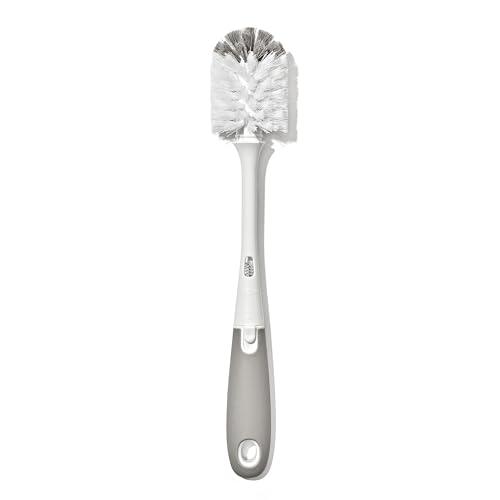
Buy the OXO Tot Baby Bottle Brush with Nipple Cleaner. It is the only brush here that solves both halves of the job in one tool: two bristle types on the same head — soft for the sides, firm for the scrubbing — on a bendable neck that reaches the shoulder of a bottle where residue actually hides, plus a detail brush built into the handle for nipples, valves and the small pump parts everything else leaves you to deal with separately. The budget pick is the Munchkin Bristle Bottle Brush, the cheapest brush we rank, which adds the one thing the OXO lacks: a suction-cup base that stands it upright to drain.
Our pick
OXO Tot Baby Bottle Brush with Nipple Cleaner
Two bristle types on one head — soft for the sides, firm for the scrubbing — on a bendable neck, with a detail brush built into the handle for nipples, valves and small parts.
Whichever you buy, it has to be a brush you use for nothing else. The CDC asks for a brush used only for infant feeding items, washed in a basin used only for feeding items — not the one that has been round a frying pan.
#ad Affiliate link · Price as of November 28, 2026
Who should buy something else
- You are washing pump parts, straws and sippy spouts too. Buy the Dr. Brown's silicone set. The straw brush is the piece nothing else has.
- Your bottles are glass and you want nothing abrasive near them. Buy the Munchkin Sponge set: a sponge head, stated for glass.
- You are tired of rebuying a brush every few months. Buy the OXO stainless brush and replace only the head.
- You want to stop hand-washing bottles entirely. That is a machine, not a brush.
Quick picks
Our ranking, with the reasoning underneath. Tap any row to jump to the full write-up.
| # | Product | Best for | Score | Price |
|---|---|---|---|---|
| 1 | OXO Tot Baby Bottle Brush with Nipple Cleaner Two bristle types on one head — soft for the sides, firm for the scrubbing — on a bendable neck, with a detail brush built into the handle for nipples, valves and small parts. | Bottle brushes, overall | 8.6 | $7.99$8.99(11% off)View on Amazon #ad Affiliate link · Price as of November 28, 2026 |
| 2 | 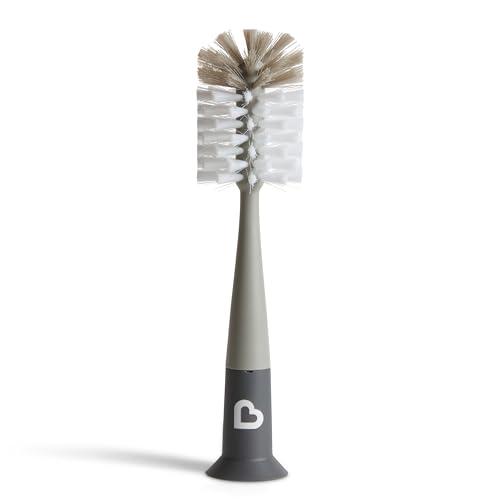 Munchkin Bristle Bottle Brush A flexible-neck brush that stands on its own suction-cup base, with soft nylon bristles the maker says are scratch-free and cut down splash-back. | Bottle brushes, budget | 8.1 | $5.78View on Amazon #ad Affiliate link · Price as of November 28, 2026 |
| 3 | 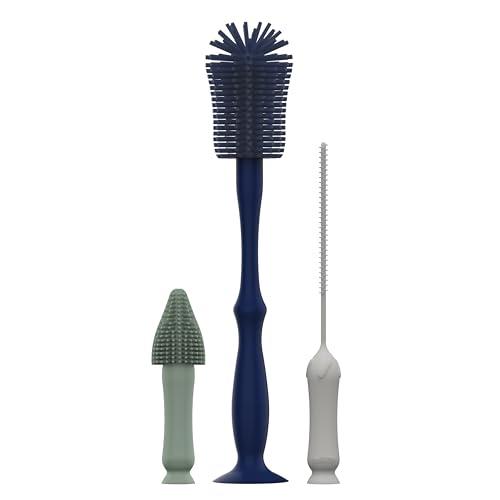 Dr. Brown's Silicone Cleaning Brush Set Three brushes rather than one — a long-handled bottle brush, a shaped nipple and spout brush, and a thin straw brush — which is what the fiddly parts of a pumping kit actually need. | Pump parts, straws and spouts | 8.0 | $12.97$14.99(13% off)View on Amazon #ad Affiliate link · Price as of November 28, 2026 |
| 4 | 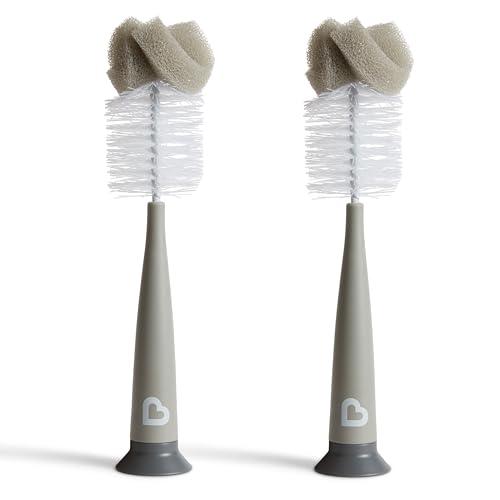 Munchkin Sponge Baby Bottle Brush Set A sponge tip instead of bristles, with a rubber nipple brush built into the same tool. The gentler option if your bottles are glass and you want nothing abrasive near them. | Glass bottles | 7.8 | $5.52$6.49(15% off)View on Amazon #ad Affiliate link · Price as of November 28, 2026 |
| 5 | 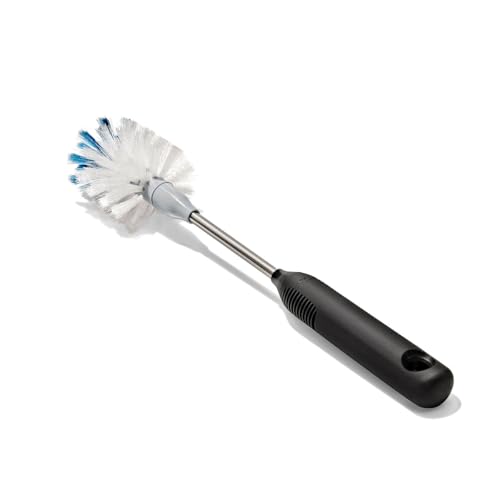 OXO Good Grips Stainless Steel Bottle Brush with Replaceable Head A stainless handle with twist-off replaceable nylon heads, so the part that wears out is the only part you rebuy. The one brush here you are not throwing away every few months. | Replacing the head, not the brush | 7.6 | $13.99$21.56(35% off)View on Amazon #ad Affiliate link · Price as of November 28, 2026 |
Scores are our own research scores on the rubric published at how we choose. They are not star ratings from customers, and we do not show a price we cannot verify live.
Every pick, in detail
Product photo from the Amazon listing, not a photograph of our own unit.
OXO Tot Baby Bottle Brush with Nipple Cleaner
OXO Tot
Two bristle types on one head — soft for the sides, firm for the scrubbing — on a bendable neck, with a detail brush built into the handle for nipples, valves and small parts.
- Reach
- 9
- Scrubbing
- 9
- Small parts
- 9
- Storage
- 6
- Value
- 9
- Bristles:
- Soft and firm on the same head
- Neck:
- Bendable, to reach deep into odd shapes
- Small parts:
- Built-in detail brush for nipples and valves
- Dishwasher:
- Stated dishwasher safe
- Price tier:
- Budget
What works
- The dual-bristle head is the one design here that handles narrow and wide bottles equally
- A bendable neck gets into the shoulder of a bottle, which is where residue actually hides
- The detail brush is part of the handle, so it is not a second thing to lose
What to know first
- No stand, so it lives wet on a counter or in a drawer unless you buy one
- Firm bristles need a light touch on soft silicone bottles
- Bristle brushes trap milk and need replacing more often than people expect
#ad Affiliate link · Price as of November 28, 2026
Product photo from the Amazon listing, not a photograph of our own unit.
Munchkin Bristle Bottle Brush
Munchkin
A flexible-neck brush that stands on its own suction-cup base, with soft nylon bristles the maker says are scratch-free and cut down splash-back.
- Reach
- 8
- Scrubbing
- 7
- Small parts
- 6
- Storage
- 9
- Value
- 10
- Bristles:
- Soft nylon, stated scratch-free
- Neck:
- Flexible, to reach the corners of any bottle shape
- Storage:
- Standing suction-cup base
- Handle:
- Textured easy-grip, for wet hands
- Price tier:
- Budget
What works
- The suction base keeps it upright and draining instead of lying in a wet sink
- Scratch-free bristles, so it is safe on glass and on coated bottles
- The cheapest brush we rank, and sold nearly everywhere
What to know first
- One bristle type, so there is no firm option for dried-on formula
- The suction cup gives up on textured or uneven counters
- No separate detail brush for valves and membranes
#ad Affiliate link · Price as of November 28, 2026
Product photo from the Amazon listing, not a photograph of our own unit.
Dr. Brown's Silicone Cleaning Brush Set
Dr. Brown's
Three brushes rather than one — a long-handled bottle brush, a shaped nipple and spout brush, and a thin straw brush — which is what the fiddly parts of a pumping kit actually need.
- Reach
- 9
- Scrubbing
- 6
- Small parts
- 10
- Storage
- 6
- Value
- 7
- In the set:
- Bottle brush, spout brush, straw brush
- Material:
- Silicone
- Bottle brush:
- Long-handled, reaches the full depth of a bottle
- Straw brush:
- Long and thin, for straws and crevices
- Price tier:
- Mid-range
What works
- The straw brush is the only thing here that cleans a sippy straw or a narrow pump tube properly
- Silicone rinses cleaner than nylon bristles and does not trap milk the same way
- Covers the whole feeding kit rather than just the bottles
What to know first
- Silicone scrubs more gently than firm nylon on dried-on residue
- Three items to store rather than one
- Costs more than a single brush that does most of the job
#ad Affiliate link · Price as of November 28, 2026
Product photo from the Amazon listing, not a photograph of our own unit.
Munchkin Sponge Baby Bottle Brush Set
Munchkin
A sponge tip instead of bristles, with a rubber nipple brush built into the same tool. The gentler option if your bottles are glass and you want nothing abrasive near them.
- Reach
- 7
- Scrubbing
- 6
- Small parts
- 8
- Storage
- 9
- Value
- 9
- Head:
- Sponge tip with nylon bristles
- Small parts:
- Built-in rubber nipple brush
- Stated for:
- Standard and angled glass or plastic bottles
- Storage:
- Base stands upright, off the counter, to air out
- Price tier:
- Budget
What works
- A sponge head covers more surface per pass than bristles, which suits wide-neck bottles
- Scratch-free and explicitly stated for glass as well as plastic
- Stands upright between uses, which is how a wet brush should be stored
What to know first
- Sponges hold water and need replacing sooner than bristles
- Less effective than firm bristles on dried-on formula
- The rubber nipple brush is small for a wide-neck nipple
#ad Affiliate link · Price as of November 28, 2026
Product photo from the Amazon listing, not a photograph of our own unit.
OXO Good Grips Stainless Steel Bottle Brush with Replaceable Head
OXO
A stainless handle with twist-off replaceable nylon heads, so the part that wears out is the only part you rebuy. The one brush here you are not throwing away every few months.
- Reach
- 9
- Scrubbing
- 9
- Small parts
- 3
- Storage
- 7
- Value
- 7
- Head:
- Replaceable, twist-off and twist-on
- Neck:
- Long stainless neck that flexes
- Bristles:
- Stiff upper bristles, softer side bristles
- Not baby-specific:
- A general bottle brush; it has no nipple cleaner
- Price tier:
- Mid-range
What works
- Replaceable heads mean a worn brush costs a refill rather than a new tool
- A stainless neck does not soften or bend out of shape the way plastic does
- Long enough for tall bottles, pitchers and pump bottles alike
What to know first
- No nipple or detail brush, so you still need something for the small parts
- Not sold as a baby product, so nothing about it is sized for nipples
- The highest up-front price here, and refills are an ongoing cost
#ad Affiliate link · Price as of November 28, 2026
Why this cannot be your normal washing-up brush
Of everything on this site, the bottle brush is the item official guidance is most specific about, and it is the item most people improvise. The CDC's guidance on cleaning infant feeding items asks for three separate things: wash in a basin used only for feeding items, scrub with a brush used only for feeding items, and rinse under fresh running water rather than in the basin the items were washed in.
The reasoning is mundane rather than alarming. A kitchen sponge that has been round a chopping board and a frying pan is the single dirtiest object in most homes, and a bottle is a sealed container of milk that a newborn drinks from. Keeping one cheap brush out of that rotation is the easiest hygiene win in the whole feeding setup, and it costs less than a pack of bottles.
The second reason is physical. A bottle is a deep, narrow cylinder with a closed end and a shoulder where the body narrows into the neck. A flat dish sponge cannot reach the shoulder, and a stubby handle cannot reach the bottom of a 9oz bottle without putting your knuckles in the water. That is what the long handle and the bendable neck on these brushes are for — not comfort, reach.
What we ranked these on
1. Reach, into a shape that fights you. The test that matters is whether the head makes full contact with the bottom corner of the bottle while the handle is still outside it. A bendable or flexible neck does this; a rigid stick does it only in a straight-sided bottle. This weighs heaviest because a brush that cannot reach the residue is not cleaning, it is rinsing.
2. What the bristles are, and what they will scratch. Firm nylon shifts dried-on formula; soft nylon and sponge heads are kinder to glass and to coated or printed bottles. The best answer is both on one head, which is the OXO Tot's whole design. Where a maker states “scratch-free”, we have quoted them rather than tested it — which matters if your bottles are glass.
3. What it does about the small parts. This is the criterion buyers discover late. A bottle is the easy bit; the nipple, the valve, the membrane and the vent insert are where milk actually hides, and they are too small for a bottle head. A brush with an integrated detail or nipple cleaner solves that in one tool. A brush without one means a second purchase you have not budgeted for — relevant to anyone washing a vented anti-colic bottle, which has five parts rather than three.
4. How it dries between uses. A brush is a wet object that sits around for hours. One that stands upright on a base drains and airs; one that lies head-down in a sink stays damp, and a permanently damp brush is the thing you are trying to keep away from the bottles. A suction-cup base or a stand is worth more than it looks on a spec sheet.
5. Running cost. Brushes are consumables. Over a year of feeding you will buy several, which makes a replaceable-head design a genuinely different proposition from a cheap brush you throw away.
We have not tested any of these and do not claim to. Every description below is the maker's own stated design, taken from the live listing on 19 November 2026.
| Brush | Head | Neck | Small parts | Stands up? |
|---|---|---|---|---|
| OXO Tot Bottle Brush | Soft and firm bristles on one head | Bendable | Detail brush built into the handle | No stand |
| Munchkin Bristle | Soft nylon, stated scratch-free | Flexible | None | Yes, suction-cup base |
| Dr. Brown's Silicone Set | Silicone, three separate brushes | Long handle | Spout brush and straw brush included | No |
| Munchkin Sponge Set | Sponge tip with nylon bristles | Standard | Built-in rubber nipple brush | Yes, base stands it off the counter |
| OXO Good Grips Stainless Steel | Stiff upper, softer side bristles | Long stainless, flexes | None — not a baby-specific brush | No |
OXO Tot Bottle Brush — the one to buy
OXO Tot puts soft and firm bristles on the same head, which removes the choice everyone else makes you make: firm enough for dried formula in the base, soft enough not to drag across the sides of a bottle. The neck bends, so it reaches deep into odd shapes rather than only into straight ones, and the handle is a soft non-slip grip that stays put with soapy hands.
The part that earns it the top spot is the detail brush built into the handle. Nipples, valves and small bottle parts get their own correctly-sized tool, attached to the one you were already holding, which means it does not end up at the back of a drawer the way a separate nipple brush does. OXO states the brush is dishwasher safe, which matters because the brush itself needs cleaning on a schedule.
The honest cons. There is no stand, so it lives wet on a counter or propped in a mug unless you buy something to hold it — the single reason the Munchkin is on this page. Firm bristles want a light touch on soft silicone bottles like a Comotomo. And like every bristle brush, it traps milk at the base of the bristles and needs replacing sooner than people expect.
Munchkin Bristle — the budget pick
The cheapest brush we rank, and it gets the two fundamentals right: a flexible neck that Munchkin says reaches the corners of every bottle shape, and soft nylon bristles it states are scratch-free and designed to cut down splash-back. The textured handle is built for wet hands.
Its real advantage over the OXO is storage. The suction-cup base stands it upright, head in the air, draining and drying between washes instead of lying in a puddle at the bottom of the sink. For a brush, that is not a luxury feature — it is the difference between a tool that stays clean and one that quietly becomes the dirtiest thing on the counter.
The honest cons. One bristle type means no firm option when formula has dried on, so you will be soaking rather than scrubbing. The suction cup only grips smooth surfaces and gives up on textured stone or uneven tile. And there is no detail brush at all, so nipples and valves need something else.
Dr. Brown's Silicone Set — for pump parts and straws
Three brushes rather than one: a long-handled bottle brush, a shaped brush for nipples and sippy spouts, and a long thin straw brush. If you are washing a pumping kit rather than just bottles, that third brush is the one nothing else here has, and it is the only tool that properly cleans a sippy straw or a narrow tube.
Silicone is the other difference. It rinses cleaner than nylon and does not hold milk at the root of the bristles the way a packed nylon head does, which means the brush itself stays fresher between replacements. If you are following the CDC's pump hygiene guidance and washing flanges, valves and membranes after every session, this set is aimed squarely at you — see also how to clean breast pump parts.
The honest cons. Silicone scrubs more gently than firm nylon, so genuinely dried-on residue takes longer. Three items is three things to store and keep track of rather than one. And it costs more than a single brush that handles most of the same work.
Munchkin Sponge Set — for glass bottles
A sponge tip instead of a bristle head, with a rubber nipple brush built into the same tool, and Munchkin states it for standard and angled glass as well as plastic bottles. A sponge covers more surface per pass than bristles, which suits wide-neck bodies, and there is nothing abrasive anywhere near the glass.
It also stands upright on its base to air out, which is the same advantage as the Bristle and the same reason we weighted drying so heavily. It comes as a two-pack, which is sensible for a consumable.
The honest cons. Sponges hold water, and a sponge that stays damp is exactly the failure mode the CDC guidance is trying to avoid — so this is the brush on this page that most needs replacing on a schedule. It is also less effective than firm bristles on dried-on formula, and the rubber nipple brush is small for a wide-neck nipple.
OXO Good Grips Stainless Steel — the one you keep
A stainless handle and neck with twist-off, twist-on replaceable nylon heads. The bristles are dual-function — stiff on the top for corners, softer on the sides — and the neck is long enough for tall bottles, pitchers and pump bottles alike.
It is the only brush here where the part that wears out is the only part you rebuy. Over a year of feeding, that changes the arithmetic: a worn brush costs a refill head rather than a new tool, and the stainless neck does not soften or bend out of shape the way a plastic one does after a few hundred washes.
Be clear about what it is not. This is a general-purpose OXO kitchen brush, not a baby product. It has no nipple cleaner and no detail brush, nothing about it is sized for a valve or a membrane, and you will still need something for the small parts. It also has the highest up-front price on this page, and the refills are an ongoing cost. We are including it because the replaceable head is a genuine answer to a real complaint, not because it is the best bottle brush — it is not.
When to throw a bottle brush away
Nobody tells you this, and it is the part of brush ownership that actually matters. A brush is a consumable, and a tired one is worse than useless because it feels like cleaning while doing less of it. Replace yours when any of these is true.
- The bristles have splayed outward and lost their shape. A splayed head has lost contact pressure, which is the only thing that removes a milk film.
- It smells of anything at all when dry. That is bacteria in the base of the bristles or inside the sponge, and it does not wash out.
- It is discolored or has a slimy feel at the root of the head. Both mean milk fat has built up where you cannot rinse it.
- It has been a couple of months of heavy use. No maker publishes a universal interval, so treat the first three signs as the test and this as the prompt to look.
Between replacements, clean the brush itself: wash it in hot soapy water after use, stand it up to dry rather than leaving it head-down in a sink, and run it through the dishwasher where the maker says that is allowed. Our full washing routine is in how to wash baby bottles, and the drying half — which is where most people lose time — is in how to dry baby bottles and the best bottle drying racks.
A brush, a washer, or a sterilizer?
These three get confused constantly, and they do different jobs in a fixed order.
The brush washes. It is the step that physically removes milk, and nothing replaces it — a sterilizer run on a dirty bottle steams a dirty bottle. Even if you own every machine in this category, you still need a brush for the parts the machine's basket does not hold properly.
A bottle washer washes for you, and it is the most expensive appliance in this category. It earns its place only if you are running a lot of bottles every day — our view on who that actually is sits on the best bottle washers.
A sterilizer kills germs on already-clean items. Whether you still need that step depends on your baby's age and health, and many families can stop earlier than they expect — when to stop sterilizing baby bottles and do I need a bottle sterilizer.
If you are buying from scratch, the sensible order is brush first, drying rack second, and a machine only once you know how many bottles a day you are actually washing.
Worth saying plainly
Use a brush kept only for infant feeding items, and wash in a basin used only for feeding items rather than directly in the sink, per the CDC. Take bottles fully apart before washing — nipple, collar, valve and vent insert all come off, and a vented bottle left assembled does not get clean. Rinse under fresh running water rather than in the wash water. Never widen a nipple hole with a brush or any other tool. Replace a brush that is splayed, discolored, slimy or smells, and stand it up to dry between uses. Washing is not sterilizing; neither a brush nor a drying rack sterilizes anything. We are not clinicians and nothing here is medical advice.
How we chose
Researched, not hands-on, and labeled that way on every card. Every bristle description, material and design claim here is the maker's own, taken from the live Amazon listing for each brush on 19 November 2026, and all five returned an in-stock offer with a price on that date — which is how we check something is genuinely purchasable before featuring it. Where a maker states “scratch-free” or “dishwasher safe” we attribute it to them rather than presenting it as a test result.
Washing and hygiene requirements come from the CDC's page on cleaning feeding items and its pump hygiene guidance; material guidance from the FDA; independent hands-on testing of the adjacent washer category from Mommyhood101. Reach and what a brush does with the small parts carry the most weight here; price carries little, because every brush on this page is inexpensive relative to a year of feeding. Rubric: how we choose.
Common questions
What is the best baby bottle brush?
The OXO Tot Baby Bottle Brush with Nipple Cleaner. It has soft and firm bristles on one head, a bendable neck that reaches the shoulder of a bottle, and a detail brush built into the handle for nipples and valves. The Munchkin Bristle is the budget pick and adds a stand.
Can I use a normal washing-up brush on baby bottles?
You should not. The CDC asks for a brush used only for infant feeding items, washed in a basin used only for feeding items. A shared sponge or brush carries everything else in your kitchen into a sealed container of milk.
How often should you replace a bottle brush?
When the bristles splay, when it discolors or feels slimy at the root of the head, or when it smells of anything while dry — and otherwise every couple of months of heavy use. No maker publishes a universal interval, so the condition of the head is the test.
Which bottle brush is best for glass bottles?
The Munchkin Sponge set, which uses a sponge head and is stated for glass as well as plastic. If you prefer bristles, pick one the maker describes as scratch-free and use the soft side.
Do I still need a bottle brush if I have a sterilizer?
Yes. Sterilizing is not washing — a sterilizer run on a dirty bottle just steams a dirty bottle. The brush does the step that physically removes milk; the machine comes afterwards.
What cleans breast pump valves and membranes?
A detail or straw brush rather than a bottle head. The OXO Tot has one built into the handle, and the Dr. Brown's silicone set includes a spout brush and a straw brush. Full routine in how to clean breast pump parts.
Can bottle brushes go in the dishwasher?
Some state that they can — the OXO Tot does. Check your own, and either way stand the brush up to dry between uses rather than leaving it head-down in a wet sink.