Breast pumps
Spectra S2 Plus vs Motif Luna: which should you take?
Both are corded, closed-system, hospital-strength and usually free through insurance. The decision is parts ecosystem against a lighter pump that tells you what it is doing.
How this page is funded: if you buy through a link here we may earn an Amazon commission, at no extra cost to you. It never changes which product we put first, and we recommend the cheaper option whenever it is the better one. Full disclosure.
The short answer
Take the Spectra S2 Plus. Not because it out-pumps the Luna — it does not, the Luna's ceiling is slightly higher — but because Spectra has the largest replacement-part and flange ecosystem of any pump brand sold in the US, and the single most common reason pumping fails is a flange that does not fit. Take the Motif Luna instead if your DME offers it with the rechargeable battery — a pump under two pounds that you can carry away from an outlet is worth more than a parts catalog, and Motif is the only one of the two that publishes its actual cycle speeds, which matters if you end up power pumping. If both arrive corded, it is Spectra.
Quick picks
Our ranking, with the reasoning underneath. Tap any row to jump to the full write-up.
| # | Product | Best for | Score | Price |
|---|---|---|---|---|
| 1 | 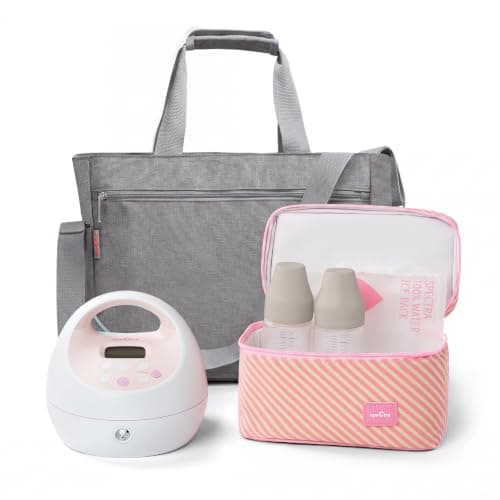 Spectra S2 Plus The same pump as the S1 without the battery. The right choice if you will always pump beside an outlet. | Double electric, value | 8.6 | $219.99View on Amazon #ad Affiliate link · Price as of November 6, 2026 |
| 2 | 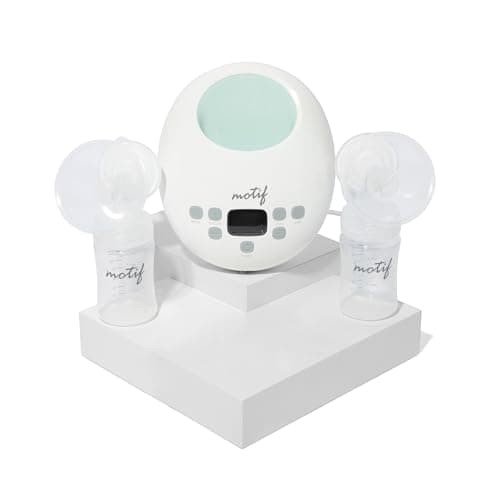 Motif Luna A hospital-strength closed-system pump that weighs under two pounds, is on most insurers' covered list, and accepts flanges from 20mm to 32mm. | Getting one through insurance | 8.4 | $150.00$189.00(21% off)View on Amazon #ad Affiliate link · Price as of November 6, 2026 |
| 3 | 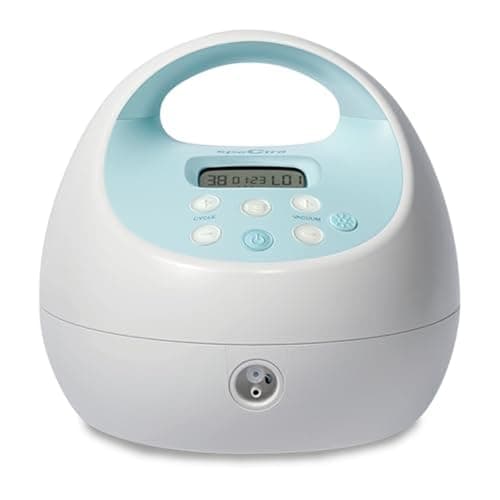 Spectra S1 Plus The one to buy when output is the priority: gentle, quiet, genuinely adjustable, and it runs on a built-in battery so you are not chained to an outlet. | Double electric, overall | 8.9 | $225.99View on Amazon #ad Affiliate link · Price as of November 6, 2026 |
Scores are our own research scores on the rubric published at how we choose. They are not star ratings from customers, and we do not show a price we cannot verify live.
Side by side
| What matters | Spectra S2 Plus | Motif Luna |
|---|---|---|
| Suction ceiling | Hospital strength, up to 270 mmHg | Hospital grade, up to 280 mmHg |
| Closed system | Yes — a sealed barrier between milk and motor | Yes — backflow protection keeps motor and tubing clean |
| Battery | None. The S2 Plus runs from its AC adapter only; the battery sibling is the S1 Plus | Depends which model you buy. Motif sells a corded Luna and a rechargeable one rated 4+ hours |
| Suction levels | Twelve, across massage and expression modes | Twelve, across massage and expression modes |
| Cycle speeds published? | Adjustable, but no published cycles-per-minute ladder | Yes — expression at 30, 34, 38, 42 and 46 CPM; massage at 60, 65, 70, 75 and 80 CPM |
| Flanges in the box | Two 24mm and two 28mm. Spectra's aftermarket range is the largest in the category | 21mm and 24mm shields included |
| Weight | A table-top pump, heavier than the Luna | Under two pounds |
| Warranty | Two years on the motor, 90 days on accessories | Two years on the motor, one year on the internal battery, 90 days on parts |
| Insurance | One of the most widely covered pumps in the US | Frequently covered, and often the DME's own house recommendation |
| Price tier | Mid-range | Mid-range |
Three rows decide this page, and none of them is suction. The first is flanges in the box and after it. The second is whether the model you are offered has a battery, because the answer differs by model within the Luna line and is fixed within the Spectra line. The third is published cycle speeds, which sounds like a spec-sheet detail and turns out to be the one thing that helps when output stalls.
Suction: a difference you will not feel
Spectra states the S2 Plus reaches 270 mmHg; Motif states the Luna reaches 280 mmHg. Both are described by their makers as hospital strength or hospital grade, and both are true closed systems, which is the specification that actually matters for hygiene and resale.
Ten millimeters of mercury between them is not a reason to choose. Almost nobody pumps at the top of the dial anyway — higher suction past the point of comfort reduces output rather than increasing it, because a sore nipple stops letting down. If you are currently pumping at level 10 or 12 and getting little, the problem is virtually never the ceiling; it is fit, timing or frequency, and we work through all three in how many ounces should I pump.
Flanges: the real reason to pick Spectra
Motif includes 21mm and 24mm shields with the Luna; Spectra supplies the S2 Plus with two 24mm and two 28mm. Motif's pairing is the more thoughtful of the two, because 24mm is the default that fits the fewest people and 28mm is a step in the wrong direction for most means a smaller-nipple pumper is not stuck ordering on day three with an engorged breast and a crying baby.
Spectra does something different and, over a year, more useful: it has the deepest third-party parts market of any pump brand on the US shelf. Flanges from 13mm to 36mm, inserts, silicone-rimmed shields, replacement duckbills, backflow protectors and tubing are all available for Spectra from multiple makers at a fraction of first-party prices. If your size turns out to be 17mm, or changes between the first and sixth month — which happens — Spectra is the platform where that costs you a few dollars rather than a new pump. Measure before you order either way: how to measure your flange size.
The honest counterweight: Motif flanges exist in 20, 24, 28 and 32mm, which covers most people, and the Luna accepts standard-thread aftermarket shields. It is a thinner market, not a dead end.
The battery question, and why it is confusing
This is where buyers get caught. Within the Spectra line, the battery is the whole difference between models: the S1 Plus has a rechargeable battery, the S2 Plus does not, and they are otherwise effectively the same pump. So if your DME offers you an S2, you are getting a pump that lives next to an outlet, full stop. That trade-off is the entire subject of Spectra S1 vs S2.
Motif sells the Luna in two forms — a corded model and a rechargeable one Motif rates at over four hours per charge. They carry the same model name, which means you have to ask which one you are being sent. The listing we link on this page is the corded Luna; the battery version is sold direct by Motif and through DMEs. Do not assume a Luna has a battery because a review you read said so.
Worth saying plainly: a battery on a traditional pump is less transformative than it sounds. It frees you from the wall, not from the tubing, the flanges or sitting still. If what you actually want is to pump while walking around or at a desk, neither of these is the answer and you want a wearable — see the best wearable breast pumps and the honest version of that trade in wearable vs traditional.
Published cycle speeds: Motif's quiet advantage
Motif publishes the Luna's actual cycle speeds: expression mode at 30, 34, 38, 42 and 46 cycles per minute, massage mode at 60, 65, 70, 75 and 80. Spectra lets you adjust cycle speed too, but does not publish the ladder in the same numbered form.
That matters in exactly one situation, and it is a common one. When supply stalls, the standard advice is to mimic a newborn's pattern — fast and shallow to trigger a let-down, then slow and strong to move milk — and to run power-pumping blocks. Being able to read the numbers off the screen rather than guess from a vibration makes that repeatable. If you are pumping to build supply rather than to maintain it, this is a real point for the Luna, and it is why we also list it in best pumps for low milk supply.
Weight and where the pump lives
The Luna is under two pounds. The S2 Plus is a table-top unit and heavier. In practice that decides whether the pump stays on one surface or moves with you between the nursery, the kitchen and the couch, which is most of what portability means when you are home all day with a newborn.
Neither is discreet. Both have external tubing and a motor that sits on furniture, and neither goes to an office without a bag and a door that closes. If you are heading back to work, read best breast pumps for working moms before you let a DME pick for you, and what to pack in a pump bag after.
Warranty, and the part nobody reads
Spectra covers the S2 Plus motor for two years and accessories for 90 days. Motif covers the Luna motor for two years, the internal battery for one, and parts for 90 days.
Two things follow. First, the 90-day accessory window on both means the valves, membranes and tubing are consumables you will buy again — which loops straight back to the parts-ecosystem argument, and to how often to replace breast pump parts. Second, a battery with a one-year warranty on a pump you may use for eighteen months is a thing to think about before you pay extra for the rechargeable Luna: a dead battery on a corded-capable pump is an inconvenience, not a brick, but it is still the component most likely to fail first.
Getting either one through insurance
Under the Affordable Care Act, most plans must cover breastfeeding support and supplies, including a pump, though which pump, whether it is rental or purchase, and whether you need a prescription all vary by plan. Both of these pumps sit on most covered lists, which is precisely why they end up compared.
The practical move is to call the DME, not the insurer, and ask two questions: which models are covered at zero cost, and — if a Luna is one of them — whether it is the corded or the rechargeable version. If the covered option is an S2 and you want a battery, ask what the upgrade to an S1 Plus costs out of pocket; it is often small. Our full walk-through is best breast pumps covered by insurance, and the FDA's own guidance on buying or renting a pump is worth five minutes before you sign anything.
Which one to take
Take the Spectra S2 Plus if you will pump beside an outlet and you want the platform with the most forgiving future: every flange size, cheap replacement parts from several makers, and a pump that is easy to resell or hand on. This is the lowest-regret choice for a first-time pumper who does not yet know their own fit.
Take the Motif Luna if the covered version is the rechargeable one, or if you are pumping to build supply and want published cycle speeds to work from. Under two pounds, two shield sizes in the box, a slightly higher suction ceiling and a longer battery warranty than most.
Take the Spectra S1 Plus if you can get it — it is the S2 with the battery, and it removes the only real argument against Spectra here. If your DME lists it at a small upgrade cost, that is the cheapest useful upgrade in this whole category.
Both are mid-range pumps and both are frequently free through insurance, so price should not decide this. If you have not settled on a traditional pump at all yet, start one step back with how to choose a breast pump.
Worth saying plainly
Clean and sanitize pump parts according to the CDC's breast pump hygiene guidance — a closed system protects the motor and tubing, not the parts that touch milk, and those still come apart after every session. Never run suction above what is comfortable, and never use a second-hand open-system pump. If output drops suddenly, check the membranes and the flange fit before you change pumps; persistent low supply, pain or nipple damage is a conversation with a lactation consultant or your doctor, not a purchase. We are not clinicians, and nothing here is medical advice.
How we chose
Researched, not hands-on, and we say so on every card. Suction figures, closed-system design, battery options, cycle speeds, included shield sizes and warranty terms come from the makers' own specification pages — Spectra and Motif Medical. Independent hands-on testing of the wider pump field comes from BabyGearLab. Insurance coverage context is HealthCare.gov's and the FDA's, and hygiene requirements are the CDC's. On this page fit range and parts availability are weighted heaviest, because they are what decides whether a pump still works for you in month six. Full rubric: how we choose.
What we would buy
Now that the decision is made, these are the products we would actually put in the basket, and why.
Product photo from the Amazon listing, not a photograph of our own unit.
Spectra S2 Plus
Spectra
The same pump as the S1 without the battery. The right choice if you will always pump beside an outlet.
- Output
- 10
- Comfort
- 9
- Discretion
- 4
- Cleaning
- 8
- Value
- 9
- Type:
- Double electric, closed system
- Standout feature:
- S1 performance, mains power only
- Cleaning burden:
- Low
- Price tier:
- Mid-range
What works
- Performance is effectively identical to the S1 Plus
- Cheaper, and often the model insurance covers
- Same low-hassle closed system
What to know first
- No battery, so every session is beside a plug
- Same bulk as the S1
- Not discreet enough for an office
#ad Affiliate link · Price as of November 6, 2026
Product photo from the Amazon listing, not a photograph of our own unit.
Motif Luna
Motif Medical
A hospital-strength closed-system pump that weighs under two pounds, is on most insurers' covered list, and accepts flanges from 20mm to 32mm.
- Output
- 9
- Comfort
- 8
- Discretion
- 4
- Cleaning
- 8
- Value
- 9
- Type:
- Traditional double electric, closed system
- Suction:
- Hospital strength, 280 mmHg
- Flange sizes:
- 20, 24, 28 and 32mm, plus any aftermarket size
- Price tier:
- Mid-range
What works
- One of the pumps insurers most often cover outright, which can make it free
- Takes the full 20-32mm flange range, so fit is not a dead end
- Under two pounds, so it moves around the house easily
What to know first
- A table-top pump with tubing, not a hands-free wearable
- Less widely stocked than Medela or Spectra, so listings vary
- You will still want something hands-free for work
#ad Affiliate link · Price as of November 6, 2026
Product photo from the Amazon listing, not a photograph of our own unit.
Spectra S1 Plus
Spectra
The one to buy when output is the priority: gentle, quiet, genuinely adjustable, and it runs on a built-in battery so you are not chained to an outlet.
- Output
- 10
- Comfort
- 9
- Discretion
- 5
- Cleaning
- 8
- Value
- 8
- Type:
- Double electric, closed system
- Standout feature:
- Rechargeable battery and massage mode
- Cleaning burden:
- Low, closed system
- Price tier:
- Premium
What works
- Widely reported to produce more milk in less time than comparable pumps
- Separate cycle and suction controls, which is what beginners end up needing most
- Battery means you can pump anywhere in the house
What to know first
- Heavier than the S2, and far heavier than a wearable
- Tubing and flanges to wash
- You will want a hands-free pumping bra to use it comfortably
#ad Affiliate link · Price as of November 6, 2026
Common questions
Is the Motif Luna better than the Spectra S2?
On paper, marginally: Motif rates the Luna at up to 280 mmHg against Spectra's 270, it weighs under two pounds, it ships with both 21mm and 24mm shields, and it publishes its cycle speeds. In practice the Spectra is the safer first pump, because its replacement-part and flange market is far larger and flange fit is the thing most likely to go wrong.
Does the Spectra S2 Plus have a battery?
No. The S2 Plus runs from its AC adapter only. The battery version is the S1 Plus, which is otherwise effectively the same pump — that is the whole difference, and we go through it in Spectra S1 vs S2.
Does the Motif Luna have a battery?
It depends which Luna. Motif sells a corded model and a rechargeable model it rates at over four hours per charge, under the same name. Ask your DME or check the listing before you assume — the listing linked on this page is the corded one.
Are both of these covered by insurance?
Both sit on most US covered lists, but which models your plan will pay for depends on the plan and the supplier. Call the DME rather than the insurer and ask which models are zero-cost to you. See best breast pumps covered by insurance.
Can I use Spectra flanges on a Motif Luna?
The Luna accepts standard-thread shields, so many aftermarket flanges fit, but do not treat cross-brand compatibility as guaranteed — check the specific flange maker's own fit list for your pump before buying. Spectra's aftermarket range is the larger of the two by a wide margin.
Which one is quieter?
Neither maker publishes a decibel figure we can stand behind, so we will not rank them on noise. Both are motor-and-tubing pumps and both are audible through a door. If quiet is your deciding factor, that is a different shortlist: the quietest breast pumps.
Which should I pick if I am exclusively pumping?
Either will do the work, but weight the decision toward parts: exclusive pumping means six to eight sessions a day and consumables replaced far more often, which favors Spectra's cheaper parts market. Full shortlist and schedule in best pumps for exclusive pumping.
Sources
- Spectra Baby USA — S2 Plus Premier specification
- Motif Medical — Luna double electric breast pump specification
- HealthCare.gov — Breastfeeding benefits (pump and lactation coverage)
- FDA — Buying and Renting a Breast Pump
- CDC — How to Clean and Sanitize Breast Pumps
- BabyGearLab — The Best Breast Pumps, lab tested and ranked