Guides
How to clean a bottle warmer
Tip the water out after every use. That one habit prevents almost everything else on this page, and almost nobody does it.
How this page is funded: if you buy through a link here we may earn an Amazon commission, at no extra cost to you. It never changes which product we put first, and we recommend the cheaper option whenever it is the better one. Full disclosure.
The short answer
After every use, unplug the warmer, tip out the water and wipe the chamber dry. Once a week, wipe the chamber, rim and lid with a cloth and hot soapy water, rinse the cloth and dry everything. Once a month — or sooner if cycles are getting slower — descale it: fill the chamber with equal parts white vinegar and water, leave it to stand for about thirty minutes (or run one heating cycle if your manual allows it), pour it out, then run two water-only cycles to rinse. Never put the base unit in a dishwasher or under a tap, and always check your own manual first — a few makers specify citric acid rather than vinegar.
Why bottle warmers get grim
A bottle warmer is a small reservoir of warm water that sits on a counter all day. Two things happen to it. Minerals in tap water precipitate out onto the heating plate as limescale, a chalky white layer that insulates the element — which is why a warmer that used to take three minutes starts taking six, and why people conclude it is broken. And milk splashes land on the rim and under the lid, where warm damp conditions are exactly what you would choose if you were trying to grow something.
Neither of these is a design flaw and neither needs a special product. They need the water tipped out, the chamber dried, and an acid wash often enough to stay ahead of the scale.
| How often | What to do | Why |
|---|---|---|
| After every use | Tip out the water, wipe the chamber dry with a clean cloth | Standing warm water is the whole problem. Dry is what stops growth |
| Weekly | Wipe the chamber and lid with hot soapy water on a cloth, rinse, dry | Milk splashes build up on the rim and under the lid |
| Monthly, or when heating slows | Descale with a vinegar-and-water solution, then run two water-only cycles | Limescale insulates the heating plate, so cycles get longer |
| Hard-water areas | Descale every two to three weeks, and use filtered or distilled water | Scale builds faster than most people expect |
Descaling, step by step
- Unplug it and let it cool. Everything below assumes a cold, unplugged unit.
- Empty and wipe out any loose residue. A paper towel is fine.
- Fill the chamber with equal parts white vinegar and water, to the normal fill line. Plain white distilled vinegar, not a flavoured one.
- Leave it to stand about thirty minutes. If your manual says you may run a heating cycle with the solution in, that works faster. If it does not say so, do not.
- Pour it out and wipe the chamber, paying attention to the heating plate. Stubborn scale comes off with a soft cloth, never a scourer or anything metal.
- Rinse by running two water-only cycles, emptying between them, and wipe dry. You should not be able to smell vinegar afterwards.
- Wash the removable basket or bottle holder in hot soapy water and air dry it.
If your warmer has a steam function, a sterilizing tray or a food-jar mode, those accessories wash like any other feeding item — see the CDC guidance on cleaning, sanitizing and storing infant feeding items and our how to wash baby bottles routine.
What not to do
Do not submerge the base or put it in the dishwasher. It contains a heating element and electronics. Only removable baskets and lids go near water.
Do not use bleach. It is unnecessary for limescale, it is difficult to rinse out of a chamber with a heating plate, and nothing about a bottle warmer calls for it.
Do not scour the heating plate. Scratches give scale and residue more surface to cling to, and on some units they damage a coating.
Do not leave water in it between uses. This is the habit that matters. Standing warm water is how a warmer develops a smell, and it is also how scale forms fastest.
Do not ignore the manual. A few manufacturers specify citric acid or a proprietary descaler rather than vinegar, and a couple void warranty claims for vinegar use. Thirty seconds reading beats a dead warmer.
When a warmer stops working properly
Cycles are getting longer. Limescale, nine times out of ten. Descale before you conclude anything else.
It smells. Water left standing, or milk under the lid seal. Descale, then wash the lid and seal separately and dry everything fully before reassembling.
It overheats or shuts off early. Scale on the plate can trigger a thermal cut-out. If descaling does not fix it, stop using it — overheated milk is the actual risk here, not an inconvenience.
It leaves white flakes in the water. That is scale coming loose, which means you are overdue. Descale and switch to filtered or distilled water.
If it is genuinely at the end of its life, our best bottle warmers roundup has the replacements, and do you need a bottle warmer is worth reading first — plenty of households discover they do not.
Portable and travel warmers
Battery warmers such as the Baby's Brew use the same principle in a smaller chamber, which means scale builds faster relative to the volume. The routine is the same, at a smaller scale: empty it the moment you are done, dry it before it goes back in the bag, and descale it monthly. The one extra rule is never to store a damp travel warmer sealed in a changing bag, which is the fastest way to find a smell you cannot remove.
Worth saying plainly
Always unplug the warmer and let it cool before cleaning, and never immerse the base unit. Follow your own model's manual over this page, especially on whether vinegar is permitted. Rinse thoroughly — any descaling solution left behind ends up in contact with a feeding bottle. Never warm milk in a microwave, which heats unevenly and causes scalds; see can you warm breast milk in the microwave. Always test the temperature of warmed milk on your wrist before feeding. Clean feeding items themselves per the CDC. We are not clinicians, and nothing here is medical advice.
What we would buy
Now that the decision is made, these are the products we would actually put in the basket, and why.
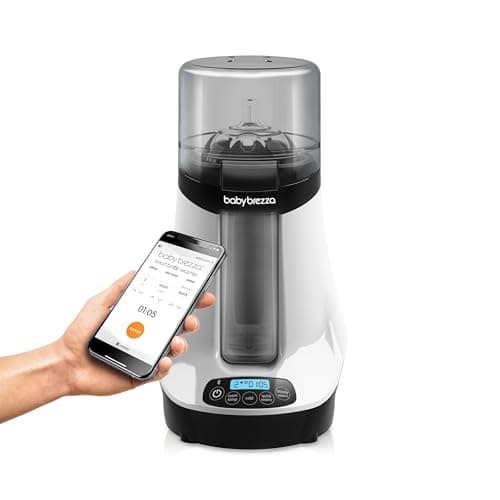
Product photo from the Amazon listing, not a photograph of our own unit.
Baby Brezza Smart Bottle Warmer
Baby Brezza
The warmer reviewers keep putting first: steady temperature control, it fits essentially every bottle shape, and it shuts itself off.
- Speed
- 8
- Evenness
- 9
- Capacity
- 8
- Ease of use
- 9
- Value
- 8
- Method:
- Warm water bath with electronic control
- Fits:
- Narrow, wide and squat bottles
- Extras:
- Auto shut-off, keep-warm, app control
- Price tier:
- Mid-range
What works
- Controlled warming rather than blasting steam, which is kinder to milk
- Accepts nearly every bottle shape, including silicone and squat bottles
- Auto shut-off and keep-warm remove the guesswork at 3am
What to know first
- Takes counter space
- The app is unnecessary for most people
- Needs descaling in hard-water areas
#ad Affiliate link · Price as of October 17, 2026
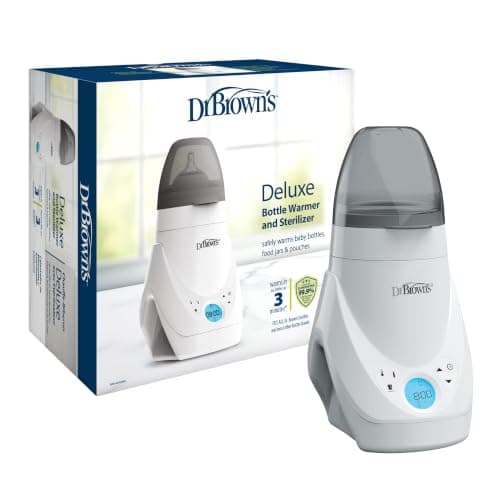
Product photo from the Amazon listing, not a photograph of our own unit.
Dr. Brown's Deluxe Bottle Warmer
Dr. Brown's
A dial, a steam basket, and nothing to learn. If you want a warmer and not a gadget, this is the one.
- Speed
- 9
- Evenness
- 7
- Capacity
- 7
- Ease of use
- 8
- Value
- 10
- Method:
- Steam
- Fits:
- Narrow and wide bottles
- Extras:
- Timer dial, auto shut-off
- Price tier:
- Budget
What works
- Cheap, simple and very widely owned
- Fits both narrow and wide bottles from most brands
- Fast
What to know first
- Steam warming can overheat milk if you misjudge the dial
- No temperature readout
- Needs the water refilled each cycle
#ad Affiliate link · Price as of October 17, 2026
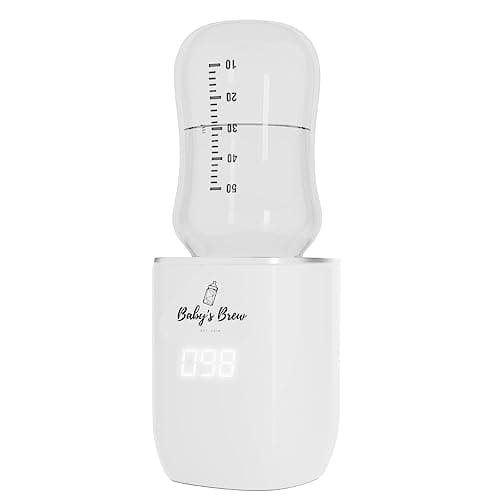
Product photo from the Amazon listing, not a photograph of our own unit.
The Baby's Brew Portable Bottle Warmer
The Baby's Brew
A cordless, rechargeable warmer that holds a set temperature. The one that actually solves warming milk in a car or on a plane.
- Speed
- 7
- Evenness
- 9
- Capacity
- 5
- Ease of use
- 8
- Value
- 6
- Method:
- Battery-powered controlled heating
- Fits:
- Most standard bottles, with adapters
- Extras:
- Temperature settings, travel case
- Price tier:
- Premium
What works
- Genuinely cordless, with no car adapter or outlet needed
- Holds a chosen temperature rather than just heating
- Adapters cover most bottle brands
What to know first
- Expensive for a second warmer
- Needs charging before you leave
- One bottle at a time
#ad Affiliate link · Price as of October 17, 2026
Common questions
How do you clean a bottle warmer with vinegar?
Unplug and cool it, fill the chamber with equal parts white vinegar and water to the normal fill line, leave it to stand about thirty minutes, pour it out, wipe the heating plate with a soft cloth, then run two water-only cycles to rinse. Check your manual first — a few makers specify citric acid instead.
How often should you descale a bottle warmer?
Monthly in a normal water area, every two to three weeks in a hard-water area, and immediately whenever cycles start taking noticeably longer than they used to. Using filtered or distilled water in the chamber slows scale build-up substantially.
Why is my bottle warmer taking longer to heat?
Limescale on the heating plate, almost always. The chalky layer insulates the element, so the same cycle delivers less heat. Descale it with vinegar and water before concluding the unit has failed — this is the single most common "broken warmer".
Can you put a bottle warmer in the dishwasher?
No. The base contains a heating element and electronics and must never be submerged or put through a dishwasher. Removable baskets, bottle holders and lids are usually washable — check your manual for which parts, and wash the rest with a cloth.
Should you empty a bottle warmer after every use?
Yes, and it is the single most useful habit here. Standing warm water grows bacteria and accelerates limescale. Unplug it, tip the water out, wipe the chamber dry, and the weekly and monthly jobs get much smaller.
What water should you use in a bottle warmer?
Filtered or distilled water if you have hard water, because it dramatically slows scale build-up. Tap water is fine otherwise, as long as you descale on schedule. The water in the chamber never touches the milk — it is heating the bottle from outside.