Guides
How to thaw frozen breast milk
Fridge overnight, a bowl of warm water, or lukewarm running water. Never a microwave. Then a 24-hour clock starts, and it starts later than most people think.
How this page is funded: if you buy through a link here we may earn an Amazon commission, at no extra cost to you. It never changes which product we put first, and we recommend the cheaper option whenever it is the better one. Full disclosure.
The short answer
Thaw frozen breast milk in the refrigerator overnight, in a bowl of warm or lukewarm water, or under lukewarm running water — those are the three methods the CDC lists. Never use a microwave. Once it is completely thawed and kept cold, use it within 24 hours; once it has been brought to room temperature or warmed, use it within 2 hours; and never refreeze it. Thaw the oldest bag first, and swirl rather than shake once it is liquid.
The methods, ranked by how much notice you have
| Method | How long | Use it when |
|---|---|---|
| In the refrigerator, overnight | Several hours to overnight | The default. Move tomorrow's milk down tonight and you never have to rush a thaw |
| In a bowl of warm or lukewarm water | Roughly 10–20 minutes, depending on volume | You need it in the next half hour |
| Under lukewarm running water | Fastest of the three | You need it now and the baby is already awake |
| A bottle warmer with a thaw setting | Varies by machine | You do this nightly. Use the thaw program, not the warm program, and never leave it unattended |
| Microwave | Never | Never — the CDC warns it destroys nutrients and creates hot spots that can burn a baby's mouth |
The practical trick is to stop thawing on demand. Move tomorrow's bag from the freezer to the fridge when you go to bed, and the 2am version of this problem disappears entirely.
The clocks, which is where people get caught
There are three different timers and they do not start at the same moment. Per CDC guidance on breast milk storage and preparation, the 24-hour fridge window for thawed milk starts when the milk is completely thawed, not when you took it out of the freezer — which is usually several hours later than parents assume, and in your favour.
| State of the milk | Use within |
|---|---|
| Thawed in the refrigerator, still cold | 24 hours, counted from when it is completely thawed |
| Brought to room temperature, or warmed | 2 hours |
| Left over after the baby has fed from the bottle | 2 hours, then discard |
| Thawed and not used | Never refreeze it |
Every other storage time — fresh milk on a counter, in a fridge, in a freezer — is in one table at how long can breast milk sit out, which is the page to put on the fridge door.
Why you never refreeze
The CDC is unambiguous: never refreeze breast milk after it has thawed. Freezing and thawing damages the fat structure and the protective components milk carries, and a second cycle makes both worse; it also means a longer total time above freezing for bacteria to multiply in.
Which is a strong argument for how you freeze in the first place: in small portions. A 2 oz bag thawed for a 2 oz feed wastes nothing. An 8 oz bag thawed for a 3 oz feed puts you on a 24-hour clock with five ounces you may not use. Freeze flat in bags rather than in bottles — they stack, they thaw faster and they take a fraction of the freezer space. Our shortlist is best breast milk storage bags; the Lansinoh bags are the default pick.
The soapy or metallic smell is usually not spoilage
This is the single most common reason good milk gets poured down a sink. Some people have high levels of the enzyme lipase, which breaks fat down after the milk is expressed, and thawed milk from a high-lipase parent can smell soapy, metallic or like old cooking oil. It is generally still safe, and many babies drink it without noticing.
Spoiled milk is a different thing: it smells sour and rancid in the way spoiled cow's milk does, and it tends to stay separated and clumpy after swirling. If you are unsure, the CDC's storage questions and answers is the reference, and your pediatrician or an IBCLC is the right person to ask about your own milk rather than a forum.
Thawing is not warming
Two separate steps. Thawing turns ice into liquid; warming takes cold liquid up to body temperature. Milk thawed in the fridge is thawed, not warm, and most babies want it warm after that. Warm it gently in a container of warm water, under warm running water, or in a warmer with temperature control — never in a microwave, and never to the boil. The method is how to warm breast milk, the reason for the microwave ban is can you warm breast milk in the microwave, and the differences from formula are in warming breast milk vs formula.
If you do this nightly, a warmer with electronic control and auto shut-off earns its place — the Baby Brezza Safe + Smart is our pick for exactly this job, and the Baby's Brew is the battery-powered one for a hotel room or a car. The honest caveat is in do you need a bottle warmer: a jug of warm water does this for nothing.
The routine, start to finish
Take the oldest bag from the freezer. Stand it in the fridge overnight, or in a bowl of warm water if you need it sooner. When it is fully liquid, note the time — that is when your 24 hours starts. Swirl it to mix the separated fat back in; do not shake, which whips air through it and makes a gassier feed. Warm it gently if your baby prefers it warm, test a drop on the inside of your wrist, and feed. Discard what is left two hours after the baby finishes, and wash the bottle — how to wash baby bottles has the method, and how to travel with breast milk covers doing all of this away from your own kitchen.
Worth saying plainly
Never thaw or warm breast milk in a microwave — per the CDC it destroys nutrients and creates hot spots that can burn a baby's mouth. Never refreeze thawed breast milk. Use milk thawed in the refrigerator within 24 hours of it being completely thawed, and within 2 hours once it has been brought to room temperature or warmed; discard leftovers 2 hours after a feed. Do not leave a bottle unattended in a warmer. Clean and sanitize pump and feeding parts per CDC guidance. We are not clinicians and nothing here is medical advice — questions about your own milk belong with an IBCLC or your clinician.
Where this comes from
Every time and method on this page is taken from the CDC's breast milk storage and preparation guidance and its storage questions and answers, checked on 10 October 2026. Warmer behaviour comes from the makers' published specifications and the independent testing in Mommyhood101's warmer tests. We have not invented a time, a temperature or a smell test anywhere on this page.
What we would buy
Now that the decision is made, these are the products we would actually put in the basket, and why.
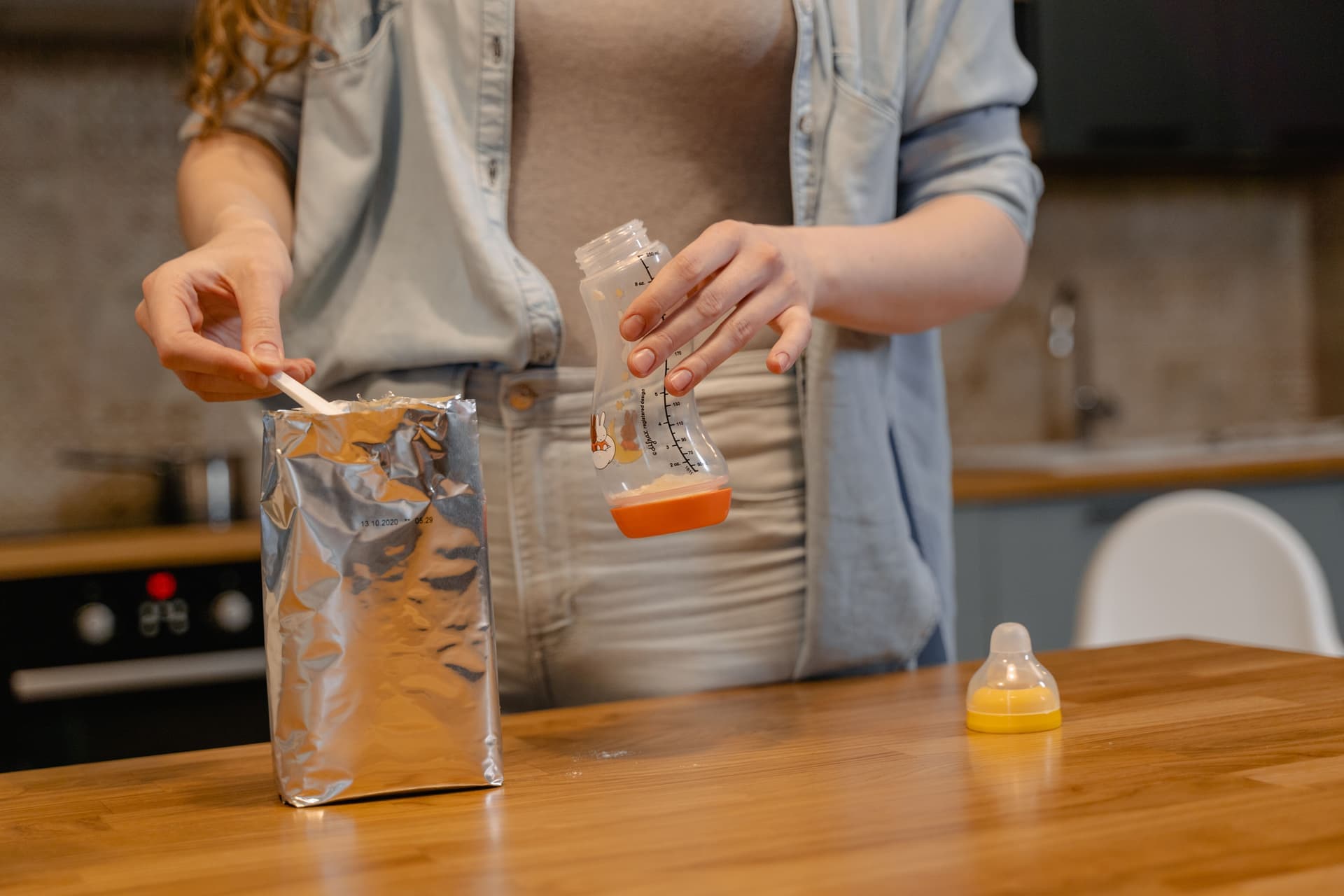
Photo for illustration, not a photograph of our own unit.
Baby Brezza Safe + Smart Bottle Warmer
Baby Brezza
The warmer reviewers keep putting first: steady temperature control, it fits essentially every bottle shape, and it shuts itself off.
- Speed
- 8
- Evenness
- 9
- Capacity
- 8
- Ease of use
- 9
- Value
- 8
- Method:
- Warm water bath with electronic control
- Fits:
- Narrow, wide and squat bottles
- Extras:
- Auto shut-off, keep-warm, app control
- Price tier:
- Mid-range
What works
- Controlled warming rather than blasting steam, which is kinder to milk
- Accepts nearly every bottle shape, including silicone and squat bottles
- Auto shut-off and keep-warm remove the guesswork at 3am
What to know first
- Takes counter space
- The app is unnecessary for most people
- Needs descaling in hard-water areas
#ad Affiliate link · We show no price until we can verify it live
Photo for illustration, not a photograph of our own unit.
Lansinoh Breastmilk Storage Bags
Lansinoh
The bag lactation consultants have recommended for years: a double-zipper seal, reinforced side seams, and no plastic taste or smell carried into the milk.
- Leak resistance
- 9
- Freezer footprint
- 6
- Filling
- 7
- Durability
- 9
- Value
- 10
- Seal:
- Double zipper
- Seams:
- Reinforced side seams
- Material:
- BPA-free
- Pump directly in?:
- No, pour or decant
- Price tier:
- Budget
What works
- Double-zipper seal and reinforced side seams, which is what matters once bags are stacked frozen
- No plastic smell or taste carried into the milk, a common complaint with cheaper bags
- The long-standing default recommendation, so it is easy to restock anywhere
What to know first
- No adapter to pump straight into the bag, so you decant and risk a spill
- Does not stand up as reliably as a gusseted bag when you are filling one-handed
- Plain shape, so no space-saving advantage in a full freezer
#ad Affiliate link · We show no price until we can verify it live
Photo for illustration, not a photograph of our own unit.
The Baby's Brew Portable Bottle Warmer
The Baby's Brew
A cordless, rechargeable warmer that holds a set temperature. The one that actually solves warming milk in a car or on a plane.
- Speed
- 7
- Evenness
- 9
- Capacity
- 5
- Ease of use
- 8
- Value
- 6
- Method:
- Battery-powered controlled heating
- Fits:
- Most standard bottles, with adapters
- Extras:
- Temperature settings, travel case
- Price tier:
- Premium
What works
- Genuinely cordless, with no car adapter or outlet needed
- Holds a chosen temperature rather than just heating
- Adapters cover most bottle brands
What to know first
- Expensive for a second warmer
- Needs charging before you leave
- One bottle at a time
#ad Affiliate link · We show no price until we can verify it live
Common questions
How do you thaw frozen breast milk?
Three ways, per the CDC: in the refrigerator overnight, in a bowl of warm or lukewarm water, or under lukewarm running water. Never in a microwave. Fridge overnight is the method to default to, because it never has to be rushed.
How long is thawed breast milk good for?
24 hours in the refrigerator, counted from when it is completely thawed — not from when you took it out of the freezer. Once it has been brought to room temperature or warmed, 2 hours. Leftovers after a feed should be discarded after 2 hours.
Can you refreeze thawed breast milk?
No. The CDC says never refreeze breast milk after it has thawed. Freeze in small portions in the first place so a thaw never commits more milk than one feed needs.
How do you thaw breast milk quickly?
Under lukewarm running water, or in a bowl of warm water. Both are sanctioned by the CDC and take minutes rather than hours. Do not use a microwave, do not use boiling water, and do not put a frozen bag on a hot surface.
Why does my thawed breast milk smell soapy or metallic?
Usually lipase, an enzyme that breaks down fat after expression. High-lipase milk can smell soapy, metallic or like old cooking oil once thawed and is generally still safe; many babies take it without complaint. Spoiled milk smells sour and rancid and stays clumpy after swirling. Ask an IBCLC or your clinician about your own milk.
Can you thaw breast milk in a bottle warmer?
Yes, if the warmer has a thaw program — use that rather than the warm program, and do not leave it unattended. If you do this nightly, a warmer with electronic temperature control and auto shut-off is the right tool. Our picks are in the best bottle warmers.
Should I thaw the oldest milk first?
Yes. Date every bag as you freeze it and work through the oldest first, which is also why freezing flat in labelled bags beats freezing in bottles. Frozen milk is best used within about six months and is acceptable up to twelve, per the CDC.