Guides
When to replace baby bottles and nipples
Replace on condition, not on a calendar. Nipples are consumables and go first; bottles last far longer, with one exception that is non-negotiable.
How this page is funded: if you buy through a link here we may earn an Amazon commission, at no extra cost to you. It never changes which product we put first, and we recommend the cheaper option whenever it is the better one. Full disclosure.
The short answer
Replace on condition, not on a date. Nipples are the consumable — check every one at every wash and bin any that is thinning, sticky, swollen, torn, discoloured or has a hole that has widened. Bottles last far longer: replace a plastic bottle when it clouds, crazes or gets scratches you can feel, and replace a glass bottle the moment it chips or cracks. The one non-negotiable: a chipped or cracked glass bottle goes in the bin and is never sterilized, because heat cycles make small cracks bigger.
What lasts how long
| Part | Replace on | Rough cycle | What failure looks like |
|---|---|---|---|
| Nipples (teats) | Condition, every time — check at every wash | The shortest-lived part by a long way. Expect to replace them well before the bottles | Thinning, stickiness, a swollen or stretched tip, discolouration, tears, a hole that has widened |
| Plastic bottles | Condition | Long, but heat cycles cloud and craze them over time | Cloudiness that will not wash out, crazing, scratches you can feel, faded volume markings |
| Glass bottles | Condition — and immediately on any damage | The longest-lived option, often outlasting the baby who used them | Any chip or crack, however small. Discard, do not sterilize — heat makes small cracks bigger |
| Silicone bottles | Condition | Long, but watch the seal where silicone meets a rigid collar | Tackiness, permanent staining, a seal that no longer grips |
| Vent inserts and valves | Condition | Shorter than the bottle, longer than the nipple | Warping, splits, or the anti-colic system simply stopping working — gas returning is the clue |
| Rings and caps | Condition | Long | Cracked threads, or a ring that no longer seals without over-tightening |
The pattern worth taking away: there is no calendar here. Two families using the same bottles can be on completely different schedules depending on how often they sterilize, whether they use a dishwasher, how hard the water is, and how enthusiastically their baby chews. Which is why the advice is a check rather than a date.
The nipple check, in ten seconds
Do this at every wash. It genuinely takes seconds once it is a habit, and the nipple is both the part most likely to fail and the part where failure matters most.
- Hold it up to the light. Thin patches show as brighter areas. A thin patch is a tear waiting to happen.
- Pull the tip gently. It should spring back. If it stays stretched or feels slack, it is done.
- Feel for tackiness. Silicone that has gone sticky or gummy is breaking down.
- Fill it with water and turn it over. It should drip steadily rather than stream. A fast stream means the hole has widened, which is a choking risk, not a convenience.
- Look at the base and the ring seat for small splits, which is where they usually start.
- Note the colour. Yellowing or cloudy discolouration that survives a wash means the material has aged.
If a nipple fails any of those, replace it — and be aware that a worn nipple and a nipple that is the wrong flow for your baby look like the same problem from the outside. Which signs mean wear and which mean it is time to size up the flow is in bottle nipple flow sizes. Never enlarge a hole yourself with a pin or a knife: the edge is uncontrolled and the flow becomes unsafe.
The bottle itself
Bottles mostly fail for hygiene reasons rather than structural ones, and the mechanism is the same across materials: a surface that is no longer smooth is a surface you cannot properly clean.
Plastic. Repeated heat — dishwasher, steam, boiling — gradually clouds and crazes it. A bottle you can feel scratches in with a fingernail should go, because milk residue sits in scratches and brushes do not reach the bottom of them. Faded volume markings are a second, underrated reason: you cannot mix formula accurately against markings you are guessing at.
Glass. Structurally the longest-lived choice, and the reason people buy it. The trade-off is that the failure mode is binary: a chip or a hairline crack means the bottle is finished, immediately, and it must not go through another heat cycle. Check the rim and the base as you load the sterilizer, which is a two-second habit covered in best sterilizers for glass bottles. The full material comparison is in glass vs plastic baby bottles.
Silicone. Durable and forgiving, with one specific thing to watch: the seal where the soft body meets a rigid collar. When that stops gripping, you get leaks that look like a tightening problem and are not.
What about old bottles, and BPA?
A reasonable question if you have been handed a box of bottles from an older sibling or a friend. The honest position: BPA has not been permitted in baby bottles sold in the US since 2012, so anything bought new since then is a non-issue — the FDA's page on BPA in food contact applications is the reference. Genuinely old bottles from before that are a different matter, and the simplest answer there is not to use them.
For hand-me-downs that are modern, the deciding factor is condition, not age: run the checks above, sanitize before first use per CDC guidance, and replace all the nipples regardless. Nipples are cheap, they are the part that wears, and they are not the thing to economise on.
How many spares to keep
One practical answer: keep at least two spare nipples per bottle in the size you are currently using, and buy them when you buy anything else rather than when one fails. A split nipple at 3am with no spare is the situation this paragraph exists to prevent.
It is also an argument for buying a widely stocked bottle in the first place. A bottle whose parts you can replace from a supermarket shelf is worth more in practice than a nicer one you have to order — a criterion we weight in best baby bottles, and one that matters most if you are formula feeding and running the whole set every day (best bottles for formula feeding).
Worth saying plainly
Discard any glass bottle that is chipped or cracked rather than sterilizing it — heat cycles enlarge small cracks. Replace nipples that are thinning, torn, sticky, swollen or flowing in a stream rather than a drip, and never enlarge a nipple hole yourself. Clean feeding items after every use and sanitize per CDC guidance, which recommends daily sanitizing if your baby is under two months old, was born prematurely, or has a weakened immune system. Material safety information is published by the FDA. We are not clinicians and nothing here is medical advice.
What we would buy
Now that the decision is made, these are the products we would actually put in the basket, and why.
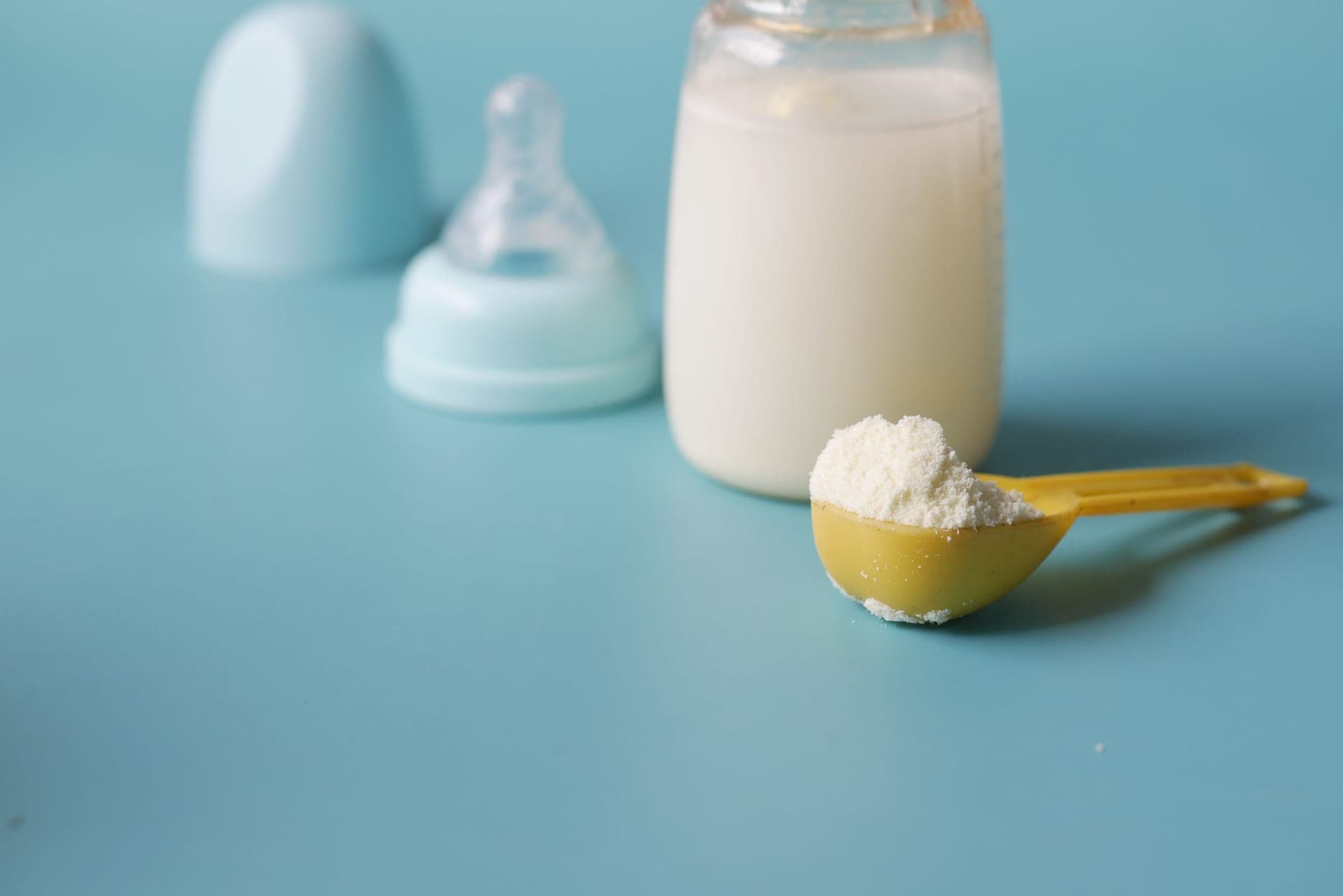
Photo for illustration, not a photograph of our own unit.
Philips Avent Natural Response
Philips Avent
The safest default buy: a wide nipple that only releases milk when the baby actively drinks, inside the biggest parts ecosystem on the shelf.
- Latch
- 9
- Colic control
- 8
- Cleaning
- 9
- Durability
- 9
- Value
- 9
- Material:
- Polypropylene, glass and PPSU versions
- Parts to wash:
- Three
- Nipple shape:
- Wide
- Price tier:
- Mid-range
What works
- Flow-on-demand nipple paces the feed more like nursing
- Bottles, nipples, sippy tops and pump parts all interchange
- Available in plastic, glass and PPSU with the same nipples
What to know first
- Venting is milder than Dr. Brown's for a severely windy baby
- Nipple flow numbering confuses first-time buyers
- Wide base does not fit narrow warmer wells
#ad Affiliate link · We show no price until we can verify it live

Photo for illustration, not a photograph of our own unit.
Lifefactory Glass Baby Bottle
Lifefactory
Borosilicate glass inside a grippy silicone sleeve. The glass bottle most likely to survive a kitchen floor.
- Latch
- 7
- Colic control
- 7
- Cleaning
- 7
- Durability
- 10
- Value
- 6
- Material:
- Borosilicate glass with a silicone sleeve
- Parts to wash:
- Three plus the sleeve
- Nipple shape:
- Narrow
- Price tier:
- Premium
What works
- Sleeve adds real drop protection and grip
- Converts to a toddler cup later with a different top
- Freezes more reliably than soda-lime glass
What to know first
- Sleeve traps water and needs removing to dry
- Narrow nipple shape suits fewer breastfed babies
- Expensive
#ad Affiliate link · We show no price until we can verify it live

Photo for illustration, not a photograph of our own unit.
Comotomo Natural Feel Baby Bottle
Comotomo
The bottle babies take when they have refused everything else: a soft squeezable silicone body and a wide, breast-shaped nipple.
- Latch
- 10
- Colic control
- 7
- Cleaning
- 9
- Durability
- 7
- Value
- 7
- Material:
- Silicone body, silicone nipple
- Parts to wash:
- Three
- Nipple shape:
- Wide, breast-like
- Price tier:
- Mid-range
What works
- The most widely recommended bottle for bottle-refusing breastfed babies
- Only three parts, and the wide mouth washes by hand easily
- Soft body is easy for small hands to hold later on
What to know first
- Squat shape does not fit every bottle warmer or sterilizer rack
- No internal venting system, so it is not the anti-colic specialist
- Nipples wear faster than hard plastic ones
#ad Affiliate link · We show no price until we can verify it live
Common questions
How often should you replace baby bottle nipples?
On condition rather than on a schedule, checked at every wash — but expect them to be the first thing you replace, well before the bottles. Bin any nipple that is thinning, sticky, swollen, discoloured, torn, or that streams rather than drips when you fill it and turn it over.
How long do baby bottles last?
Far longer than the nipples. Plastic bottles last until heat cycles cloud or craze them or they develop scratches you can feel; glass lasts almost indefinitely but must be discarded immediately on any chip or crack; silicone lasts well, with the seal at the collar being the part to watch.
Can you use a cracked or chipped baby bottle?
No. Discard it, and do not put it through a sterilizer first — heat cycles make small cracks bigger. That applies to glass especially, where a hairline crack is a genuine breakage risk, and to plastic where a crack is somewhere milk residue sits and cannot be cleaned out.
Is it safe to use hand-me-down baby bottles?
Modern bottles in good condition, yes — run the condition checks, sanitize before first use per CDC guidance, and replace every nipple regardless of how they look. Genuinely old bottles predating the 2012 US ban on BPA in baby bottles are best not used at all.
Why have my bottles gone cloudy?
Repeated heat — dishwashers, steam sterilizing, boiling — gradually clouds and crazes plastic. Cloudiness alone is cosmetic; cloudiness with crazing, or scratches you can feel with a fingernail, means replace them, because milk residue sits in the texture and a brush will not reach it.
Can I make the hole in a bottle nipple bigger?
No, never. A hole cut or pierced at home has an uncontrolled edge and an unpredictable flow rate, which is a choking risk. If the flow is too slow for your baby, buy the next flow level up — bottle nipple flow sizes covers the signs it is actually time.