Breast pumps
Haakaa alternatives
Before anything else: the Haakaa is not really a pump, so 'alternative' splits into two different questions. Answer that first and the shortlist writes itself.
How this page is funded: if you buy through a link here we may earn an Amazon commission, at no extra cost to you. It never changes which product we put first, and we recommend the cheaper option whenever it is the better one. Full disclosure.
If you want a real pump instead, buy the Medela Harmony. It is the default manual pump in the US and the reason is its two-position handle: a fast, light action to trigger let-down, then a slower, deeper one to express — the same two-phase idea the expensive electric pumps are built around, powered by your hand. Unlike a Haakaa, you control the suction. The budget pick is the Lansinoh Manual, which is cheaper than the Harmony and ships with two flange sizes. Nothing on this page is as cheap as a Haakaa, and we are not going to pretend otherwise.
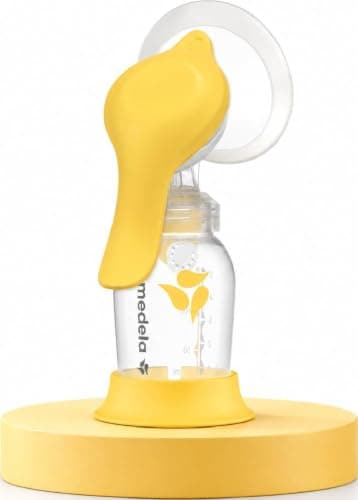
Our pick
Medela Harmony
The default manual pump in the US, and deservedly so: a two-speed handle that lets you stimulate then express without a motor.
One thing to settle before you buy anything: what were you using the Haakaa for? If the answer is “catching what leaks from the other side during a feed”, no pump on this page does that job better, and the right purchase is a second Haakaa. If the answer is “expressing a bottle”, then yes — a Haakaa was always the wrong tool and anything here is an upgrade.
#ad Affiliate link · Price as of November 28, 2026
Who should buy something else
- You only ever used it to catch let-down. Buy a second Haakaa. Nothing replaces it, and this page says so.
- Your bottles are Philips Avent. Buy the Avent manual. It pumps into the bottles you already own.
- You want your hands AND real suction. Buy the Momcozy V1 Pro. It is a different price bracket entirely.
- You are pumping for most feeds. No manual pump is enough for that. Read the electric options.
Quick picks
Our ranking, with the reasoning underneath. Tap any row to jump to the full write-up.
| # | Product | Switch to it for | Score | Price |
|---|---|---|---|---|
| 1 | Medela Harmony The default manual pump in the US, and deservedly so: a two-speed handle that lets you stimulate then express without a motor. | Manual, overall | 8.0 | $25.49$28.99(12% off)View on Amazon #ad Affiliate link · Price as of November 28, 2026 |
| 2 | 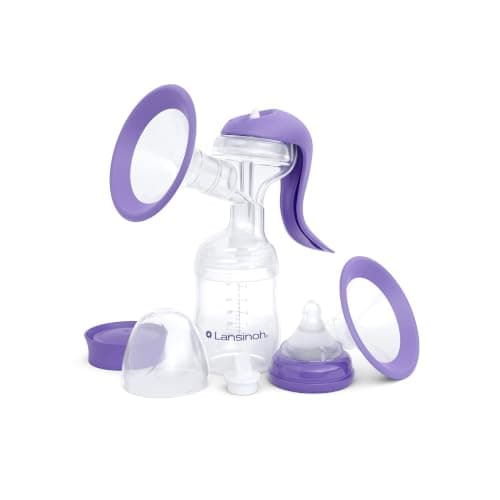 Lansinoh Manual Breast Pump Cheaper than the Harmony and close enough in use that several reviewers put it first for occasional pumping. | Manual, budget | 7.8 | $28.27$34.99(19% off)View on Amazon #ad Affiliate link · Price as of November 28, 2026 |
| 3 | 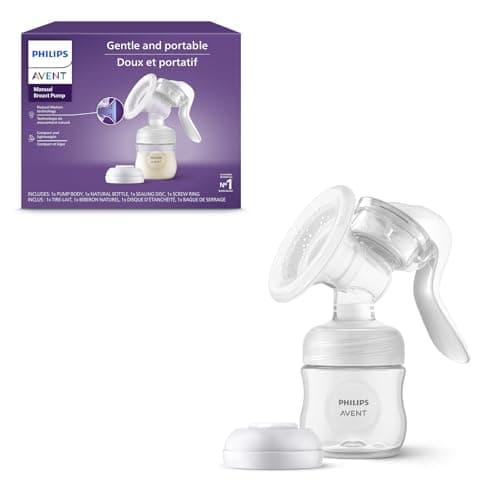 Philips Avent Manual Breast Pump Pumps straight into the Avent bottles you probably already own, which removes a transfer step at 3am. | Avent bottle owners | 7.4 | $36.95View on Amazon #ad Affiliate link · Price as of November 28, 2026 |
| 4 | 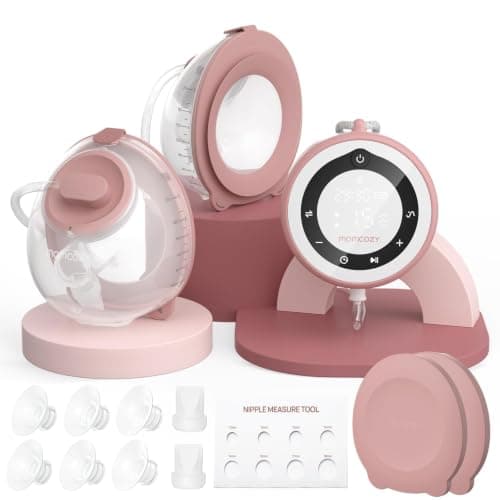 Momcozy V1 Pro Hands-free collection cups with the motor kept off your chest in a pocket unit, so output lands closer to a traditional pump. | Hands-free with output first | 7.6 | $149.99$199.99(25% off)View on Amazon #ad Affiliate link · Price as of November 28, 2026 |
Scores are our own research scores on the rubric published at how we choose. They are not star ratings from customers, and we do not show a price we cannot verify live.
Every pick, in detail
Product photo from the Amazon listing, not a photograph of our own unit.
Medela Harmony
Medela
The default manual pump in the US, and deservedly so: a two-speed handle that lets you stimulate then express without a motor.
- Output
- 6
- Comfort
- 8
- Discretion
- 8
- Cleaning
- 9
- Value
- 10
- Type:
- Manual, single
- Standout feature:
- Two-phase handle action
- Cleaning burden:
- Low
- Price tier:
- Budget
What works
- The best-selling manual pump in the US, so parts are everywhere
- Angled shield fits more bodies comfortably than a flat flange
- Nothing to charge and nothing to break
What to know first
- One breast at a time, and your hand does the work
- Not a realistic tool for exclusive pumping
- Hand fatigue on long sessions
#ad Affiliate link · Price as of November 28, 2026
Product photo from the Amazon listing, not a photograph of our own unit.
Lansinoh Manual Breast Pump
Lansinoh
Cheaper than the Harmony and close enough in use that several reviewers put it first for occasional pumping.
- Output
- 6
- Comfort
- 8
- Discretion
- 8
- Cleaning
- 9
- Value
- 10
- Type:
- Manual, single
- Standout feature:
- Two flange sizes included
- Cleaning burden:
- Low
- Price tier:
- Budget
What works
- Two flange sizes in the box, which matters more than most beginners realize
- Comfortable handle angle
- Very low price
What to know first
- Single-sided and hand-powered
- Smaller parts ecosystem than Medela
- An occasional-use tool only
#ad Affiliate link · Price as of November 28, 2026
Product photo from the Amazon listing, not a photograph of our own unit.
Philips Avent Manual Breast Pump
Philips Avent
Pumps straight into the Avent bottles you probably already own, which removes a transfer step at 3am.
- Output
- 6
- Comfort
- 7
- Discretion
- 8
- Cleaning
- 9
- Value
- 9
- Type:
- Manual, single
- Standout feature:
- Screws onto the Avent bottle system
- Cleaning burden:
- Low
- Price tier:
- Budget
What works
- No decanting if your bottles are Avent
- Compact enough for a work bag
- Soft massage cushion in the funnel
What to know first
- Single-sided and hand-powered
- Less comfortable than the Harmony for some users
- Ties you to one bottle system
#ad Affiliate link · Price as of November 28, 2026
Product photo from the Amazon listing, not a photograph of our own unit.
Momcozy V1 Pro
Momcozy
Hands-free collection cups with the motor kept off your chest in a pocket unit, so output lands closer to a traditional pump.
- Output
- 8
- Comfort
- 7
- Discretion
- 6
- Cleaning
- 7
- Value
- 8
- Type:
- Hands-free cups with a separate pocket motor
- Standout feature:
- Motor off the body, with see-through cups
- Cleaning burden:
- Moderate
- Price tier:
- Mid-range
What works
- Separating the motor usually means stronger, steadier suction
- Still hands-free while you feed or work
- Cheaper than premium all-in-cup wearables
What to know first
- Not truly cable-free, since there is a unit to carry
- Less discreet than an in-bra cup
- More pieces to keep track of
#ad Affiliate link · Price as of November 28, 2026
What the Haakaa is actually known for
It is worth setting this out properly, because three of its four strengths are things no pump on this page matches, and the fourth is the only one worth switching for.
One piece. There is no valve, no membrane, no tubing and no collar. It is a single molded shape, so washing takes seconds and there is nothing to lose down a drain or to perish at month four. Every pump that replaces it adds parts — that is the trade, and it is a real one at 3am.
Passive suction. You squeeze it, seat it, and it holds itself on. There is no pumping action, no handle to work and no motor. For somebody holding a baby, that is the whole design.
It catches what you were losing. This is the use most Haakaa owners actually have: suction it onto the breast you are not feeding from, and it collects the milk that would otherwise soak into a nursing pad. People routinely collect a usable amount a day this way without ever doing a pumping session. That is found milk, not expressed milk, and it is a different activity from pumping.
It costs about ten dollars. Cheap enough to own two, cheap enough to keep one in a bag.
What it is not good at is expressing a bottle on demand. The suction is passive, so there is no control at all: no strength setting, no rhythm, nothing to adjust if it is not working. It also tips over easily when full, which is a genuine heartbreak. The full comparison against real pumps is breast pump vs Haakaa.
The honest answer to “what replaces it”
Nothing in this registry replaces a Haakaa at the job a Haakaa is best at, and that is the most useful sentence on this page. We stock no second silicone milk collector — we have verified none, so we recommend none. If passive let-down collection is what you want, buy another Haakaa; they are ten dollars and owning two means one is always clean.
So “Haakaa alternative” really means one of two things:
- I want the same simplicity, but with control. That is a manual pump, and three of them are below. You gain a handle you can work at your own pace; you lose one-piece washing.
- I want my hands free AND real suction. That is a wearable pump, and it costs ten to fifteen times what a Haakaa does. One is below, and the price gap is the honest headline rather than a footnote.
| What you liked about the Haakaa | Alternative | What it matches on | What you give up |
|---|---|---|---|
| Hand-powered, no outlet, no charging | Medela Harmony | Two-phase handle: fast to trigger let-down, slow and deep to express | One-piece washing — a manual pump is five or six parts |
| It cost about ten dollars | Lansinoh Manual | The cheapest real manual pump, with two flange sizes in the box | Nothing is as cheap as a Haakaa; this is two to three times the price |
| No decanting — milk ends up where you need it | Philips Avent Manual | Screws straight onto the Avent bottle system | Flexibility: it ties you to one bottle range |
| Hands free while you feed the other side | Momcozy V1 Pro | Collection cups sit in the bra, motor in a pocket unit, real suction | Price, charging, and a dozen parts per session instead of one |
| Catching let-down passively, nothing else | A second Haakaa | Nothing in this registry does that job, and we are not pretending otherwise | — |
How we ranked these
Control first. It is the one thing a Haakaa cannot give you, so it is the only reason to switch rather than add. A two-phase handle beats a one-speed squeeze.
Then parts per session. You are coming from one piece. A pump with five parts is a different daily routine from a pump with eight, and nobody mentions this until the third week.
Then fit. A Haakaa has no sizing to get wrong. A flange does, and the cheap end of the market supplies the fewest sizes — so a pump that ships two is worth more than one that ships one.
Then where the milk ends up. A device that pumps straight into the bottle you will feed from removes a transfer step, and transfer steps are where milk gets spilled.
We have not tested any of these and do not claim to. Every specification here is the maker's own.
Medela Harmony — the pick
The best-selling manual pump in the US, and it earns that on the handle. Two positions: a fast, light stroke to start let-down, then a slower, deeper one to express. That is two-phase expression, the principle the premium electric pumps are built on, and getting it from a hand pump for the price of a takeaway is the reason this is the default recommendation.
The angled shield also fits more bodies comfortably than a flat flange does, and because the pump is in every pharmacy in the country, a replacement membrane is an errand rather than a delivery. It wins the best manual breast pumps for the same reasons.
The honest cons. One breast at a time, and your hand does the work, so long sessions mean hand fatigue in a way a Haakaa never caused. It is five or six parts to wash instead of one. And it is not a realistic tool for pumping every feed — for that, start at the best breast pumps under $100.
Lansinoh Manual — the budget pick
Cheaper than the Harmony and close enough in use that several reviewers put it first for occasional pumping. What earns it the budget slot is the box: it includes two flange sizes, which most cheap pumps do not, and which matters far more than a first-time buyer expects. A flange that is too wide pulls on the areola instead of the nipple, and the result feels like a weak pump.
If you are moving off a Haakaa precisely because you did not want to spend much, this is the smallest step up that still gives you control.
The honest cons. Single-sided and hand-powered. The parts ecosystem is smaller than Medela's, so a replacement valve is an online order. And it is strictly an occasional-use tool. If your size is not in the box, an insert is cheaper than a second pump — see the best flange inserts.
Philips Avent Manual — if your bottles are Avent
This one wins on logistics rather than on suction. It screws directly onto the Philips Avent bottle system, so the milk you express is already in the bottle you are going to feed from: no funnel balanced on a counter, no decanting, nothing extra to wash. If your bottles are Avent — and Avent is the most common first bottle on this site, see the best bottle starter sets — that convenience outweighs a few dollars of price difference.
It has a soft massage cushion in the funnel and it is compact enough for a work bag.
The honest cons. Single-sided and hand-powered, like every manual. Some people find the Harmony's handle more comfortable over a long session. And it ties you to one bottle system, which only matters if you were planning to leave it.
Momcozy V1 Pro — if you want hands free with real suction
The honest answer to the strength people miss most when they stop using a Haakaa: being able to do something else. The V1 Pro puts collection cups in your bra and keeps the motor in a separate pocket unit, which usually means stronger and steadier suction than an all-in-cup design manages, because the motor is not constrained by having to fit inside a bra.
Be clear about the money. This is ten to fifteen times the price of a Haakaa, it needs charging, and there are around a dozen parts per session instead of one. It is an upgrade on exactly one axis — suction while your hands are free. If that axis is why you are here, our full ranking is the best wearable breast pumps, and the cheaper end of the category is the best wearable breast pumps under $200.
The honest cons. Not truly cable-free: there is a unit to carry and a cable to manage, so it is less discreet than an in-bra cup. More pieces to keep track of. And no vacuum figure is published, so its output advantage is reported rather than measured. If you want a different wearable, the alternatives are on Momcozy alternatives.
The case for keeping the Haakaa anyway
Most people who own a good pump should also own a Haakaa, and it is worth saying because “alternative” implies replacing. Three situations where the ten-dollar cup is still the right tool and the three-hundred-dollar pump is not:
- During a feed. Nothing else collects let-down from the other side while a baby is latched, without being switched on, charged or assembled.
- In the first week. Small volumes, unpredictable timing, and a device you can wash one-handed in a hospital bathroom.
- In a bag. There is no scenario where carrying one piece of silicone is worse than carrying a pump.
What it should not be is your only device if you are exclusively pumping or returning to work on a pumping schedule. Passive suction cannot be scheduled against a supply, and how often should I pump is the page that makes that concrete.
Two checks before you spend anything
- Check your insurance benefit. Most US plans are required to cover a breast pump, and people routinely buy a manual out of pocket while a double electric sits unclaimed on their plan. HealthCare.gov has the basics; the models that commonly qualify are on the pumps insurance usually covers.
- Measure before you buy a flange. It is free, takes two minutes, and is the most common reason a cheap pump feels like a bad pump: breast pump flange size.
Worth saying plainly
Pumping and hand expression should never hurt. Pain, bruising, cracked skin or a nipple that comes out white means the fit or the suction is wrong, not that you should push through — stop, change size, and speak to a lactation consultant if it continues. A silicone collector left unattended tips easily; set it where a knock cannot reach it. Personal breast pumps are single-user devices and the FDA advises against buying or borrowing a used one; rent a multi-user hospital-grade pump instead if cost is the obstacle. Wash every milk-contact part after every use per the CDC, and store what you collect by the CDC's milk storage times — milk collected in a cup over a long feed still counts from when expression started. We are not clinicians and nothing here is medical advice.
How we chose
Researched, not hands-on, and labeled that way on every card. Every pick is already in this site's registry and every listing was re-checked as purchasable before this page was written. Specifications come from the makers' own pages; independent testing of the manual class from The Bump and of the category from BabyGearLab; device guidance from the FDA; storage and hygiene rules from the CDC. Control is weighted heaviest, then parts per session, then fit, then where the milk ends up. Rubric: how we choose.
Common questions
What is the best alternative to a Haakaa?
The Medela Harmony, if what you want is a real pump you can control: its two-position handle triggers let-down and then expresses, which passive silicone suction cannot do. If you only ever used the Haakaa to catch let-down during a feed, the honest answer is a second Haakaa — nothing else does that job.
Is a Haakaa a real breast pump?
Not in the sense that matters for building a supply. It is a one-piece silicone cup with passive suction and no control, designed to catch milk rather than to express it on demand. It is excellent at that and should not be your only device if you are pumping for most feeds.
Is a manual pump better than a Haakaa?
For expressing a bottle, yes, because you control the suction and the rhythm. For catching let-down while feeding on the other side, no — a manual pump needs a hand you do not have free.
Can I use a Haakaa instead of pumping at work?
We would not plan around it. Passive collection cannot be scheduled against a supply, and a workday needs a device that empties the breast on a timetable. See the best breast pumps for working moms.
Are the prices on this page current?
Yes. Every price comes from the Amazon listing we link, is refreshed daily and carries the date it was checked. Where we cannot verify a price we show no number at all rather than an old one.
Sources
- The Bump — Best Manual Breast Pumps, tested by moms
- BabyGearLab — The Best Breast Pumps, lab tested and ranked
- FDA — Choosing a Breast Pump
- FDA — Buying and Renting a Breast Pump
- HealthCare.gov — Breastfeeding benefits (pump and lactation coverage)
- CDC — How to Clean and Sanitize Breast Pumps
- CDC — Breast Milk Storage and Preparation