Breast pumps
The best breast pumps under $100
Under $100 the choice stops being which electric pump and becomes whether you need an electric pump at all. For a lot of people the honest answer is no.
How this page is funded: if you buy through a link here we may earn an Amazon commission, at no extra cost to you. It never changes which product we put first, and we recommend the cheaper option whenever it is the better one. Full disclosure.
Buy the Lansinoh Signature Pro. It is the only double electric pump that sits under $100 often enough to belong on this page, it is a closed system so milk cannot reach the motor, and it pumps both sides at once — which is the single thing no manual pump can do for you. The budget pick is the Haakaa Silicone, the cheapest thing here by a long way, and the only one that is not really a pump at all.
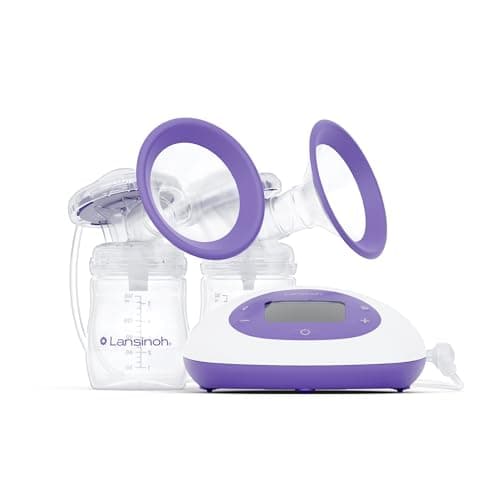
Our pick
Lansinoh Signature Pro
The cheapest double electric we would actually recommend: enough control for occasional pumping, not enough for exclusive pumping.
One thing to be clear about before you buy it: this is a pump for occasional and back-to-work pumping, not for pumping every feed. If this will be your only pump and your baby takes most feeds from a bottle, the money is better spent one band up — see the best pumps under $200.
#ad Affiliate link · Price as of November 28, 2026
What is actually under the line today
As of November 28, 2026, 5 of the 5 picks below had a live Amazon price under $100. Amazon prices move daily, so treat the band as where these products normally sit rather than a guarantee — every “Check price” button goes to the live listing and carries the date we last verified it.
Who should buy something else
- You will pump a handful of times a week, not daily. Buy the Medela Harmony. A manual is less to carry, less to wash and nothing to charge.
- Your bottles are already Philips Avent. Buy the Avent manual — it pumps straight into the bottles you own.
- You only want to stop leaking from the other side during a feed. Buy a Haakaa. It is $10-something and it is the right tool for that job.
- Your insurance has not been checked yet. Call before you spend anything. Most US plans must cover a pump.
Quick picks
Our ranking, with the reasoning underneath. Tap any row to jump to the full write-up.
| # | Product | Best for | Score | Price |
|---|---|---|---|---|
| 1 | Lansinoh Signature Pro The cheapest double electric we would actually recommend: enough control for occasional pumping, not enough for exclusive pumping. | Double electric, budget | 7.3 | $95.99View on Amazon #ad Affiliate link · Price as of November 28, 2026 |
| 2 | 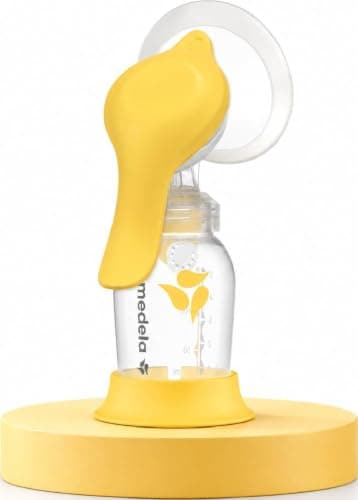 Medela Harmony The default manual pump in the US, and deservedly so: a two-speed handle that lets you stimulate then express without a motor. | Manual, overall | 8.0 | $25.49$28.99(12% off)View on Amazon #ad Affiliate link · Price as of November 28, 2026 |
| 3 | 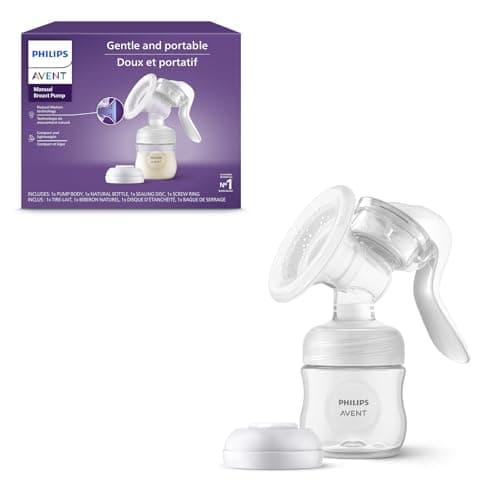 Philips Avent Manual Breast Pump Pumps straight into the Avent bottles you probably already own, which removes a transfer step at 3am. | Avent bottle owners | 7.4 | $36.95View on Amazon #ad Affiliate link · Price as of November 28, 2026 |
| 4 | 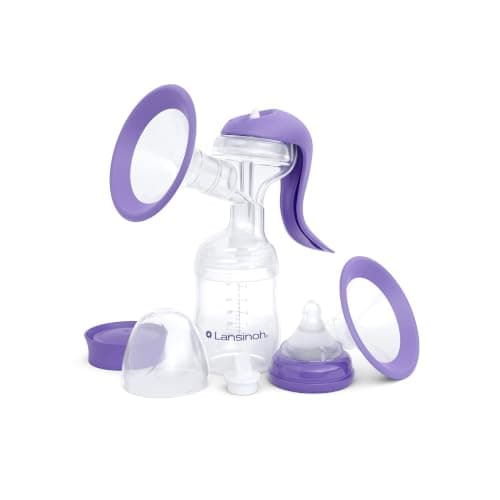 Lansinoh Manual Breast Pump Cheaper than the Harmony and close enough in use that several reviewers put it first for occasional pumping. | Manual, budget | 7.8 | $28.27$34.99(19% off)View on Amazon #ad Affiliate link · Price as of November 28, 2026 |
| 5 | 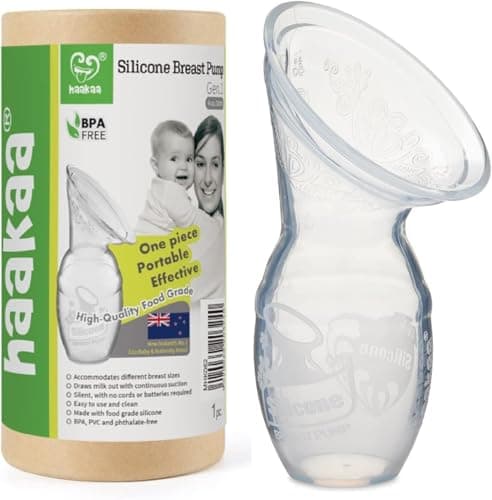 Haakaa Silicone Breast Pump Not really a pump: a one-piece silicone cup that catches the milk your other side leaks during a feed. Buy it as a second device, never your only one. | Catching let-down | 7.2 | $10.39$12.94(20% off)View on Amazon #ad Affiliate link · Price as of November 28, 2026 |
Scores are our own research scores on the rubric published at how we choose. They are not star ratings from customers, and we do not show a price we cannot verify live.
Every pick, in detail
Product photo from the Amazon listing, not a photograph of our own unit.
Lansinoh Signature Pro
Lansinoh
The cheapest double electric we would actually recommend: enough control for occasional pumping, not enough for exclusive pumping.
- Output
- 7
- Comfort
- 7
- Discretion
- 4
- Cleaning
- 8
- Value
- 9
- Type:
- Double electric, closed system
- Standout feature:
- Lowest cost of entry to double pumping
- Cleaning burden:
- Low
- Price tier:
- Budget
What works
- Genuinely affordable double pumping
- Closed system, so milk cannot reach the motor
- Compact and light
What to know first
- Not built for the volume of exclusive pumping
- Noisier than premium pumps
- Fewer flange sizes in the box
#ad Affiliate link · Price as of November 28, 2026
Product photo from the Amazon listing, not a photograph of our own unit.
Medela Harmony
Medela
The default manual pump in the US, and deservedly so: a two-speed handle that lets you stimulate then express without a motor.
- Output
- 6
- Comfort
- 8
- Discretion
- 8
- Cleaning
- 9
- Value
- 10
- Type:
- Manual, single
- Standout feature:
- Two-phase handle action
- Cleaning burden:
- Low
- Price tier:
- Budget
What works
- The best-selling manual pump in the US, so parts are everywhere
- Angled shield fits more bodies comfortably than a flat flange
- Nothing to charge and nothing to break
What to know first
- One breast at a time, and your hand does the work
- Not a realistic tool for exclusive pumping
- Hand fatigue on long sessions
#ad Affiliate link · Price as of November 28, 2026
Product photo from the Amazon listing, not a photograph of our own unit.
Philips Avent Manual Breast Pump
Philips Avent
Pumps straight into the Avent bottles you probably already own, which removes a transfer step at 3am.
- Output
- 6
- Comfort
- 7
- Discretion
- 8
- Cleaning
- 9
- Value
- 9
- Type:
- Manual, single
- Standout feature:
- Screws onto the Avent bottle system
- Cleaning burden:
- Low
- Price tier:
- Budget
What works
- No decanting if your bottles are Avent
- Compact enough for a work bag
- Soft massage cushion in the funnel
What to know first
- Single-sided and hand-powered
- Less comfortable than the Harmony for some users
- Ties you to one bottle system
#ad Affiliate link · Price as of November 28, 2026
Product photo from the Amazon listing, not a photograph of our own unit.
Lansinoh Manual Breast Pump
Lansinoh
Cheaper than the Harmony and close enough in use that several reviewers put it first for occasional pumping.
- Output
- 6
- Comfort
- 8
- Discretion
- 8
- Cleaning
- 9
- Value
- 10
- Type:
- Manual, single
- Standout feature:
- Two flange sizes included
- Cleaning burden:
- Low
- Price tier:
- Budget
What works
- Two flange sizes in the box, which matters more than most beginners realize
- Comfortable handle angle
- Very low price
What to know first
- Single-sided and hand-powered
- Smaller parts ecosystem than Medela
- An occasional-use tool only
#ad Affiliate link · Price as of November 28, 2026
Product photo from the Amazon listing, not a photograph of our own unit.
Haakaa Silicone Breast Pump
Haakaa
Not really a pump: a one-piece silicone cup that catches the milk your other side leaks during a feed. Buy it as a second device, never your only one.
- Output
- 4
- Comfort
- 8
- Discretion
- 9
- Cleaning
- 10
- Value
- 10
- Type:
- One-piece silicone suction cup
- Standout feature:
- Nothing to assemble
- Cleaning burden:
- Very low, one piece
- Price tier:
- Budget
What works
- One piece, so washing takes seconds
- Catches milk that would otherwise soak into a nursing pad
- Cheap enough to own two
What to know first
- Suction is passive, so it cannot replace a real pump
- Tips over easily when full
- No suction control at all
#ad Affiliate link · Price as of November 28, 2026
What $100 actually buys
Three different kinds of device, and they are not competing for the same job:
- One double electric pump. The Lansinoh Signature Pro is the only mainstream double electric that lands under this line with any regularity. It does the thing that matters — both sides at once, motor doing the work — at the bottom of what that is possible for.
- Three manual pumps. Your hand is the motor. One side at a time. They are quiet, unbreakable, need no outlet, and for somebody pumping twice a week they are not a compromise at all.
- One silicone cup that is not a pump. The Haakaa suctions onto the breast you are not feeding from and catches what leaks. It is genuinely useful and it genuinely cannot replace a pump.
That is the whole decision on this page, and it is a decision about frequency rather than about money. The question to answer before you read any further is in how often should I pump: if the answer is “a few times a week so my partner can do a feed”, a $25 manual is the right buy and the electric pump is wasted. If the answer is “three or four times a day from week six”, nothing on this page is enough, and we would rather tell you that than sell you one.
A note on the numbers before anything else: pump prices move a lot and they move most in November. Every price on this page is read from the listing we link at the moment you load it, and the note above says how many of these picks are under $100 today, with the date we checked. We never write a price into the text, so nothing here can quietly go stale.
| Pump | Type | Sides at once | Flange sizes in the box | Needs power? |
|---|---|---|---|---|
| Lansinoh Signature Pro | Double electric, closed system | Two | Fewer than the premium pumps supply | Yes |
| Philips Avent Manual | Manual, single | One | One, with a soft massage cushion | No |
| Medela Harmony | Manual, single, two-phase handle | One | One angled shield | No |
| Lansinoh Manual | Manual, single | One | Two | No |
| Haakaa Silicone | One-piece passive suction cup | One | Not applicable — one molded shape | No |
What we ranked these on
Sessions per week first. A pump that is wrong for your pumping pattern is wrong at any price. Double electric for daily pumping, manual for occasional.
Then fit. The thing that decides whether a cheap pump works is whether the flange matches your nipple, and the cheap end of the market supplies the fewest sizes. Measure first — breast pump flange size takes two minutes — and if your size is not in the box, read the best flange inserts before you blame the pump.
Then whether it is a closed system. A closed system puts a barrier between the milk path and the motor. On a used or hand-me-down pump this is the difference between a device you can clean and one you cannot — the longer version is in closed system breast pumps.
Then parts per session. At 3am the number of pieces in the sink is a real feature. The Haakaa has one. A double electric has a dozen.
We have not tested any of these pumps and do not claim to. Every specification here is the maker's own.
Lansinoh Signature Pro — the pick
The cheapest double electric we would actually recommend. It is compact, it is light, and it is a closed system, which at this price is not guaranteed. Pumping both sides at once roughly halves the time you spend attached to a machine, and when you are fitting sessions around a working day that is the feature you are buying.
The honest cons. It is not built for the volume of exclusive pumping and we would not pretend otherwise. It is noisier than premium pumps, which matters if you pump in a shared office — see the quietest breast pumps. And it ships with fewer flange sizes than the premium pumps, so measure before you order.
Medela Harmony — the manual to buy
The default manual pump in the US, and deservedly so. The handle has two positions: a fast, light action to trigger let-down, then a slower, deeper one to express — the same two-phase idea the expensive electric pumps are built around, done by your hand. The angled shield also fits more bodies comfortably than a flat flange does.
Because it is the best-selling manual in the country, replacement membranes and shields are in every pharmacy, which is not a small thing when a $3 part is the difference between pumping and not pumping.
The honest cons. One breast at a time, and your hand does the work, so long sessions mean hand fatigue. It is not a realistic tool for pumping every feed. Our full ranking of this class is the best manual breast pumps.
Philips Avent Manual — if you already own Avent bottles
This one wins on a logistics detail rather than on suction: it screws directly onto the Philips Avent bottle system, so the milk you pump is already in the bottle you are going to feed from. No decanting, no second thing to wash, no funnel of milk balanced on a counter at 3am. If your bottles are Avent — and Avent is the default first bottle for a lot of people, see the best bottle starter sets — that convenience is worth more than a few dollars of price difference.
The honest cons. Single-sided and hand-powered, like every manual. Some people find the Harmony's handle more comfortable. And it ties you to one bottle system, which is only a problem if you were planning to leave it.
Lansinoh Manual — the cheaper manual that is nearly as good
Cheaper than the Harmony and close enough in use that several reviewers put it first for occasional pumping. The reason it earns its place here is the box: it comes with two flange sizes, which matters more than a beginner expects. Most cheap pumps ship one size and let you find out the hard way.
The honest cons. Single-sided and hand-powered. The parts ecosystem is smaller than Medela's, so a replacement valve is an online order rather than a pharmacy trip. Occasional use only.
Haakaa Silicone — the budget pick
The cheapest item on this page and the one most often misunderstood. It is a single piece of silicone you squeeze and suction onto the breast you are not feeding from, and it catches the milk that would otherwise soak into a nursing pad. People routinely collect a usable amount a day this way without ever doing a pumping session.
One piece means washing takes seconds, which is why many people who own a good electric pump own one of these too. It is cheap enough to own two.
The honest cons. The suction is passive, so it cannot replace a real pump and nothing about it is adjustable. It tips over easily when full — a real heartbreak at 3am. The full comparison is breast pump vs Haakaa.
What the $100 ceiling actually costs you
Hands-free pumping. Nothing under $100 is wearable. If pumping while you work is the whole point, the cheapest honest route is a wearable under $200, and no amount of shopping below that gets you there.
Suction control. The pumps that let you set strength and rhythm separately — the thing that makes a long session bearable — start above this band. Under $100 you get modes, or you get a handle.
Output for exclusive pumping. If you are pumping for every feed, a budget double electric will physically struggle and you will blame yourself rather than the pump. That is the one case where we would say wait, check insurance, and buy up.
One thing the ceiling does not cost you: coverage. Most US plans must cover a breast pump, which means the real price of a good pump is often not the sticker price at all. HealthCare.gov has the basics and the pumps insurance usually covers has the models. Make that call before you spend anything on this page.
Three things to do before you click buy
- Count your sessions per week honestly. Two or three means a manual. Daily means the electric, or a band up.
- Measure your nipple diameter. It is free, it takes two minutes, and it is the most common reason a cheap pump feels like a bad pump: breast pump flange size.
- Check your insurance benefit first. Spending $95 out of pocket on a pump your plan would have covered is the most common expensive mistake in this category.
Worth saying plainly
Pumping should never hurt. Pain, bruising, cracked skin or a nipple that comes out white means the flange size or the setting is wrong, not that you should push through — stop, change size, and speak to a lactation consultant if it continues. Personal breast pumps are single-user devices and the FDA advises against buying or borrowing a used one, which matters most in exactly this band, where a secondhand premium pump looks like a bargain; rent a multi-user hospital-grade pump instead if cost is the obstacle. Wash every milk-contact part after every session per the CDC. We are not clinicians and nothing here is medical advice; a drop in supply is a conversation with a professional rather than a shopping decision.
If the Haakaa is what you are replacing rather than what you are adding, Haakaa alternatives works through the same pumps from that starting point — including the case for keeping the Haakaa as well.
How we chose
Researched, not hands-on, and labeled that way on every card. The band is verified against the live price layer when the page renders, with the date shown above, rather than written into the copy — so if a pump moves above $100 the note changes instead of the claim going stale. Specifications come from the makers' own pages; independent testing of the manual class from The Bump and of the category from BabyGearLab; device guidance from the FDA. Sessions per week is weighted heaviest, then fit, then closed system, then parts. Rubric: how we choose.
Common questions
What is the best breast pump under $100?
The Lansinoh Signature Pro, because it is the only double electric that reliably sits under the line and it is a closed system. If you will pump a few times a week rather than daily, buy the Medela Harmony manual instead and keep the difference.
Is a cheap breast pump worth it?
For occasional pumping, yes. For pumping every feed, no — a budget double electric will struggle with that volume. The deciding variable is how many sessions a week you will actually do, not the price.
Can I use a manual breast pump instead of an electric one?
Yes, if you are pumping occasionally. A manual does one side at a time and your hand does the work, which is fine for a few sessions a week and unrealistic for exclusive pumping.
Will insurance cover a breast pump instead?
Usually. Most US plans are required to cover a pump, so check your benefit before spending anything here — the models that commonly qualify are on the pumps insurance usually covers.
Are the prices on this page current?
Yes. Every price comes from the Amazon listing we link, is refreshed daily and carries the date it was checked. Where we cannot verify a price we show no number at all rather than an old one.