Guides
Do I need a high chair?
You need something with a harness and a stable base from about six months. Whether that something is a high chair depends almost entirely on how much floor space you have.
How this page is funded: if you buy through a link here we may earn an Amazon commission, at no extra cost to you. It never changes which product we put first, and we recommend the cheaper option whenever it is the better one. Full disclosure.
The short answer
Yes, you need a seat — but not necessarily a high chair. From about six months, a baby eating solids needs to be upright, supported and harnessed into something that cannot tip, and your lap does not qualify. In an ordinary kitchen, the cheapest floor-standing chair with a real harness does that job completely, and spending more buys convenience rather than safety. If you have no floor space to give, skip the chair entirely and buy a booster that straps to a dining chair you already own, or a seat that clamps to the table. The thing you almost certainly do not need is a reclining chair for a newborn: a baby who cannot sit unsupported is not ready for a feeding seat at all.
Work out which situation you are in
| Your situation | Do you need a high chair? | What to buy instead, or which to buy |
|---|---|---|
| Ordinary kitchen, baby about to start solids | Yes, and the cheap one is fine | A basic floor-standing chair with a harness. This is the one purchase almost nobody regrets |
| No floor space at all — studio, rental, tiny galley kitchen | No — you need a seat, not a chair | A clamp-on table seat, or a booster strapped to a dining chair you already own |
| You already own sturdy dining chairs | Optional | A strap-on booster with a harness and a tray costs a fraction of a high chair and stores in a cupboard |
| Baby is not yet sitting unsupported | Not yet | Nothing. Buying early gets you a chair that sits unused, and no seat makes a baby ready for solids |
| Grandparents' house, one weekend a month | No | A cheap folding booster left permanently at that house |
| Twins, or two children under three | Yes, and buy on footprint | Two narrow chairs, or one chair and one booster. See our twins page below |
| You want one chair to last into school age | Yes, and this is where spending more is defensible | A wooden chair with a slotted frame and an adult weight rating |
Only two rows in that table end in "buy a high chair, and spend money on it": the one where you want a chair that outlives the baby stage, and the one where you have two children in seats at once. Everything else is either a cheap chair or no chair.
Why you need something, even if you skip the chair
Three reasons, and only the first is non-negotiable.
Safety. A baby learning to eat gags, lunges, twists and pushes backwards. The American Academy of Pediatrics is specific that the restraint is what keeps a child in the seat, and that a tray is not a restraint — the full version of that point is in does a high chair tray replace the harness. The CPSC regulates high chairs and booster seats as separate product classes with their own standards, which is worth knowing because it means a booster is not a cut-rate high chair — it is a different product, tested against different requirements.
Choking position. Upright and supported is the position a baby can clear their own airway in. A reclined baby being spoon-fed solids, or a baby eating on a moving lap, is the position you are trying to avoid. The AAP's guidance on starting solids ties readiness to being able to sit up and hold the head steady for exactly this reason.
Everything else is convenience, and it is real. Two free hands. A tray that catches most of the mess. A child at the table rather than on you. These are not safety arguments, but they are why nobody who buys a seat goes back.
When you actually need it
Around six months, and the trigger is the baby, not the calendar: they can sit unsupported, hold their head steady and are showing interest in food. Buying at four months gets you a large object in a small kitchen for two months. The timing question has its own page in when can a baby sit in a high chair.
This is also the answer to "do I need a reclining high chair for a newborn?" — no. A recline position is for a baby who already sits and sometimes wants to lean back, not a way to start solids earlier. Nor is a floor seat a feeding chair: that distinction is the whole of high chair vs Bumbo.
What the seat has to have
- A five-point harness, or at minimum a three-point one with a crotch post. A lap belt alone lets a child stand up inside it. This is the one specification worth refusing to compromise on.
- A base that cannot tip when a child pushes off a wall or a table. For a strap-on booster, that means the chair underneath it has to be solid — not a folding chair, not a stool, nothing on wheels.
- Foot support, or a height that gives it. A dangling-legged child fidgets and slides. It is the most-ignored comfort feature in the category and the reason chairs with footrests are worth a look.
- A surface you can actually clean. Seams, fabric crevices and tufted pads are where food lives. Our cleaning guide is mostly a list of places to check.
- A published weight limit you will not outgrow next year. Limits vary far more than people expect, which is why we wrote high chair weight limits.
What you do not need
A recline position, unless you specifically want to use the chair as a place to park a non-eating younger baby. It does not let you start solids earlier.
Wheels, in almost every kitchen. They make the chair easier to move and easier to roll, and the scenario where they genuinely help is a large open-plan room.
Six-in-one convertibility, usually. Most of the modes are a booster you would not have bought separately and a toddler chair you will not use. The convertibles worth the money are the ones whose last mode is a chair an adult can sit in — which is a wooden-frame argument, made in full in the best wooden high chairs and in the best convertible high chairs.
A premium chair, if you are buying for function. The budget floor-standing chairs in this category pass the same federal standard as the expensive ones. What money buys is adjustment, materials, a smaller footprint and a frame that lasts a decade — all legitimate, none of them safety.
The cheapest honest answer
A basic floor-standing chair with a harness and a wipeable seat. It is light, it tucks away, and the whole category of complaint about it is that it has no recline, no footrest worth the name and a tray that needs washing in a sink. For a year of mealtimes, that is a reasonable trade, and the best high chairs under $100 is the page that ranks this end of the shelf properly.
If floor space is the constraint rather than money, the cheap answer changes shape: a booster strapped to a dining chair you already own, or a clamp-on seat that uses no floor at all. Both are covered in the best high chairs for small spaces, and the travel versions of the same two ideas are in the best travel high chairs.
Can you skip a feeding seat entirely?
Not really, and the alternatives people reach for are worse than they look. Feeding a baby solids on your lap removes the restraint, puts the food at the wrong angle and gives you one hand. A floor seat is not designed or sold for mealtimes. A dining chair with cushions is not a restraint of any kind.
What you can legitimately skip is the chair. A harnessed booster on a solid dining chair is a complete answer to the problem for most families, costs a fraction of a high chair and lives in a cupboard between meals. The head-to-head is high chair vs booster seat, and if clamping to the table appeals more, high chair vs hook-on chair.
If you will have two in seats
Buy on footprint, not on features. Two full-size chairs with splayed legs will not fit most kitchens side by side, and the usual working answer is one chair plus one booster on a dining chair. We ranked the pairs that work in the best high chairs for twins.
Worth saying plainly
Whatever you buy, use the harness every meal, including the crotch strap, and never treat the tray as a restraint — that is AAP guidance. Do not put a baby in a feeding seat before they can sit unsupported and hold their head steady. Keep the seat away from walls, tables and counters a child can push off, never strap a booster to a folding chair, a stool or anything on wheels, and never leave a child unattended in a seat. Check any second-hand chair against CPSC recalls and confirm the harness is present and undamaged. Floor seats such as the Bumbo are not intended for use on a raised surface. Starting solids, readiness signs and allergen introduction are conversations with your pediatrician — we are not clinicians, and nothing here is medical advice.
How we chose
Researched, not hands-on, and the cards say so. Readiness signs and the harness requirement come from the AAP and its guidance on starting solids; the product-class split between high chairs and boosters is the CPSC's, from its high chair and booster seat pages. Independent hands-on testing of the category comes from NBC Select and Mommyhood101. The four picks above are one representative of each honest answer to this question — a budget chair, a convertible, a booster and a clamp-on — rather than a ranking; the rankings live on the hub pages linked throughout. Rubric: how we choose.
What we would buy
Now that the decision is made, these are the products we would actually put in the basket, and why.

Photo for illustration, not a photograph of our own unit.
IKEA Antilop
IKEA
A single piece of molded plastic on four legs that you can hose off outside. It is the value benchmark every other chair gets measured against.
- Safety
- 8
- Cleaning
- 10
- Footprint
- 9
- Longevity
- 5
- Value
- 10
- Type:
- Molded plastic, fixed height
- Footprint:
- Small, legs detach for storage
- Tray:
- Sold separately
- Price tier:
- Budget
What works
- Nothing to trap food, which makes it the easiest chair in the world to clean
- Costs a fraction of everything else here
- Legs unclip, so it travels and stores flat
What to know first
- No recline, no height adjustment and no footrest as standard
- Outgrown in toddlerhood
- Sold by IKEA only, so there is nothing for us to link and we earn nothing. We still recommend it
Sold direct by IKEA
Reference link only — we do not earn a commission at IKEA.
Product photo from the Amazon listing, not a photograph of our own unit.
Graco Blossom 6-in-1
Graco
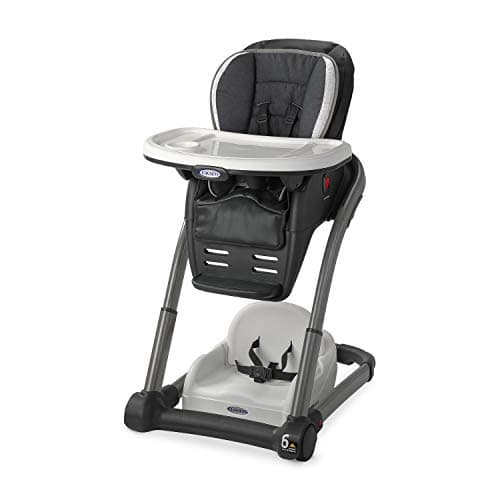
Converts through six configurations from infant high chair to toddler booster to youth stool. The most modes for the money.
- Safety
- 8
- Cleaning
- 6
- Footprint
- 5
- Longevity
- 9
- Value
- 9
- Type:
- Convertible, six modes
- Footprint:
- Large
- Tray:
- Removable, dishwasher-safe insert
- Price tier:
- Mid-range
What works
- Covers infant through school age without another purchase
- Tray insert goes in the dishwasher
- Recline is genuinely useful for a young baby
What to know first
- Bulky, with the biggest floor footprint here
- The fabric seat pad catches crumbs in every seam
- Lots of parts to store when unused
#ad Affiliate link · Price as of October 22, 2026
Product photo from the Amazon listing, not a photograph of our own unit.
hiccapop OmniBoost Travel Booster
hiccapop
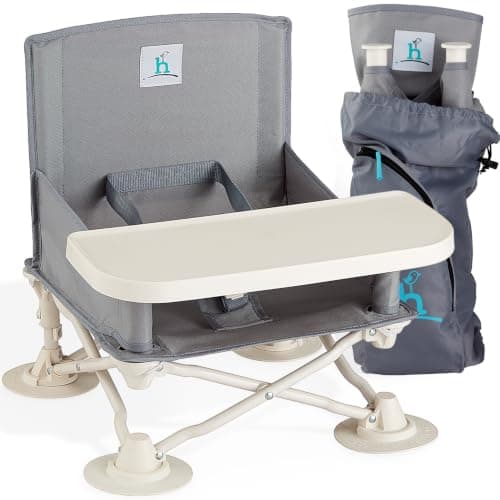
Folds to the size of a laptop bag and straps onto a dining chair. The cheapest way to have a safe seat at a grandparent's house.
- Safety
- 7
- Cleaning
- 7
- Footprint
- 10
- Longevity
- 7
- Value
- 9
- Type:
- Folding booster with tray
- Footprint:
- None, it sits on a chair
- Tray:
- Included, removable
- Price tier:
- Budget
What works
- Folds small enough for a carry-on
- Tray included, unlike most boosters
- Cheap enough to leave at a relative's house
What to know first
- Only as stable as the chair you strap it to
- Fabric absorbs spills
- Not a replacement for a daily high chair with a young baby
#ad Affiliate link · Price as of October 22, 2026
Product photo from the Amazon listing, not a photograph of our own unit.
Inglesina Fast Table Chair
Inglesina
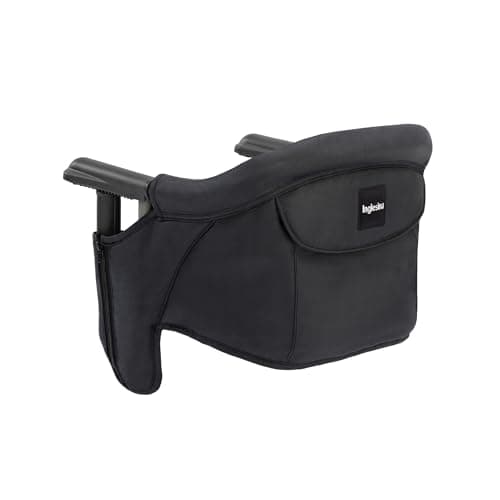
Clamps to the table with zero floor footprint and folds into a bag. The single best thing to own in a small apartment or a rental.
- Safety
- 8
- Cleaning
- 7
- Footprint
- 10
- Longevity
- 7
- Value
- 8
- Type:
- Hook-on table chair
- Footprint:
- None on the floor
- Tray:
- None, the child uses the table
- Price tier:
- Mid-range
What works
- No floor space used at all
- Folds flat into a carry bag for restaurants and travel
- Puts the baby at table height with the family
What to know first
- Needs a suitable table edge, so no pedestal or glass tables
- Fabric seat needs sponging, not hosing
- Weight limit is lower than a floor-standing chair
#ad Affiliate link · Price as of October 22, 2026
Common questions
Do I really need a high chair?
You need a safe seat from about six months; you do not necessarily need a high chair. In an ordinary kitchen a cheap floor-standing chair with a harness is the simplest answer. If floor space is short, a booster strapped to a dining chair you already own or a seat that clamps to the table does the same job and stores away.
Should a high chair go on the baby registry?
Yes, as one of the few large items that genuinely gets used daily for a year or more. Put a chair you have measured against your kitchen on the list rather than the one with the most modes, and consider asking for a booster instead if your kitchen is tight.
Do I need a high chair for a newborn?
No. A baby who cannot sit unsupported is not ready for a feeding seat, and a recline position does not change that. Buy when they can sit up and hold their head steady, usually around six months — see when can a baby sit in a high chair.
Can I use a booster seat instead of a high chair?
For most families, yes. A harnessed booster on a solid dining chair is a complete answer at a fraction of the price and the footprint. The conditions are that the chair underneath is genuinely solid and that the booster has a real harness, not just a lap strap.
How much should I spend on a high chair?
Budget is enough for the job. Every chair sold in the US meets the same federal standard, so extra money buys adjustment, materials, a smaller footprint or a frame that lasts into school age — not more safety. Spending more is defensible when you want a chair that converts into furniture you will still use.
Do I need a travel high chair as well?
Only if you regularly eat somewhere with no safe seat. Most restaurants provide one; the reason to carry your own is that a borrowed chair often has a broken or missing harness. If you visit the same relative often, a cheap folding booster left at their house beats a seat you carry — the options are in the best travel high chairs.
How long will we use it?
Roughly from six months to somewhere between two and three years, when most children move to a booster at the table. Plan on about two years of daily use, which is the number to divide the price by — and see when to stop using a high chair.
Sources
- American Academy of Pediatrics (HealthyChildren.org) — High Chair Safety Tips
- American Academy of Pediatrics (HealthyChildren.org) — Starting Solid Foods
- CPSC — High Chairs (16 CFR part 1231, ASTM F404)
- CPSC — Booster Seats (16 CFR part 1237, ASTM F2640)
- Bumbo USA — Floor Seat safety notice and recall history
- NBC Select — 17 high chairs tested and reviewed
- Mommyhood101 — Best High Chairs, tested and reviewed
- CPSC — Recalls