Guides
When to switch from a bottle to a sippy cup
Start offering a cup at six months. Start replacing bottles at twelve. Those are two different things, and conflating them is why the handover goes badly.
How this page is funded: if you buy through a link here we may earn an Amazon commission, at no extra cost to you. It never changes which product we put first, and we recommend the cheaper option whenever it is the better one. Full disclosure.
The short answer
Start offering a cup at around six months, when your baby starts solids, and start actually replacing bottle feeds at around twelve months, aiming to be done with bottles by eighteen months. The six-month cup is practice with water at meals; nothing is being taken away. The twelve-month switch is the real transition, and it goes best as one feed at a time over two or three weeks, starting with the feed your baby cares about least — usually the middle of the day — and ending with the bedtime bottle.
Why there are two dates, not one
Almost every argument about sippy cups comes from treating "when can my baby use a cup" and "when should my baby stop using bottles" as the same question. They are months apart and they have different answers.
The first is a skill. Drinking from a cup is a motor skill that takes practice, and practice should start long before the cup has to carry any of the day's nutrition. Around six months, when solids start, is the usual point — the same milestone the AAP's starting solid foods guidance describes. A small amount of water in a cup at mealtimes, most of it ending up on the tray, is exactly what success looks like at this stage.
The second is a handover. Around a baby's first birthday, when whole milk or continued breastfeeding replaces formula as the drink, the bottle itself stops having a job. Prolonged bottle use past this point is associated with tooth decay and with iron deficiency from drinking milk in place of eating, which is why most guidance wants bottles gone by around eighteen months.
| Age | What to offer | What it is for |
|---|---|---|
| Around 6 months | An open cup or a straw cup with a little water, at meals | Practice. Nothing is being replaced yet |
| 6–12 months | Cup at meals alongside normal bottle or breast feeds | Building the skill before you need it |
| Around 12 months | Start replacing bottle feeds with cup feeds | This is the point most pediatric guidance names |
| By 18 months | Bottles gone | Avoids the dental and feeding issues of prolonged bottle use |
Which cup: spouted, straw or open
There are three real options and the classic hard-spout sippy is the least recommended of them. A hard spout works much like a bottle nipple: the child sucks, the tongue pushes forward, and the oral pattern you are trying to move on from is reinforced. Speech and dental professionals generally prefer a straw cup or an open cup for that reason.
Open cup. Best for oral development, worst for your floor. Use a tiny one, fill it with a centimetre of water, and accept the mess at meals.
Straw cup. The practical compromise most families land on. It encourages a mature swallow, it travels, and a weighted straw works at any angle.
Spouted sippy. Tidiest, and genuinely useful in a car or a stroller. Treat it as a spill-control device rather than a developmental step, and use a soft spout rather than a hard one if you use one at all.
A note on what we are not doing here: we do not keep sippy cups in our product registry, so we are not going to rank cups we have not researched to the standard we apply to everything else. What we can usefully tell you is which bottles make the handover easier, which is what the picks below are.
What to look for when you buy
- A straw or soft spout over a hard spout. If you are buying one cup, buy a straw cup.
- Few parts, and no hidden valve. Anti-spill valves are mould traps and they make sucking harder than a straw needs to be. Fewer pieces also means fewer things to lose.
- Small volume. A 7oz cup encourages grazing on milk all day, which is the habit the switch is meant to break. Small cups, at meals.
- Dishwasher-safe, top rack. You are about to own several.
- A brand whose bottle you already use, if you can. Several major bottle ranges sell cups alongside the bottles, so collars, brushes and sterilizer baskets you already own keep being useful. Check the maker's own page for what fits what before assuming parts interchange.
- Nothing that needs a new sterilizer. Cups are washed, not sterilized, for a baby of this age — see when to stop sterilizing baby bottles.
How to do the switch without a fight
One feed at a time, over two to three weeks. Pick the feed your baby is least attached to — usually a daytime one — and offer the cup at that feed instead of the bottle for several days before dropping the next. Keep the order, the place and the person the same; it is the ritual the baby is attached to as much as the bottle.
Leave the bedtime bottle until last, and when you do drop it, move the drink earlier in the routine so it stops being the thing that sends them to sleep. A bottle in bed is the specific habit the dental guidance is worried about, so it is worth separating drink from sleep before you worry about the container.
Expect a dip in milk intake for a week or two. A cup is slower and more effortful than a bottle, and that is partly the point. What matters is that overall intake across food and drink stays reasonable; if you are unsure, that is a conversation with your pediatrician rather than a reason to go back to bottles. Bottle-side context is in when to replace baby bottles and how much milk should a newborn drink.
When it is going wrong
They refuse the cup entirely. Change the cup type before you change the plan — a lot of babies who reject a hard spout take a straw immediately. Offer it when they are thirsty but not desperate, and let them hold it themselves.
They will drink water but not milk from it. Common. Put a very small amount of milk in the cup at a meal where food is the main event, rather than trying to replace a milk feed outright.
They take it from a caregiver but not from you. Also common, and it is the same mechanism as bottle refusal from a nursing parent. Have someone else offer it for a few days — the pattern is described in baby won't take a bottle.
You are past eighteen months and still on bottles. Not a disaster, and very common. Go cold on daytime bottles first and keep offering a cup at every meal. Ask your pediatrician or dentist if you are worried about teeth.
Worth saying plainly
Never put a baby to bed with a bottle or a cup of milk or juice — prolonged contact between sugary liquid and teeth overnight is the main cause of early childhood tooth decay. Do not give cow's milk as a main drink before twelve months. Supervise any cup with a straw or a rigid spout while your child is walking around. Timing questions about your own child, including any concern about intake, growth or speech, belong with your pediatrician or dentist — we are not clinicians and nothing here is medical advice.
What we would buy
Now that the decision is made, these are the products we would actually put in the basket, and why.
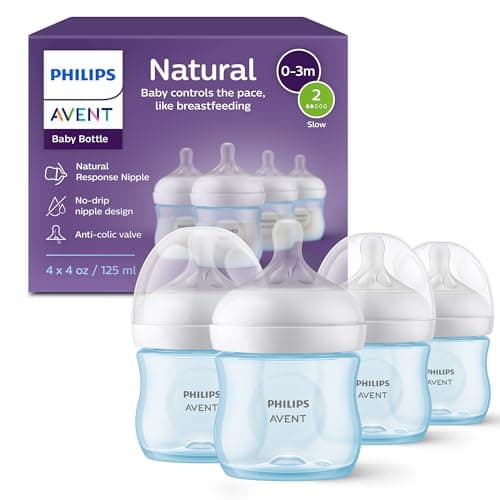
Product photo from the Amazon listing, not a photograph of our own unit.
Philips Avent Natural Bottle with Natural Response Nipple
Philips Avent
The safest default buy: a wide nipple that only releases milk when the baby actively drinks, inside the biggest parts ecosystem on the shelf.
- Latch
- 9
- Colic control
- 8
- Cleaning
- 9
- Durability
- 9
- Value
- 9
- Material:
- Polypropylene, glass and PPSU versions
- Parts to wash:
- Three
- Nipple shape:
- Wide
- Price tier:
- Mid-range
What works
- Flow-on-demand nipple paces the feed more like nursing
- Bottles, nipples, sippy tops and pump parts all interchange
- Available in plastic, glass and PPSU with the same nipples
What to know first
- Venting is milder than Dr. Brown's for a severely windy baby
- Nipple flow numbering confuses first-time buyers
- Wide base does not fit narrow warmer wells
#ad Affiliate link · Price as of October 17, 2026
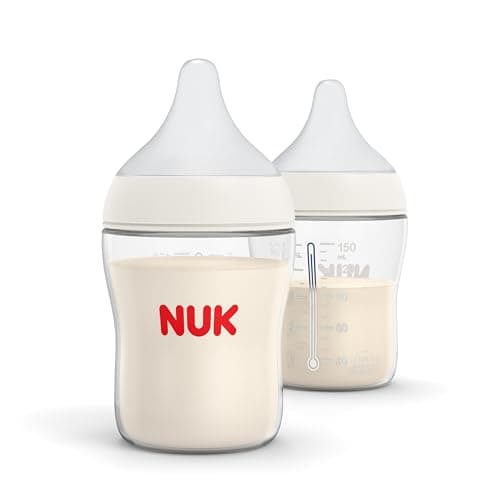
Product photo from the Amazon listing, not a photograph of our own unit.
NUK Perfect Match Natural Transition Bottle
NUK
Sold on one thing only: a nipple NUK says is twice as soft as its usual silicone, for the baby who has turned down everything else.
- Latch
- 9
- Colic control
- 8
- Cleaning
- 8
- Durability
- 7
- Value
- 8
- Material:
- Plastic body, medical-grade silicone nipple
- Parts to wash:
- Three
- Nipple shape:
- Breast-shaped, extra-soft
- Price tier:
- Mid-range
What works
- Nipple is made twice as soft as NUK's standard silicone, which is the whole point of it
- Anti-colic vent, so you are not trading wind problems for latch ones
- Cheap enough to try as an experiment rather than a commitment
What to know first
- A soft nipple can collapse under a strong suck
- Sold in 5oz, so you outgrow the size before the nipple wears out
- Smaller accessory range than Avent or Dr. Brown's
#ad Affiliate link · Price as of October 17, 2026
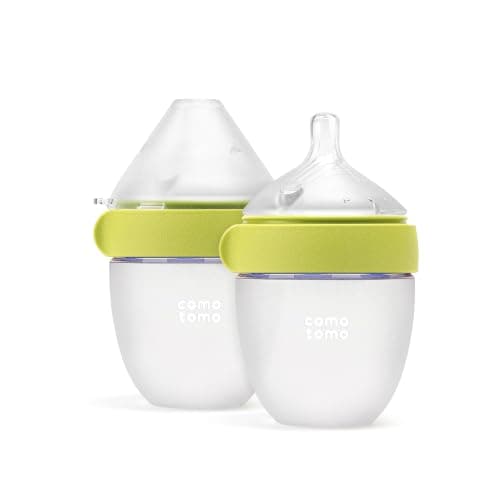
Product photo from the Amazon listing, not a photograph of our own unit.
Comotomo Silicone Baby Bottle (Gen 2)
Comotomo
The bottle babies take when they have refused everything else: a soft squeezable silicone body and a wide, breast-shaped nipple.
- Latch
- 10
- Colic control
- 7
- Cleaning
- 9
- Durability
- 7
- Value
- 7
- Material:
- Silicone body, silicone nipple
- Parts to wash:
- Three
- Nipple shape:
- Wide, breast-like
- Price tier:
- Mid-range
What works
- The most widely recommended bottle for bottle-refusing breastfed babies
- Only three parts, and the wide mouth washes by hand easily
- Soft body is easy for small hands to hold later on
What to know first
- Squat shape does not fit every bottle warmer or sterilizer rack
- No internal venting system, so it is not the anti-colic specialist
- Nipples wear faster than hard plastic ones
#ad Affiliate link · Price as of October 17, 2026
Common questions
When should a baby switch from a bottle to a sippy cup?
Start offering a cup around six months, when solids begin, and start replacing bottle feeds around twelve months, aiming to have bottles gone by eighteen months. The first is practice with water at meals; the second is the actual handover, done one feed at a time over a couple of weeks.
Is a straw cup better than a sippy cup?
Generally yes. A hard-spout sippy works much like a bottle nipple and reinforces the same sucking pattern, while a straw encourages a more mature swallow. If you are buying one cup, buy a straw cup; keep a spouted cup for the car if you want spill control.
What age should bottles be stopped completely?
Most guidance says by around eighteen months. Prolonged bottle use past that is associated with tooth decay and with drinking milk in place of eating. If you are past it, drop daytime bottles first and keep a cup available at every meal.
How do I get my baby to drink milk from a cup?
Offer a small amount at a meal where food is the main event, rather than swapping a whole milk feed. Many babies accept water in a cup long before milk. Keep the ritual the same — same chair, same time — because the routine is often what they are attached to rather than the bottle.
Can you go straight from a bottle to an open cup?
Yes, and plenty of families do, especially those who have been offering an open cup at meals since six months. It is messier for a few weeks and better for oral development. A straw cup is the usual compromise if your floor is a consideration.
Do sippy cups fit my existing bottles?
Sometimes. Several major bottle ranges sell trainer cups and spouts designed around the same bottle bodies, which saves you buying a whole new system. Compatibility varies by range and by generation, so check the maker's own page for your specific bottle rather than assuming parts interchange.