Baby bottles
The best baby bottles under $50
Twenty-five dollars buys you a plastic multipack. Fifty buys you a material choice - which is a different question, and the one most people are actually asking.
How this page is funded: if you buy through a link here we may earn an Amazon commission, at no extra cost to you. It never changes which product we put first, and we recommend the cheaper option whenever it is the better one. Full disclosure.
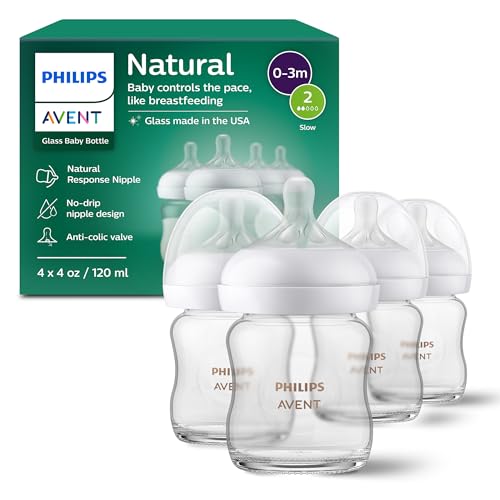
Buy the Philips Avent Natural Glass bottle. Under $50 it is the easiest glass bottle to live with: borosilicate, which handles the temperature swing of a dishwasher and a sterilizer better than cheaper soda-lime glass, three parts to wash, and the same flow-on-demand nipple as the plastic Avent — so nipples, lids, sippy tops and pump parts all interchange with the biggest accessory range on the shelf. The budget pick is the Tommee Tippee Closer to Nature Glass, the cheapest real glass bottle sold and the cheapest way to find out whether you even like glass.
Our pick
Philips Avent Natural Glass Bottle
Borosilicate glass with the same flow-on-demand nipple as the plastic Avent. The easiest glass bottle to live with.
One thing to be clear about before you buy it: glass is heavy once it is full, and no sleeve is included. If your baby is at the stage of holding the bottle themselves, or if bottles get handed to a toddler in a car seat, buy the plastic Avent Natural Response instead — same nipple, same ecosystem, none of the weight.
#ad Affiliate link · Price as of November 28, 2026
What is actually under the line today
As of November 28, 2026, 6 of the 6 picks below had a live Amazon price under $50. Amazon prices move daily, so treat the band as where these products normally sit rather than a guarantee — every “Check price” button goes to the live listing and carries the date we last verified it.
Who should buy something else
- Your baby is gassy and nothing else has helped. Buy the Dr. Brown's Options+ Glass. The vent system, in glass.
- You want the nipple most often described as closest to nursing. Buy the Pigeon PPSU. Light, and it survives daily sterilizing.
- You travel, or sterilize in a hotel room and an office kitchen. Buy the MAM Easy Start. The base unscrews and it sterilizes itself in a microwave.
- You only have $25 to spend. The tighter band is a different page, and plastic is the honest answer there.
Quick picks
Our ranking, with the reasoning underneath. Tap any row to jump to the full write-up.
| # | Product | Best for | Score | Price |
|---|---|---|---|---|
| 1 | Philips Avent Natural Glass Bottle Borosilicate glass with the same flow-on-demand nipple as the plastic Avent. The easiest glass bottle to live with. | Glass, overall | 8.5 | $39.95View on Amazon #ad Affiliate link · Price as of November 28, 2026 |
| 2 | 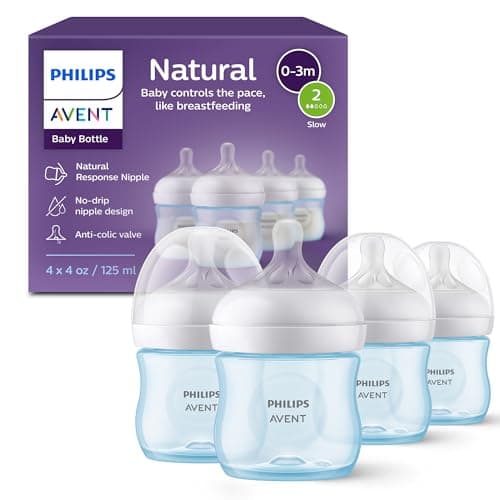 Philips Avent Natural Bottle with Natural Response Nipple The safest default buy: a wide nipple that only releases milk when the baby actively drinks, inside the biggest parts ecosystem on the shelf. | Most babies | 8.9 | $27.19$33.99(20% off)View on Amazon #ad Affiliate link · Price as of November 28, 2026 |
| 3 | 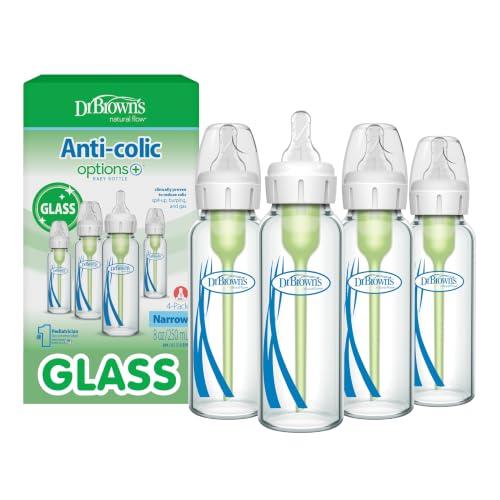 Dr. Brown's Options+ Glass The Options+ vent system in glass. The pick if you want both the anti-colic engineering and a plastic-free feed. | Anti-colic in glass | 8.3 | $31.96View on Amazon #ad Affiliate link · Price as of November 28, 2026 |
| 4 | 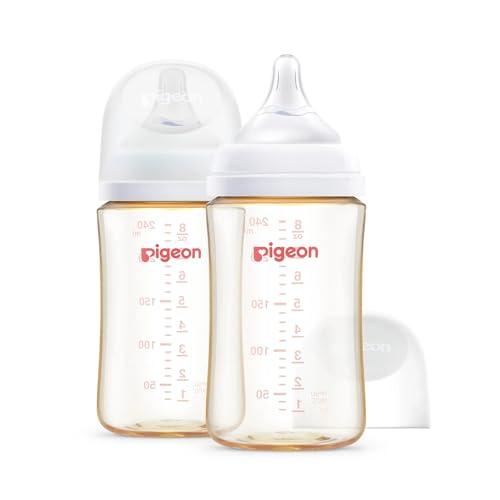 Pigeon PPSU Wide-Neck Bottle The nipple most often described as closest to nursing, on a PPSU body that survives daily sterilizing without clouding. | Nipple feel | 8.7 | $28.79$35.99(20% off)View on Amazon #ad Affiliate link · Price as of November 28, 2026 |
| 5 | 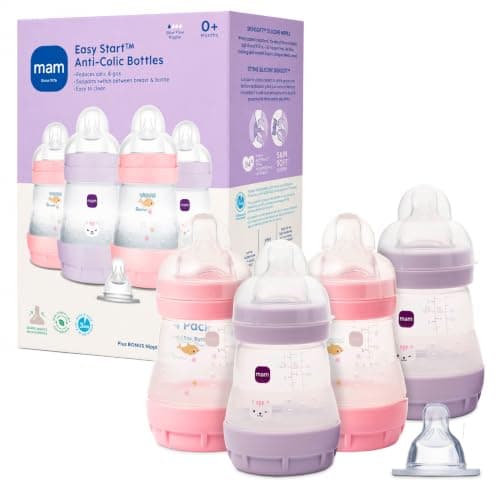 MAM Easy Start Anti-Colic Its base unscrews so the bottle sterilizes itself in a microwave, which is genuinely useful in a hotel room or an office kitchen. | Self-sterilizing | 8.2 | $23.99$29.99(20% off)View on Amazon #ad Affiliate link · Price as of November 28, 2026 |
| 6 | 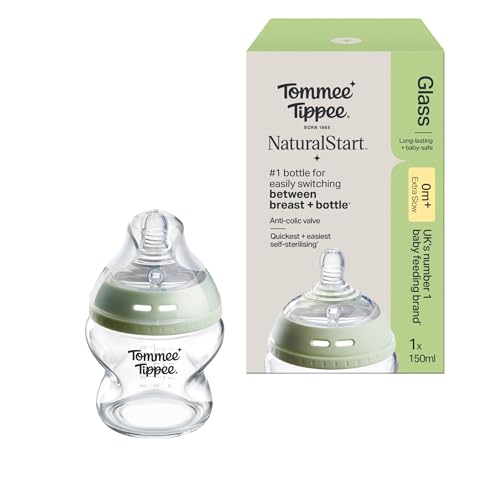 Tommee Tippee Closer to Nature Glass The cheapest way to try glass, with the same wide nipple as Tommee Tippee's plastic range. | Glass, value | 8.0 | $17.99View on Amazon #ad Affiliate link · Price as of November 28, 2026 |
Scores are our own research scores on the rubric published at how we choose. They are not star ratings from customers, and we do not show a price we cannot verify live.
Every pick, in detail
Product photo from the Amazon listing, not a photograph of our own unit.
Philips Avent Natural Glass Bottle
Philips Avent
Borosilicate glass with the same flow-on-demand nipple as the plastic Avent. The easiest glass bottle to live with.
- Latch
- 9
- Colic control
- 8
- Cleaning
- 9
- Durability
- 8
- Value
- 6
- Material:
- Borosilicate glass
- Parts to wash:
- Three
- Nipple shape:
- Wide
- Price tier:
- Premium
What works
- Borosilicate handles temperature change better than soda-lime glass
- Shares nipples and lids with the plastic Avent range
- Resists staining and smells
What to know first
- Heavy once filled
- No sleeve included, so drops are unforgiving
- Costs several times a plastic bottle
#ad Affiliate link · Price as of November 28, 2026
Product photo from the Amazon listing, not a photograph of our own unit.
Philips Avent Natural Bottle with Natural Response Nipple
Philips Avent
The safest default buy: a wide nipple that only releases milk when the baby actively drinks, inside the biggest parts ecosystem on the shelf.
- Latch
- 9
- Colic control
- 8
- Cleaning
- 9
- Durability
- 9
- Value
- 9
- Material:
- Polypropylene, glass and PPSU versions
- Parts to wash:
- Three
- Nipple shape:
- Wide
- Price tier:
- Mid-range
What works
- Flow-on-demand nipple paces the feed more like nursing
- Bottles, nipples, sippy tops and pump parts all interchange
- Available in plastic, glass and PPSU with the same nipples
What to know first
- Venting is milder than Dr. Brown's for a severely windy baby
- Nipple flow numbering confuses first-time buyers
- Wide base does not fit narrow warmer wells
#ad Affiliate link · Price as of November 28, 2026
Product photo from the Amazon listing, not a photograph of our own unit.
Dr. Brown's Options+ Glass
Dr. Brown's
The Options+ vent system in glass. The pick if you want both the anti-colic engineering and a plastic-free feed.
- Latch
- 8
- Colic control
- 10
- Cleaning
- 5
- Durability
- 8
- Value
- 6
- Material:
- Borosilicate glass
- Parts to wash:
- Five with the vent fitted
- Nipple shape:
- Narrow and wide versions
- Price tier:
- Premium
What works
- The only mainstream glass bottle with a full internal vent system
- Vent can be removed later
- Same nipples as the plastic Options+
What to know first
- Heaviest bottle here when full
- Five parts in glass is a lot of washing
- Glass plus vent is the most expensive combination
#ad Affiliate link · Price as of November 28, 2026
Product photo from the Amazon listing, not a photograph of our own unit.
Pigeon PPSU Wide-Neck Bottle
Pigeon
The nipple most often described as closest to nursing, on a PPSU body that survives daily sterilizing without clouding.
- Latch
- 10
- Colic control
- 8
- Cleaning
- 9
- Durability
- 9
- Value
- 6
- Material:
- PPSU
- Parts to wash:
- Three
- Nipple shape:
- Wide
- Price tier:
- Premium
What works
- PPSU tolerates repeated sterilizing better than polypropylene
- Nipple is widely praised for latch
- Light for a premium bottle
What to know first
- Most expensive plastic bottle here
- The amber tint of PPSU looks stained even when clean
- Smaller US accessory range than Avent
#ad Affiliate link · Price as of November 28, 2026
Product photo from the Amazon listing, not a photograph of our own unit.
MAM Easy Start Anti-Colic
MAM
Its base unscrews so the bottle sterilizes itself in a microwave, which is genuinely useful in a hotel room or an office kitchen.
- Latch
- 8
- Colic control
- 8
- Cleaning
- 8
- Durability
- 8
- Value
- 9
- Material:
- Polypropylene
- Parts to wash:
- Four
- Nipple shape:
- Wide, vented base
- Price tier:
- Mid-range
What works
- Self-sterilizes in a microwave with a splash of water
- Vented base reduces gas without a long internal straw
- The unscrewing base makes scrubbing easy
What to know first
- One more join means one more place to leak
- Four parts, not three
- Nipple is flatter than the wide breast-shaped designs
#ad Affiliate link · Price as of November 28, 2026
Product photo from the Amazon listing, not a photograph of our own unit.
Tommee Tippee Closer to Nature Glass
Tommee Tippee
The cheapest way to try glass, with the same wide nipple as Tommee Tippee's plastic range.
- Latch
- 8
- Colic control
- 7
- Cleaning
- 9
- Durability
- 7
- Value
- 9
- Material:
- Borosilicate glass
- Parts to wash:
- Three
- Nipple shape:
- Wide, squat bottle
- Price tier:
- Mid-range
What works
- Least expensive mainstream glass bottle
- Shares nipples with the plastic range
- Short body is easy to grip
What to know first
- No protective sleeve
- A squat glass bottle is awkward in narrow warmers
- Basic venting
#ad Affiliate link · Price as of November 28, 2026
What $50 buys that $25 does not
A material choice. That is the whole difference, and it is a bigger one than it sounds.
At $25 the sensible buy is a plastic multipack: polypropylene, light, cheap enough to lose one, and genuinely fine — that band has its own page at the best baby bottles under $25 and the honest winner there is plastic. At $50 two other materials come into reach:
- Borosilicate glass. Nothing leaches, nothing stains, nothing holds a smell, and it takes the thermal shock of going from a fridge to a warmer to a sterilizer without crazing. It is also heavy and it breaks.
- PPSU. A high-performance plastic that tolerates repeated sterilizing far better than ordinary polypropylene, which clouds and softens over a year of steam cycles. It is light like plastic and durable like glass, and it costs more than either.
If that distinction is new, the longer version is in glass vs plastic baby bottles, and the safety question underneath it — what the FDA actually says about BPA in US baby bottles — is covered there too.
A note on the numbers before anything else: bottle prices move with multipack size as much as with discounts, so a “bottle” under $50 might be one premium glass bottle or a four-pack of plastic. Every price on this page is read from the listing we link at the moment you load it, and the note above says how many of these picks are under $50 today, with the date we checked. We never write a price into the copy.
| Bottle | Material | Parts to wash | Nipple shape | Shares parts with |
|---|---|---|---|---|
| Philips Avent Natural Glass | Borosilicate glass | Three | Wide, flow-on-demand | The whole Avent range, plastic and PPSU |
| Dr. Brown's Options+ Glass | Borosilicate glass | Five with the vent fitted | Narrow and wide versions | The plastic Options+ nipples |
| Pigeon PPSU Wide-Neck | PPSU | Three | Wide | Pigeon's own range only |
| Philips Avent Natural Response | Polypropylene | Three | Wide, flow-on-demand | The whole Avent range, glass and PPSU |
| MAM Easy Start Anti-Colic | Polypropylene | Four | Wide, vented base | MAM's own range |
| Tommee Tippee Closer to Nature Glass | Borosilicate glass | Three | Wide, squat bottle | The plastic Tommee Tippee range |
What we ranked these on
Parts to wash, first. You will do this six to eight times a day for months. A three-part bottle and a five-part bottle are not the same product, whatever the material, and the gap compounds: see the easiest baby bottles to clean.
Then the accessory ecosystem. The single most expensive mistake in this category is buying into a range you later abandon, because nipples, lids and spouts do not transfer. A bottle whose nipples also fit the glass version, the PPSU version and your pump is worth real money over a year.
Then nipple shape. Wide and breast-shaped for a baby who also nurses, narrow if your baby has already accepted one. There is no universally correct answer, which is why the nipple itself gets its own page.
Then venting. Only worth paying for if your baby is actually windy. A vent is two more parts and one more place to leak.
We have not tested these bottles and do not claim to. Materials, part counts and nipple shapes come from the makers' own specifications.
Philips Avent Natural Glass — the pick
Borosilicate glass with the same Natural Response nipple as the plastic range, which only releases milk when the baby actively drinks rather than dripping under gravity. Three parts to wash, which for a glass bottle is as low as it goes, and it resists staining and smells in a way that plastic simply does not after six months of formula.
The reason it wins rather than the Dr. Brown's is the ecosystem. Avent nipples, lids, sippy tops and pump parts interchange across plastic, glass and PPSU, so the bottle you buy today does not lock you out of anything later — and the manual pump in the same range screws straight onto it, which removes a decanting step at 3am.
The honest cons. Heavy once filled. No protective sleeve is included, so a drop onto tile is a drop onto tile. And it costs several times what a plastic bottle does, which is the trade you are choosing to make.
Philips Avent Natural Response — the same bottle in plastic
Worth its own entry on a band page because it is the version most people should actually buy: identical nipple, identical ecosystem, a fraction of the weight, and comfortably inside this band even in a multipack. If you want the Avent system and do not specifically want glass, this is the buy.
It is also the safest default first bottle on the whole site, which is why it anchors our starter-set picks.
The honest cons. The venting is milder than Dr. Brown's for a severely windy baby. The nipple flow numbering confuses first-time buyers — bottle nipple flow sizes untangles it. And the wide base does not fit narrow warmer wells.
Dr. Brown's Options+ Glass — for a gassy baby
The only mainstream glass bottle with a full internal vent system, which means it is the one bottle here that gives you both the anti-colic engineering and a plastic-free feed. If wind is the actual problem you are solving, this is the pick and the material is a bonus.
The vent can be removed once colic settles, which drops it from five parts to three — a real feature rather than a marketing line.
The honest cons. It is the heaviest bottle here when full, and five parts in glass is a lot of washing. Glass plus vent is also the most expensive combination in the category. If your baby is windy but you do not need glass, the plastic anti-colic picks are cheaper and lighter.
Pigeon PPSU Wide-Neck — the nipple people compare to nursing
The Pigeon nipple is the one most often described as closest to the breast, on a PPSU body that survives daily sterilizing without clouding. Three parts, light for a premium bottle, and if you are sterilizing every day — which the under-$100 sterilizers make easy — PPSU is the material that puts up with it best.
The honest cons. The most expensive plastic bottle here. The amber tint of PPSU looks stained even when it is perfectly clean, which bothers some people. And the US accessory range is smaller than Avent's, so you have fewer places to go later.
MAM Easy Start Anti-Colic — for travel
Its base unscrews, so with a splash of water the bottle sterilizes itself in a microwave in about three minutes. In a hotel room or an office kitchen that is genuinely useful — it is the reason this bottle also appears on our microwave sterilizer picks. The vented base reduces wind without a long internal straw, and the unscrewing base makes scrubbing the inside easy.
The honest cons. One more join means one more place to leak. Four parts, not three. And the nipple is flatter than the wide breast-shaped designs, which matters for a baby who also nurses.
Tommee Tippee Closer to Nature Glass — the budget pick
The least expensive mainstream glass bottle sold, which makes it the sensible way to try glass before committing a whole set to it. It shares nipples with the plastic Tommee Tippee range, and the short body is easy to grip one-handed.
The honest cons. No protective sleeve. A squat glass bottle is awkward in narrow warmer wells, so check yours — the units that take wide and squat bottles are flagged on bottle warmers for glass bottles. And the venting is basic, so it is not the pick for a windy baby.
What the $50 ceiling actually costs you
Honestly, not much — which is unusual for a price band. Baby bottles are one of the few categories where $50 reaches the top of the market rather than the bottom. What it does not buy is quantity: one premium glass bottle at this price is one bottle, and a newborn getting most feeds from a bottle needs six to eight so you are not washing between every feed. Work out your number first — how many bottles do I need — because buying four cheap bottles often beats buying one beautiful one.
The other thing it does not buy is a guess at what your baby will accept. Nipple preference is not predictable from a spec sheet, and the only reliable method is to buy one of two shapes and try. That is why the cheap bottles on this page are not filler: a $12 glass bottle that your baby takes beats a $43 one they refuse.
Three things to do before you click buy
- Buy one, not a set, until a nipple is accepted. Then buy the set. Bottle refusal is common and sets are expensive — our bottle-refusal picks exist for exactly that week.
- Check the bottle fits your warmer and sterilizer. Wide and squat bottles do not fit every well, and glass does not fit every rack.
- Decide whether you are buying into a system. If you will want sippy tops or pump compatibility later, pick the range that has them rather than the bottle that is $3 cheaper now.
Worth saying plainly
Wash and sanitize every bottle and nipple before first use, and wash after every feed — the CDC's guidance on cleaning feeding items is the one to follow, and how to wash baby bottles is our walkthrough of it. Replace any nipple that is torn, sticky, discoloured or stretched, and replace glass with any chip or crack immediately rather than at a convenient moment. Never heat a bottle in a microwave: it heats unevenly and creates hot spots that can scald, which is why we say not to warm milk that way even in bottles rated for microwave sterilizing. We are not clinicians and nothing here is medical advice.
How we chose
Researched, not hands-on, and labeled that way on every card. The band is verified against the live price layer when the page renders, with the date shown above, rather than written into the copy. Materials, part counts and nipple specifications come from the makers' own pages, including Philips Avent and Dr. Brown's; independent round-ups from Mommyhood101; material and hygiene guidance from the FDA and CDC. Parts to wash is weighted heaviest, then ecosystem, then nipple shape. Rubric: how we choose.
Common questions
What is the best baby bottle under $50?
The Philips Avent Natural Glass bottle: borosilicate glass, only three parts to wash, and the same nipple and accessories as the whole Avent range. Buy the plastic Natural Response version instead if weight matters, or the Tommee Tippee glass bottle if you want the cheapest way into glass.
Is it worth paying more than $25 for a baby bottle?
Only for a material you specifically want. Above $25 you are buying borosilicate glass or PPSU rather than better feeding performance — a good polypropylene bottle feeds a baby just as well.
How many bottles do I need?
Six to eight if your baby takes most feeds from a bottle, three or four if bottles are occasional. The full calculation is in how many bottles do I need.
Is glass or PPSU better for baby bottles?
Glass if you want nothing but glass touching the milk and you can live with the weight; PPSU if you sterilize daily and want something light that will not cloud. Both outlast ordinary polypropylene.
Are the prices on this page current?
Yes. Every price comes from the Amazon listing we link, is refreshed daily and carries the date it was checked. Where we cannot verify a price we show no number at all rather than an old one.
Sources
- Philips Avent — Natural Response nipple range (five flow levels)
- Dr. Brown's — Natural Flow Anti-Colic Options+ Narrow bottle specification
- Mommyhood101 — Best Baby Bottles, tested and reviewed
- FDA — Bisphenol A (BPA): Use in Food Contact Application
- CDC — How to Clean, Sanitize, and Store Infant Feeding Items