Breast pumps
The best breast pumps for combo feeding in 2026
If you nurse most of the time and bottle-feed some of the time, the pump that wins is not the one that removes the most milk. It is the one you will bother to set up for twenty minutes.
How this page is funded: if you buy through a link here we may earn an Amazon commission, at no extra cost to you. It never changes which product we put first, and we recommend the cheaper option whenever it is the better one. Full disclosure.
Start with a Haakaa and a manual pump, and only buy an electric once you know how often you are actually pumping. Combination feeding usually means a handful of sessions a week, and at that frequency the cleaning and setup time per session dominates everything else — a one-piece silicone cup you rinse in ten seconds gets used, and a six-part electric system in a cupboard does not. If you are pumping daily around work, buy the Momcozy M9; if you are replacing several feeds a day, buy the Spectra S2 Plus.
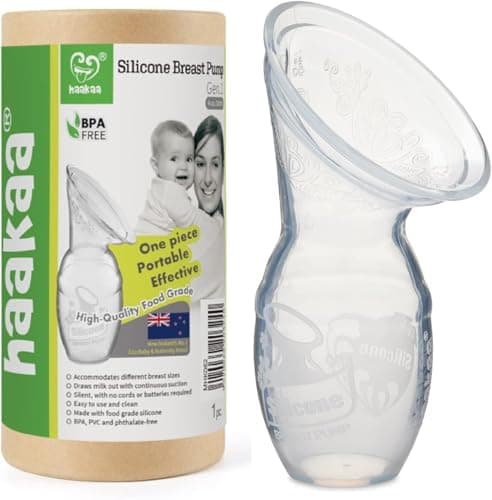
Our pick
Haakaa Silicone Breast Pump
Not really a pump: a one-piece silicone cup that catches the milk your other side leaks during a feed. Buy it as a second device, never your only one.
Combination feeding is a moving target. Most people pump more in month two than they expected and less in month six. Buy the cheap thing first, work out your actual pattern over three or four weeks, and then buy the right electric pump once rather than the wrong one immediately.
#ad Affiliate link · Price as of October 17, 2026
Who should buy something else
- You pump once a day around work and want it quick. Buy the Momcozy M9. In-bra, no table, no tubing.
- You are replacing several feeds a day. Buy the Spectra S2 Plus. At that volume output starts to matter again.
- You need a wearable that solves flange fit in the box. Buy the Elvie Stride 2.
- You are not sure you need a pump at all. Read this before spending anything.
Quick picks
Our ranking, with the reasoning underneath. Tap any row to jump to the full write-up.
| # | Product | Best for | Score | Price |
|---|---|---|---|---|
| 1 | Haakaa Silicone Breast Pump Not really a pump: a one-piece silicone cup that catches the milk your other side leaks during a feed. Buy it as a second device, never your only one. | Catching let-down | 7.2 | $12.94View on Amazon #ad Affiliate link · Price as of October 17, 2026 |
| 2 | 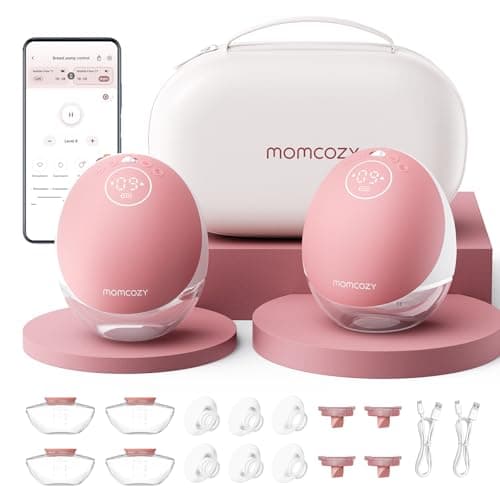 Momcozy M9 A real wearable without premium money, and the easiest one to recommend to somebody pumping for the first time. | Wearable, value | 8.4 | $194.64$269.99(28% off)View on Amazon #ad Affiliate link · Price as of October 17, 2026 |
| 3 | 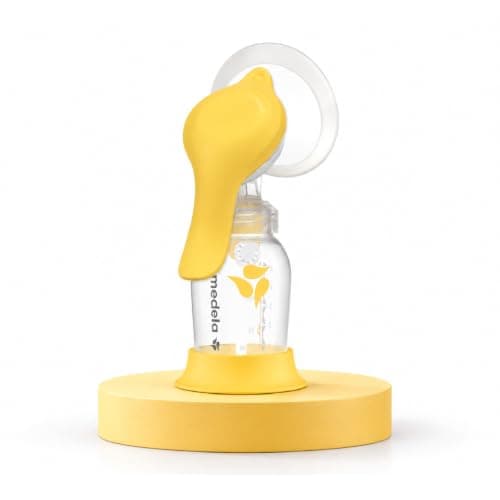 Medela Harmony The default manual pump in the US, and deservedly so: a two-speed handle that lets you stimulate then express without a motor. | Manual, overall | 8.0 | $28.72View on Amazon #ad Affiliate link · Price as of October 17, 2026 |
| 4 | 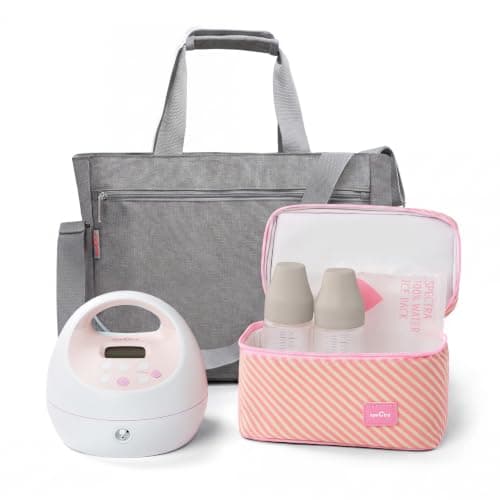 Spectra S2 Plus The same pump as the S1 without the battery. The right choice if you will always pump beside an outlet. | Double electric, value | 8.6 | $219.99View on Amazon #ad Affiliate link · Price as of October 17, 2026 |
| 5 | 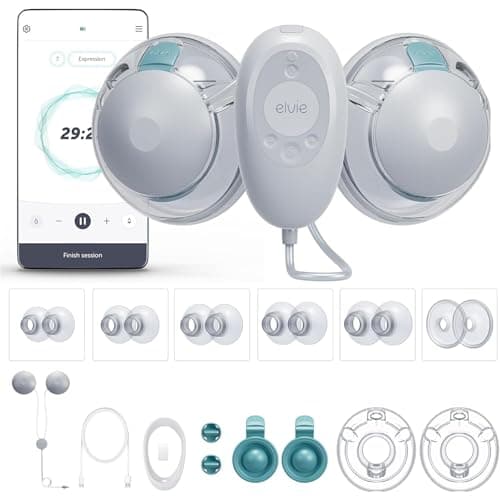 Elvie Stride 2 The only mainstream pump that ships six flange sizes and three cushion inserts, which is why it suits bodies at both ends of the sizing chart. | Fit solved in the box | 8.5 | $199.99$269.99(26% off)View on Amazon #ad Affiliate link · Price as of October 17, 2026 |
Scores are our own research scores on the rubric published at how we choose. They are not star ratings from customers, and we do not show a price we cannot verify live.
Every pick, in detail
Product photo from the Amazon listing, not a photograph of our own unit.
Haakaa Silicone Breast Pump
Haakaa
Not really a pump: a one-piece silicone cup that catches the milk your other side leaks during a feed. Buy it as a second device, never your only one.
- Output
- 4
- Comfort
- 8
- Discretion
- 9
- Cleaning
- 10
- Value
- 10
- Type:
- One-piece silicone suction cup
- Standout feature:
- Nothing to assemble
- Cleaning burden:
- Very low, one piece
- Price tier:
- Budget
What works
- One piece, so washing takes seconds
- Catches milk that would otherwise soak into a nursing pad
- Cheap enough to own two
What to know first
- Suction is passive, so it cannot replace a real pump
- Tips over easily when full
- No suction control at all
#ad Affiliate link · Price as of October 17, 2026
Product photo from the Amazon listing, not a photograph of our own unit.
Momcozy M9
Momcozy
A real wearable without premium money, and the easiest one to recommend to somebody pumping for the first time.
- Output
- 8
- Comfort
- 8
- Discretion
- 8
- Cleaning
- 7
- Value
- 9
- Type:
- In-bra wearable cup, double
- Standout feature:
- Near-premium suction at a mid-range price
- Cleaning burden:
- Moderate
- Price tier:
- Mid-range
What works
- Reviewers rate its suction close to premium wearables
- Widely stocked, so replacement parts are easy to find
- Simple controls, so there is less to learn in the first sleepless week
What to know first
- Not as quiet as the Elvie Pump
- No warming function
- Fit varies more by body than the premium cups
#ad Affiliate link · Price as of October 17, 2026
Product photo from the Amazon listing, not a photograph of our own unit.
Medela Harmony
Medela
The default manual pump in the US, and deservedly so: a two-speed handle that lets you stimulate then express without a motor.
- Output
- 6
- Comfort
- 8
- Discretion
- 8
- Cleaning
- 9
- Value
- 10
- Type:
- Manual, single
- Standout feature:
- Two-phase handle action
- Cleaning burden:
- Low
- Price tier:
- Budget
What works
- The best-selling manual pump in the US, so parts are everywhere
- Angled shield fits more bodies comfortably than a flat flange
- Nothing to charge and nothing to break
What to know first
- One breast at a time, and your hand does the work
- Not a realistic tool for exclusive pumping
- Hand fatigue on long sessions
#ad Affiliate link · Price as of October 17, 2026
Product photo from the Amazon listing, not a photograph of our own unit.
Spectra S2 Plus
Spectra
The same pump as the S1 without the battery. The right choice if you will always pump beside an outlet.
- Output
- 10
- Comfort
- 9
- Discretion
- 4
- Cleaning
- 8
- Value
- 9
- Type:
- Double electric, closed system
- Standout feature:
- S1 performance, mains power only
- Cleaning burden:
- Low
- Price tier:
- Mid-range
What works
- Performance is effectively identical to the S1 Plus
- Cheaper, and often the model insurance covers
- Same low-hassle closed system
What to know first
- No battery, so every session is beside a plug
- Same bulk as the S1
- Not discreet enough for an office
#ad Affiliate link · Price as of October 17, 2026
Product photo from the Amazon listing, not a photograph of our own unit.
Elvie Stride 2
Elvie
The only mainstream pump that ships six flange sizes and three cushion inserts, which is why it suits bodies at both ends of the sizing chart.
- Output
- 8
- Comfort
- 9
- Discretion
- 8
- Cleaning
- 7
- Value
- 7
- Type:
- Hands-free cups on a small hub motor
- Suction:
- Hospital grade, up to -300 mmHg
- Flange sizes:
- Six options 21-28mm in the box, plus 15/17/19mm inserts
- Price tier:
- Premium
What works
- Six sizes supplied, so you are not ordering parts in week one
- Cushion inserts go down to 15mm, the smallest range on a mainstream pump
- Hospital-grade suction in a cup you can wear under a shirt
What to know first
- Cups are tethered to a hub, so it is hands-free rather than cordless
- Premium money if your plan will not cover it
- More parts per session than a single-piece collection cup
#ad Affiliate link · Price as of October 17, 2026
What combination feeding actually is
Nursing some feeds and giving bottles for others — of expressed milk, formula, or both. It is extremely common, it is a legitimate way to feed a baby, and USDA WIC Breastfeeding Support has a plain-language page on how to do it while protecting supply. The feeding-side decisions are in the best bottles for combination feeding. This page is only about which pump, if any, to buy.
The important thing about combo feeding, from a shopping point of view, is that it has an enormous range. "One bottle in the evening so somebody else can do a feed" and "four bottles a day because I am back at work three days a week" are both combination feeding, and they need completely different equipment.
| How often you pump | What matters most | What to buy |
|---|---|---|
| A few times a week, to build a small stash | Nothing to set up, nothing to wash | A Haakaa, plus a manual pump |
| Once a day, usually the same slot | Speed and a short cleaning routine | A wearable such as the Momcozy M9 |
| Two or three times a day around work | Discretion and portability without losing output | Elvie Stride 2, or a wearable plus a tabletop pump at home |
| Replacing several feeds a day | Milk removal, because supply is now doing real work | Spectra S2 Plus or stronger |
The setup tax is the deciding number
Here is the arithmetic nobody does. A double electric pump with tubing, flanges, valves and bottles takes two or three minutes to assemble, twenty minutes to run, and five to ten minutes to wash and dry. For an exclusive pumper doing eight sessions a day that overhead is unavoidable and worth optimising. For somebody doing four sessions a week, it is most of the reason the pump stops getting used in month three.
So rank on total time per session, not on milliliters per session. A Haakaa is zero setup and ten seconds of washing. A wearable is a couple of minutes either side and nothing to carry. A tabletop double electric is the most total time and the most milk — which only wins once you are pumping often enough for the milk to be the point.
What to look for in a combo-feeding pump
- Parts you can wash in under a minute. Count them in the listing before you buy. This is the number that decides whether the pump stays in use.
- Something you can run without sitting at a table. Combo feeders pump in the gaps, not in a dedicated slot. In-bra formats fit the gaps.
- Enough suction control to be comfortable. Irregular pumping means you are often pumping on a full breast, which is more sensitive, not less.
- Compatibility with the bottles you already own. Pumping into a bottle you can feed straight from removes an entire transfer step and a wash.
- Flange sizes that fit you. This decides output more than the motor does. Measure first — breast pump flange size.
- Nothing you will resent charging. A pump used twice a week will always be flat when you need it unless it charges by USB on the shelf where it lives.
What pumping does to supply when you are also nursing
Milk production responds to removal. If a bottle replaces a feed and nothing removes milk at that time, supply gradually adjusts down — which is fine if that is what you want, and a problem if it is not. The practical rule most lactation guidance gives is to pump at roughly the time of the feed you are replacing, especially in the early months while supply is still being established.
The other direction is just as real: pumping extra on top of full nursing can push supply up, which is useful for building a stash and unhelpful if you are already engorged. Our how often should I pump guide covers the schedule side, and how many ounces should I pump covers what a normal session actually yields when you are nursing as well — which is usually much less than exclusive pumpers report, and is not a problem.
Combination feeding with formula is covered on the feeding side in the best bottles for formula feeding, and the warming question in warming breast milk vs formula.
The thing that actually goes wrong
Not supply, usually — bottle refusal. A baby who nurses well and is handed a bottle for the first time at ten weeks frequently refuses it, and the fix is technique and timing rather than a different pump. Introduce the bottle before you need it to work, have someone else give it, and use paced bottle feeding so the bottle does not teach a faster flow than the breast. Full sequence in how to introduce a bottle, and the rescue plan in baby won't take a bottle.
Worth saying plainly
If you are combination feeding because of a supply concern, a weight concern or pain, speak to a lactation consultant or your pediatrician — that is a clinical question and a different pump is rarely the answer. Buy a new pump rather than a used one: the FDA is clear that personal-use pumps are single-user devices. Clean parts after every use per the CDC, and follow the CDC storage windows for anything you express. We are not clinicians, and nothing here is medical advice.
How we chose
Researched, not hands-on, and we do not claim otherwise. Combination feeding guidance comes from USDA WIC Breastfeeding Support; device guidance from the FDA; specifications from Spectra and Elvie; independent testing of the wider category from BabyGearLab and Consumer Reports. On this page total time per session — setup plus cleaning — is weighted heaviest, and peak output is weighted down until frequency rises. Rubric: how we choose.
Common questions
What is the best breast pump for combination feeding?
It depends entirely on frequency. For a few sessions a week, a Haakaa plus a manual pump is genuinely the right answer, because setup and cleaning time dominates. For a daily session around work, the Momcozy M9. For several feeds a day, the Spectra S2 Plus. Buy the cheap option first and work out your pattern.
Do I need a pump if I am combination feeding with formula?
Not necessarily. If the bottles are formula and you are comfortable with your supply settling to match the feeds you nurse, you may need nothing. A pump becomes useful if you want the bottles to be your own milk, or if you get uncomfortably full when a feed is replaced.
Will combination feeding reduce my milk supply?
It can, because production responds to how much milk is removed. If you want to hold supply steady, pump at roughly the time of the feed you are replacing, particularly in the first months. If you are happy for supply to settle lower, you do not need to do anything.
How much should I expect to pump if I am also nursing?
Much less than exclusive pumpers report, and that is normal — your baby has already taken most of it. A session that yields an ounce or two between nursing feeds is typical. Judge the system by whether your baby is growing and content, not by the bottle markings.
Is a wearable pump good enough for combo feeding?
For most combo feeders, yes. Wearables remove less milk than a good tabletop pump, but when you are pumping once a day alongside nursing, the gap matters far less than whether the pump is convenient enough to actually use. Switch up if you start replacing several feeds a day.
Should I pump before or after nursing?
To build a stash without disturbing a feed, pump after nursing or between feeds. To replace a feed you are skipping, pump at around the time that feed would have happened. Pumping immediately before nursing mostly makes the next feed harder for your baby.
Sources
- USDA WIC Breastfeeding Support — Combination Feeding and Maintaining Milk Supply
- FDA — Choosing a Breast Pump
- FDA — Buying and Renting a Breast Pump
- CDC — How to Clean and Sanitize Breast Pumps
- CDC — Breast Milk Storage and Preparation
- Spectra Baby USA — S2 Plus Premier specification
- Elvie — Elvie Stride 2 product specification
- BabyGearLab — The Best Breast Pumps, lab tested and ranked
- Consumer Reports — Best Wearable Breast Pumps, tested and reviewed