Baby bottles
Tommee Tippee vs Dr. Brown's: which bottle should you buy?
One is the cheapest honest way to find out whether your baby takes a wide nipple. The other is the bottle you buy once gas is already the problem.
How this page is funded: if you buy through a link here we may earn an Amazon commission, at no extra cost to you. It never changes which product we put first, and we recommend the cheaper option whenever it is the better one. Full disclosure.
The short answer
Buy a small pack of Tommee Tippee Natural Start first. Not because it is the better bottle — Dr. Brown's venting is better engineered and better evidenced — but because it costs so little that finding out your baby refuses a wide nipple is a cheap lesson instead of an expensive one. Buy Dr. Brown's Anti-Colic Options+ Narrow if your baby is already gassy, grunting through feeds or spitting up more than seems normal, or if the Tommee Tippee nipple keeps collapsing on them. Dr. Brown's is the only one of the two whose vent lifts out later, so it is also the better buy if you want the option of a simpler bottle in three months.
Quick picks
Our ranking, with the reasoning underneath. Tap any row to jump to the full write-up.
| # | Product | Best for | Score | Price |
|---|---|---|---|---|
| 1 | 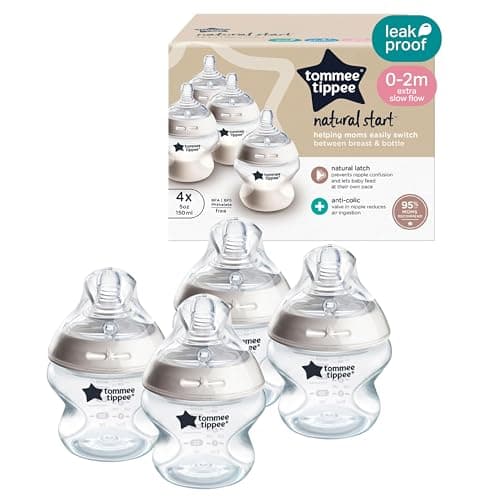 Tommee Tippee Natural Start Anti-Colic The cheapest way to find out whether a wide, soft nipple suits your baby before you commit to a full set. | Trying a wide nipple cheaply | 8.0 | $25.30View on Amazon #ad Affiliate link · Price as of November 6, 2026 |
| 2 | 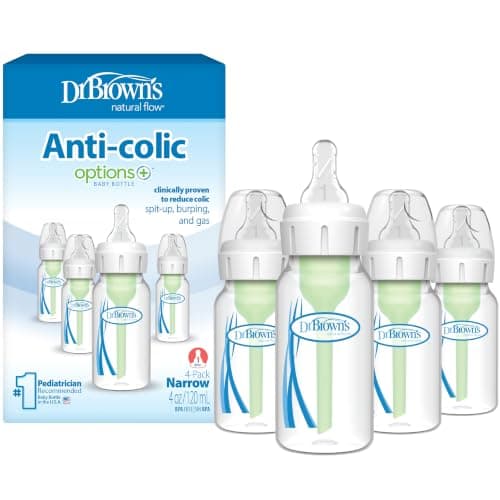 Dr. Brown's Anti-Colic Options+ Narrow The anti-colic bottle with the deepest clinical backing. The internal vent genuinely reduces wind, and genuinely adds parts to wash. | Gas and colic | 8.6 | $23.99View on Amazon #ad Affiliate link · Price as of November 6, 2026 |
| 3 | 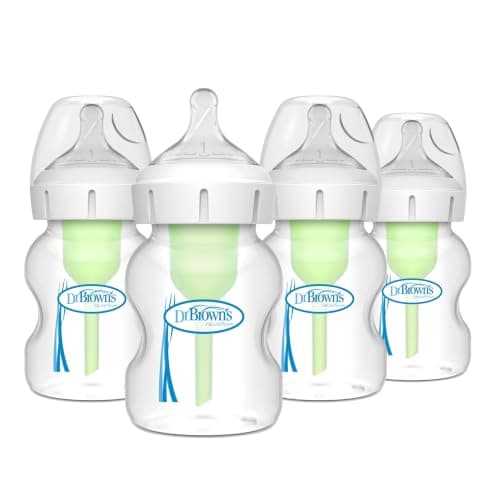 Dr. Brown's Anti-Colic Options+ Wide-Neck Dr. Brown's venting behind a wide, breast-shaped nipple. The compromise pick when your baby is gassy and nursing. | A gassy breastfed baby | 8.7 | $24.99View on Amazon #ad Affiliate link · Price as of November 6, 2026 |
Scores are our own research scores on the rubric published at how we choose. They are not star ratings from customers, and we do not show a price we cannot verify live.
Side by side
| What matters | Tommee Tippee Natural Start Anti-Colic | Dr. Brown's Anti-Colic Options+ Narrow |
|---|---|---|
| How air is kept out of the milk | A built-in valve in the nipple that Tommee Tippee says reduces air intake | An internal vent tube that routes air past the milk to the back of the bottle |
| Parts to wash per bottle | Three | Five with the vent in, three with it out |
| Nipple shape | Wide, soft silicone, on a short squat bottle | Narrow (a wide-neck version exists, below) |
| Behavior on a hard suck | The soft nipple can collapse and need breaking off to reset | The vent prevents a vacuum building, so collapse is rare while it is fitted |
| Can you simplify it later? | Nothing to remove — it is already three parts | Yes — the maker says the vent can come out as feeding develops, with no change of bottle |
| Flow range at the slow end | Slow flow from newborn; no published preemie step below it | Preemie and Ultra-Preemie flows below the newborn level |
| Bottle sizes | 5oz, 9oz and 11oz | Narrow and wide-neck ranges, polypropylene and glass |
| Fits a narrow warmer well | No — the squat shape fits fewer warmer wells | Yes, the narrow version does |
| Cheapest way to try the range | A supermarket multi-pack | Single bottles or a starter set, at a higher per-bottle cost |
| Price tier | Budget | Mid-range |
Two rows carry this page. The first is price against engineering: a valve in the nipple sold in cheap multi-packs, against a vent tube that works better and costs you two extra parts at every wash. The second is the row almost nobody writes about — what happens on a hard suck, where a soft wide nipple can collapse flat and a vented bottle will not.
The venting: both claim it, one engineers it
Tommee Tippee's Natural Start bottle has a vent valve built into the nipple, which the maker says reduces air intake and helps reduce symptoms of colic. That is the same basic approach most mainstream bottles take: a hole or slit that lets air into the bottle so the baby is not drinking against a vacuum.
Dr. Brown's does something more involved. Its internal vent tube routes incoming air past the milk to the back of the bottle, so the milk itself is not aerated and no vacuum builds against the nipple as the bottle empties. It is the most thoroughly documented venting design on the US shelf, and it is the reason Dr. Brown's has the reputation it does with gassy babies.
Two honest qualifications, and they apply to both bottles. "Less air in the milk" is a plumbing claim, not a cure: a baby who cries inconsolably every evening is not necessarily a baby with a bottle problem. And no vent helps a baby who is gulping because the flow rate is wrong for them — that is a nipple problem, and it is the first thing to check. We cover it in bottle nipple flow sizes, explained.
Nipple collapse: the specific thing that goes wrong
This is the failure mode that sends people from Tommee Tippee to Dr. Brown's, and it is worth naming because it looks like a defect and is not one. The Natural Start nipple is a soft, wide, thin silicone dome. A baby with a strong suck, or a baby working at a slow flow level, can pull it inward until it folds flat. The feed stops, the baby gets angry, and you have to break the seal with a finger to let air back in.
It is more common on a nearly-empty bottle and on the slowest flow. The usual fixes are to loosen the collar very slightly, to move up one flow level, or to stop over-tightening the cap. If none of those settle it, the architecture is the problem, and Dr. Brown's vent is the architecture that solves it: with air routed in through the tube, there is far less for the nipple to fight.
Parts to wash: the daily cost of the better vent
Three parts against five, six to eight times a day. Over a week that is roughly sixty small items in the drying rack against roughly a hundred, and the Dr. Brown's vent tube and reservoir need a brush rather than a rinse. A vent assembled slightly wrong is also the single most common cause of the leaks Dr. Brown's gets blamed for, usually from over-tightening or over-filling.
If you have a dishwasher with a heated dry or sanitize cycle, the gap narrows a lot. If you are hand-washing in a small kitchen at midnight, it is the deciding factor for a lot of people — and it is the reason we rate Tommee Tippee's three-part simplicity as a real advantage rather than a compromise. The routine that makes a five-part bottle survivable is in how to wash baby bottles, and the drying half of it is in how to dry baby bottles.
The underrated detail: Dr. Brown's says the vent can be removed as feeding develops, with no need to change bottle. So you can run five parts while the baby is windy and drop to three when they are not, without buying a second set. Nothing in the Tommee Tippee range does the reverse.
Shape, and where the bottle has to fit
The Natural Start bottle is short and squat with a wide neck. That makes it genuinely easy to hold one-handed and easy to get a brush into, and it is a shape a breastfed baby often takes more readily. It is also the shape least likely to fit a bottle-warmer well or a narrow sterilizer rack. Dr. Brown's narrow bottles are the opposite: slimmer, taller, and they drop into essentially every warmer made.
Worth checking before you buy either: what else is already on your counter. If you own a warmer, measure the well. If you are still deciding, our bottle warmer picks note bottle fit on every entry, and do you need a bottle warmer? argues that plenty of families do not.
Flow range, and why it matters at the slow end
Tommee Tippee sells Natural Start bottles with a slow-flow nipple from newborn, in 5oz, 9oz and 11oz bodies. Dr. Brown's publishes a longer ladder at the bottom end, including Preemie and Ultra-Preemie flows below the standard newborn level.
For most full-term babies this never comes up. For a baby born early, a baby with a weak suck, or a baby who chokes and sputters on anything faster, it is the whole decision — there is simply more range available below newborn in the Dr. Brown's range. That is the argument we make at length in best bottles for preemies, and the nipple-first version of it is in the best bottle nipples.
If you are mixing breast and bottle
Lean Tommee Tippee for the first attempt. A wide, soft, gently sloping nipple is the easier shape for a breastfed baby to transfer onto, and the cheap multi-pack means a refusal costs you very little. Tommee Tippee markets the shape as breast-like and claims high acceptance; we cannot verify an acceptance rate, and we would not buy six bottles on the strength of a marketing figure — but buying two to find out is sensible, which is exactly what how many bottles do I need? recommends.
If the baby takes it and then fights the feed, the problem is more likely pace than shape. Learn paced bottle feeding before you buy a different brand; it costs nothing and fixes more feeds than a purchase will. And if the bottle is refused outright, work through why won't my baby take a bottle?
The third option: Dr. Brown's with a wide neck
If you want Dr. Brown's venting but your baby has already settled on a wide nipple, the Anti-Colic Options+ wide-neck version is the obvious answer. Same internal vent, same remove-it-later behavior, in a bottle shape much closer to the Tommee Tippee.
The trade is the same one the Tommee Tippee makes: a wide neck is easier to brush out, and it will not fit a narrow warmer well, and it takes more cupboard space. If neither shape is settled yet, buying one narrow and one wide and letting the baby decide is a legitimate and cheap experiment.
Which one to buy
Buy Tommee Tippee Natural Start if you are buying a first bottle and nothing has gone wrong yet. Three parts, a wide soft nipple, a shape that is easy to hold and easy to clean, and a multi-pack price that makes the whole experiment low-risk. This is the cheapest honest way into bottle feeding.
Buy Dr. Brown's Anti-Colic Options+ Narrow if gas is already your problem, if the Tommee Tippee nipple keeps collapsing, if your baby needs a flow slower than newborn, or if your bottles have to fit a narrow warmer. You are accepting two extra parts per wash for the best-engineered venting here, and you can take the vent out later.
Buy Dr. Brown's Anti-Colic Options+ Wide-Neck if you want that vent but the baby has already refused a narrow nipple.
Neither of these is expensive relative to a year of feeding, so price should not be the whole decision — but it is a fair tiebreaker when you genuinely do not know yet which your baby prefers. For the two ranges placed against the rest of the field, that is the best baby bottles, and if gas is your actual problem rather than your suspected one, start at the best anti-colic bottles.
Worth saying plainly
Take every bottle apart and clean it after each feed, and follow the CDC's cleaning and sanitizing guidance for infant feeding items — a five-part bottle has more places for milk residue to sit, so the vent tube and reservoir need a brush rather than a rinse. Never enlarge a nipple hole to speed a feed up, never prop a bottle, and replace a nipple that has gone sticky, swollen or torn. Persistent spit-up, back-arching, poor weight gain or distress at every feed is a conversation with your pediatrician, not a bottle purchase — see AAP guidance on spitting up. We are not clinicians, and nothing here is medical advice.
How we chose
Researched, not hands-on, and we say so on every card. The venting designs, parts counts, bottle sizes, materials and the remove-the-vent claim come from the makers' own specification pages — Tommee Tippee and Dr. Brown's, with the slow-end flow range from Dr. Brown's preemie nipple specification. Independent hands-on testing of the wider bottle field comes from Mommyhood101. Cleaning requirements are the CDC's and the spit-up context is the AAP's. On this page daily cleaning load and the cost of being wrong are weighted heaviest, because a first-time buyer cannot predict which nipple their baby will accept. Full rubric: how we choose.
What we would buy
Now that the decision is made, these are the products we would actually put in the basket, and why.
Product photo from the Amazon listing, not a photograph of our own unit.
Tommee Tippee Natural Start Anti-Colic
Tommee Tippee
The cheapest way to find out whether a wide, soft nipple suits your baby before you commit to a full set.
- Latch
- 8
- Colic control
- 7
- Cleaning
- 9
- Durability
- 7
- Value
- 10
- Material:
- Polypropylene, glass version available
- Parts to wash:
- Three
- Nipple shape:
- Wide, squat bottle
- Price tier:
- Budget
What works
- Sold in cheap multi-packs, so trialling is low-risk
- Short, squat bottle is easy to hold one-handed
- Widely stocked in US supermarkets
What to know first
- Venting is basic
- Squat shape fits fewer warmers
- Nipples collapse more readily on a strong suck
#ad Affiliate link · Price as of November 6, 2026
Product photo from the Amazon listing, not a photograph of our own unit.
Dr. Brown's Anti-Colic Options+ Narrow
Dr. Brown's
The anti-colic bottle with the deepest clinical backing. The internal vent genuinely reduces wind, and genuinely adds parts to wash.
- Latch
- 8
- Colic control
- 10
- Cleaning
- 5
- Durability
- 9
- Value
- 8
- Material:
- Polypropylene, glass version available
- Parts to wash:
- Five with the vent, three without
- Nipple shape:
- Narrow
- Price tier:
- Mid-range
What works
- The vent system has the strongest evidence base for reducing gas
- Vent is removable once colic settles, cutting cleaning to three parts
- Nipple flow levels run from preemie upward
What to know first
- Most parts to wash of any bottle here
- The vent can leak if the bottle is over-tightened or over-filled
- Narrow neck makes hand-washing fiddlier
#ad Affiliate link · Price as of November 6, 2026
Product photo from the Amazon listing, not a photograph of our own unit.
Dr. Brown's Anti-Colic Options+ Wide-Neck
Dr. Brown's
Dr. Brown's venting behind a wide, breast-shaped nipple. The compromise pick when your baby is gassy and nursing.
- Latch
- 9
- Colic control
- 10
- Cleaning
- 6
- Durability
- 9
- Value
- 8
- Material:
- Polypropylene, glass version available
- Parts to wash:
- Five with the vent fitted
- Nipple shape:
- Wide
- Price tier:
- Mid-range
What works
- Wide nipple is easier for a nursing baby to accept than the narrow version
- Same vent system as the narrow Options+
- Easier to hand-wash than the narrow neck
What to know first
- Still five parts with the vent in
- Bulkier in a diaper bag
- Wide bottles fit fewer warmer wells
#ad Affiliate link · Price as of November 6, 2026
Common questions
Is Tommee Tippee or Dr. Brown's better?
Dr. Brown's has the better venting and a longer slow-flow range; Tommee Tippee has three parts instead of five, an easier shape for a breastfed baby, and a multi-pack price that makes a refusal cheap. For a first bottle with no problems yet, start with Tommee Tippee. If the baby is already gassy, start with Dr. Brown's.
Why does my Tommee Tippee nipple keep collapsing?
A soft, wide nipple can be pulled flat by a strong suck, most often on a nearly-empty bottle or the slowest flow level. Try loosening the collar slightly, stop over-tightening the cap, and move up one flow level. If it keeps happening, a vented bottle such as Dr. Brown's is the structural fix.
Do Tommee Tippee and Dr. Brown's parts fit each other?
No. Nipples, collars and caps are not interchangeable between the two ranges, and Dr. Brown's own narrow and wide-neck parts are not interchangeable with each other either. Settle on a range before you buy a set of six.
Which is easier to clean?
Tommee Tippee, clearly: three parts and a wide neck a brush fits into. Dr. Brown's with the vent fitted is five parts, and the vent tube needs brushing rather than rinsing. A dishwasher with a heated dry cycle narrows the gap.
Can you use Dr. Brown's bottles without the vent?
Yes. Dr. Brown's states the bottle works best with the vent fitted but that it can be removed as feeding develops, with no need to switch bottles. Removing it takes the bottle from five parts to three.
Which one is better for a breastfed baby?
Tommee Tippee, for the first try — the wide, soft nipple is the easier shape to transfer onto, and the low price makes a refusal painless. If it is refused, the next thing to change is pace rather than brand. Full ranking in best bottles for breastfed babies.
Does Tommee Tippee fit in a bottle warmer?
Often not well. The Natural Start bottle is short and squat, which is the shape least likely to drop into a narrow warmer well. Dr. Brown's narrow bottles fit almost every warmer made. Check the well before you buy either.
Sources
- Tommee Tippee — Natural Start anti-colic baby bottle specification
- Dr. Brown's — Natural Flow Anti-Colic Options+ Narrow bottle specification
- Dr. Brown's — Narrow bottle nipple, Ultra-Preemie flow
- CDC — How to Clean, Sanitize, and Store Infant Feeding Items
- American Academy of Pediatrics (HealthyChildren.org) — Why Babies Spit Up
- Mommyhood101 — Best Baby Bottles, tested and reviewed